
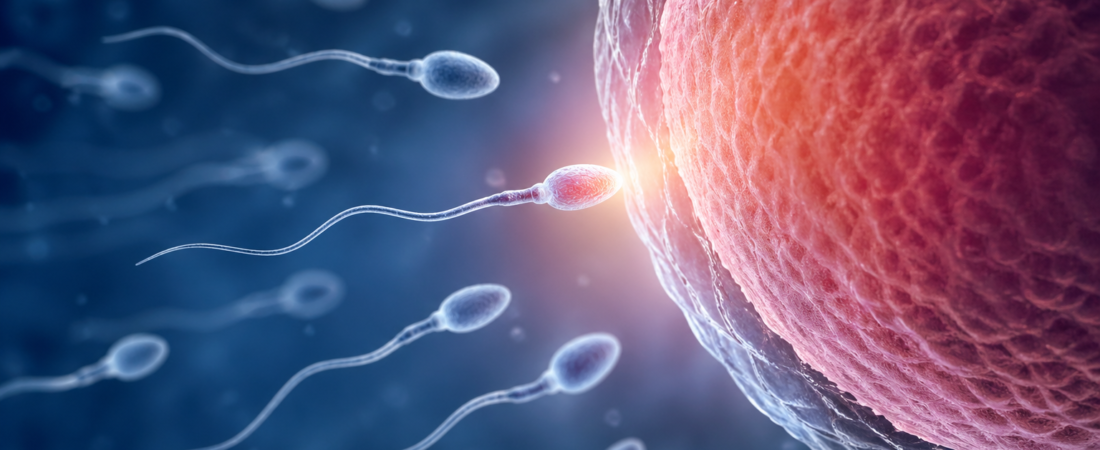
Male factor infertility deserves assessment alongside the female partner’s evaluation. A semen analysis is an important starting point, not a complete diagnosis. Selected hormonal, genetic or other tests can help clarify the cause; more tests, supplements or advanced sperm-selection tools do not automatically mean better outcomes.

The historical narrative of infertility as a predominantly female-driven challenge is rapidly dismantling. Modern reproductive medicine now recognizes male factors as either the sole or contributory cause in roughly 40–50% of infertility cases, with some clinical cohorts reporting male-only factors in over 30% of instances.
Read semen measures together
Concentration, movement and morphology each supply information. They do not individually certify fertility or genetic health.
- Motility and Morphology: Dynamic performance and structural integrity.
- DNA integrity: A separate question for selected circumstances, not something routine sperm appearance can prove.
Choose additional tests for a reason
DNA-fragmentation, oxidative-stress and advanced morphology tests are not universal routine initial investigations. Their value depends on the clinical question.
Automated or AI-assisted analysis may support laboratory work. More detailed measurement does not automatically improve treatment outcomes.
Health and exposure need context
Medical conditions and some exposures may be relevant, but uncertain links involving microplastics or everyday electronics should not be presented as established causes in an individual.
Redefining the Clinical Protocol
These shifts have necessitated a fundamental reorganization of the clinical protocol. The outdated “sequential approach,” where male testing was deferred until female evaluations were complete, is being replaced by “Concurrent Evaluation Strategy.”
By assessing both partners from the first consultation, clinics can now:
- Reduce unnecessary time delays.
- Optimize treatment planning: Deciding early on whether to utilize Intracytoplasmic Sperm Injection (ICSI).
- Management: Address identified causes and relevant health issues; antioxidant benefits remain uncertain.
Conclusion: A Biological Partnership
The paradigm of fertility treatment has moved from “selecting the best embryo” to “integrating the health of all reproductive cells.” Fertilization is not just a biological collision; it is a precise fusion of two distinct genetic packages. The current reality is clear: infertility is not a “female problem” but a biological event co-authored by both partners. And in this event, the male factor is no longer a footnote—it is an equal, fundamental player at the very start of the journey.
Disclaimer: This content is provided for informational purposes, based on current reproductive medicine research and public health data. Medical judgments and treatment decisions must always be made in consultation with professional medical personnel. Image: AI-generated (ChatGPT, OpenAI) / Visual reference for illustrative purposes only.
Interpret results together
Additional testing depends on the clinical question. Appearance and motility alone cannot certify sperm DNA integrity. AUA/ASRM male infertility guideline (2024).
Related reading
"The Sperm Count Warning": Why Oligozoospermia is a Biomarker for Overall Male Health