
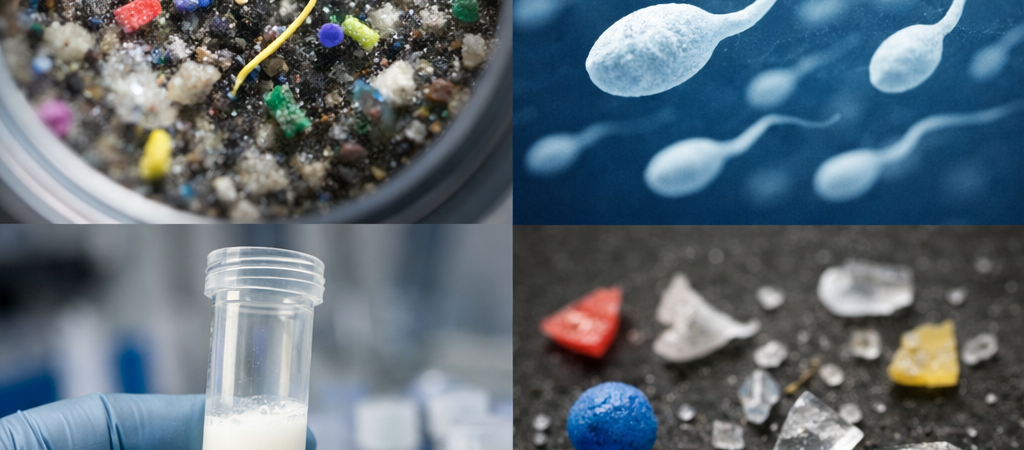
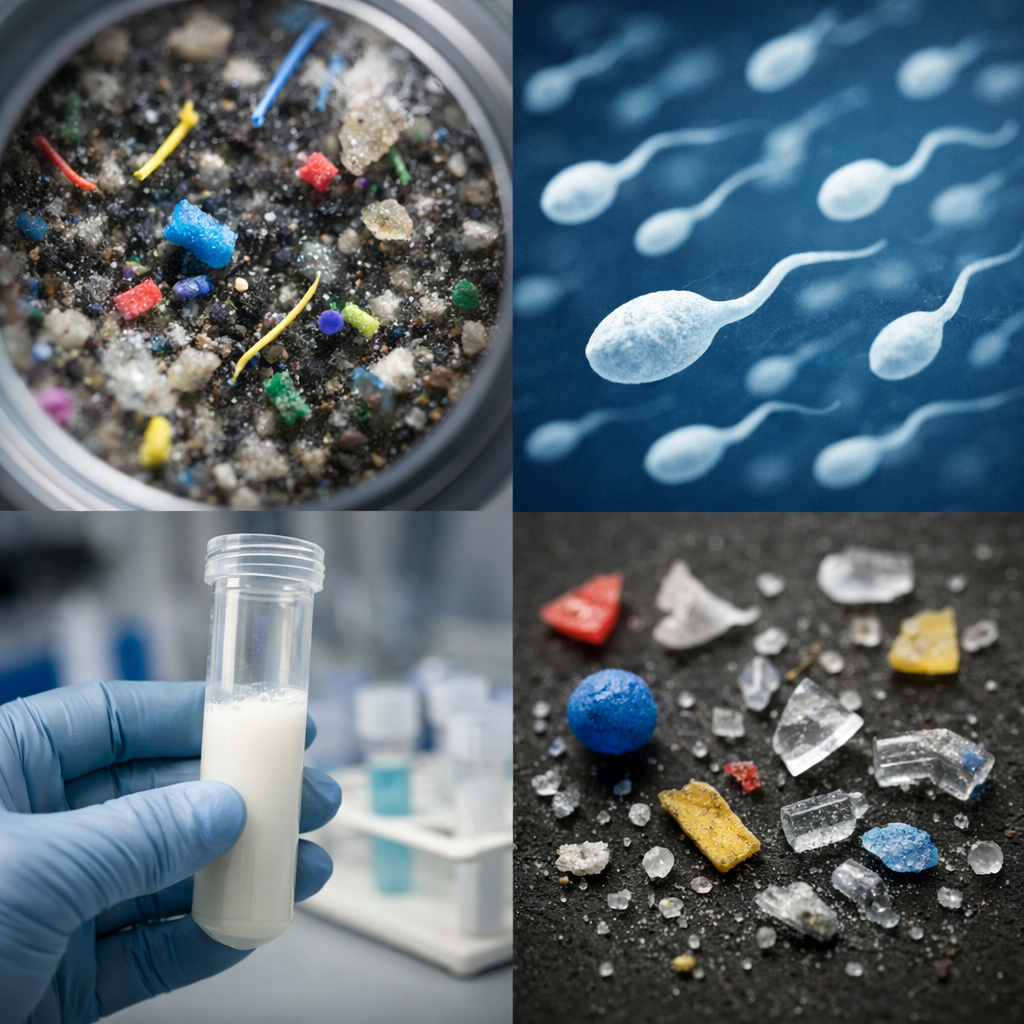
Recent reports confirming the presence of microplastics in human semen have shifted the discourse on male fertility from “biological concern” to “ecological crisis.” The discovery suggests that environmental pollutants have breached our most protected internal systems, with the reproductive tract now standing at the front line of environmental toxic exposure.
Beyond Mere Detection: A Functional Collapse The findings transcend mere detection; they point to a functional decline. Animal models exposed to microplastics consistently show a 30% reduction in sperm count and a 20–40% drop in motility. This represents a dual assault on both quantity and quality, signaling that the very foundation of reproduction is under siege.
Researchers have identified the biological mechanism behind this degradation: microplastics induce intense oxidative stress and damage Sertoli cells (responsible for sperm formation) and Leydig cells (responsible for testosterone secretion). Furthermore, these pollutants appear to compromise the blood-testis barrier, the specialized anatomical wall intended to protect the testes from external insults. Once this barrier is breached, the integrity of the entire spermatogenesis process is structurally undermined.
Sperm as a “Biological Barometer” This crisis is reflected in global statistics, with sperm counts plummeting over several decades—a phenomenon experts call the “Silent Reproductive Crisis.” The common culprit? Ubiquitous exposure to microplastics through food packaging, disposable containers, and atmospheric particulate matter.
Crucially, sperm are now being recognized as a “biological barometer.” Because sperm cells are exceptionally sensitive to external stressors, they are often the first to register systemic environmental changes. Their decline is not merely a marker of individual health; it is a mirror reflecting the degraded state of our wider environment.
A New Paradigm in Fertility Care While experts caution that establishing direct causality requires further investigation, the consistent patterns emerging from recent data lead to a singular conclusion: environmental pollution is penetrating the human interior through the reproductive system.
In the past, infertility was analyzed through the lens of age or underlying clinical disease. Today, it must be framed as an “environmental problem”—a consequence of the air we breathe, the water we drink, and the materials we interact with daily. We have entered an era where our lifestyle choices and our environmental footprint are inextricably linked to the birth potential of future generations.
Sperm is the first cell to speak this truth. Whether we choose to listen will determine the trajectory of human reproduction in the century to come.
Sources: News-Medical (Oct 2025); Medical Xpress (July 2025); Environmental Health News (Oct 2025); Fox News (March 2026).
Disclaimer: This content is provided for informational purposes, based on reporting on public health and environmental studies. Medical judgments and treatment decisions must always be made in consultation with professional medical personnel. Image: AI-generated (ChatGPT, OpenAI) / Visual reference for illustrative purposes only.