
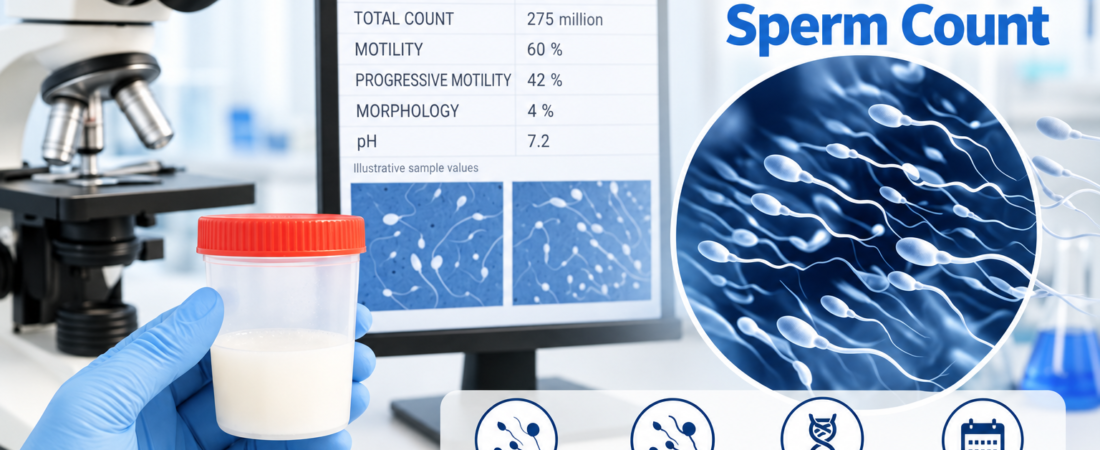
Sperm abstinence before testing is about following a standardized collection protocol, not maximizing every fertility measure. WHO guidance uses a 2–7-day interval for diagnostic semen collection. That interval is different from advice about intercourse when trying to conceive or a clinic’s instructions before a specific treatment.
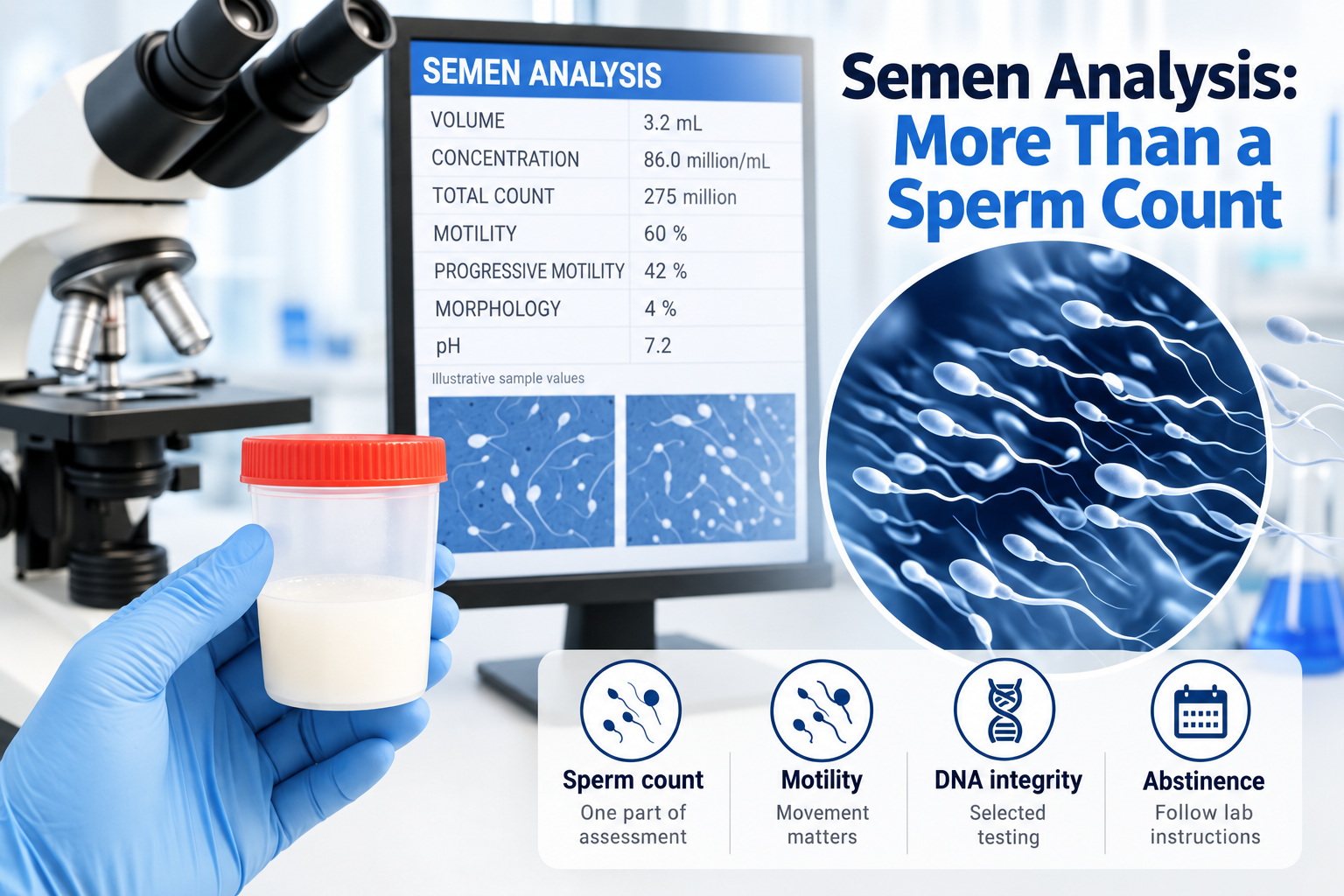
The belief that “abstaining from ejaculation leads to more sperm” is true. However, the assumption that this equates to better fertility is one of the most persistent misconceptions in reproductive health. Sperm are not merely “inanimate objects” that accumulate in a container; they are dynamic, biological cells that undergo functional degradation over time. While their quantity may increase with abstinence, their quality is never guaranteed.
Storage and semen characteristics
Abstinence can affect several semen measures in different ways. It does not create a universal point beyond which all sperm are slow or damaged.
A testing standard is not a conception schedule
WHO specifies 2–7 days of abstinence for diagnostic collection to support standardized assessment. It is not a prescription to maximize pregnancy chances.
Study findings vary by population, interval and endpoint. Concentration, motility, DNA-fragmentation measures and live birth should not be treated as interchangeable.
Follow the purpose of collection
IVF clinics may individualize collection advice. No single interval is established here as best for every patient or procedure.
The persistence of the “abstinence myth” stems from the obsession with diagnostic numbers. Longer abstinence produces an impressive concentration on a lab report, but pregnancy is not a numerical competition; it is a functional one. A sperm that cannot reach or fertilize the egg is functionally nonexistent, regardless of how high the count on a semen analysis report may be.
Relevant medical and lifestyle factors belong in a broader assessment. Abstinence alone does not explain every abnormal semen result.
For natural conception, regular intercourse during the fertile window avoids treating sperm as something that must be stockpiled. For testing or treatment, follow the clinic’s collection instructions.
Ultimately, the statement “abstaining produces more” is only half true. And it misses the most critical half: “More does not mean better.”
Disclaimer: This content is provided for informational purposes, based on reporting on infertility and various public data. Medical judgments and treatment decisions must always be made in consultation with professional medical personnel. Image: AI-generated (ChatGPT, OpenAI) / Visual reference for illustrative purposes only.
Collection guidance has a purpose
Standardizing a diagnostic sample is different from scheduling intercourse or an IVF collection. Ask the clinic which instructions apply. WHO laboratory manual for human semen, sixth edition (2021).
Related reading
At-Home Sperm Tests: A Useful First Look—or False Reassurance?