
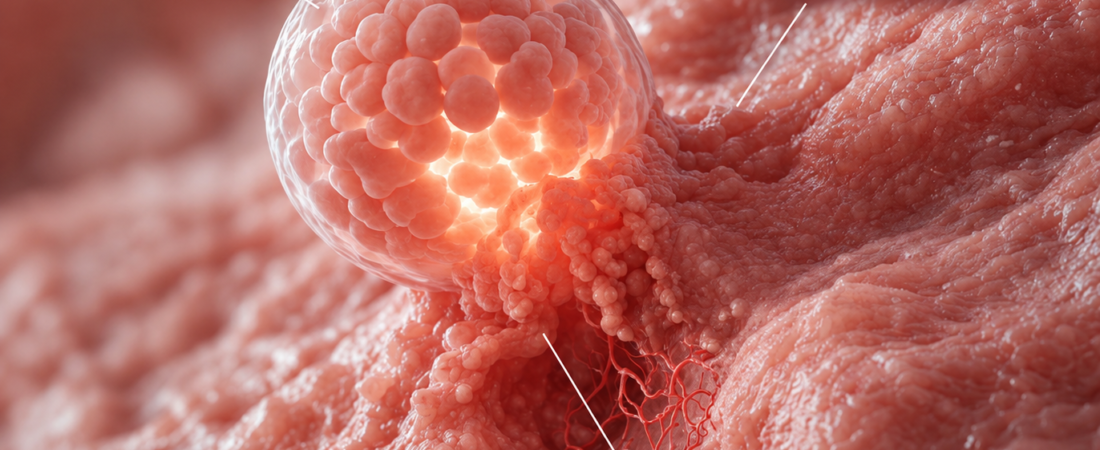
A thin endometrium can raise questions during IVF, but endometrial thickness is not a standalone implantation verdict. Ultrasound measurements, treatment history and the uterine cavity need context. A thicker lining does not guarantee pregnancy, and proposed add-ons should not be mistaken for proven regeneration.
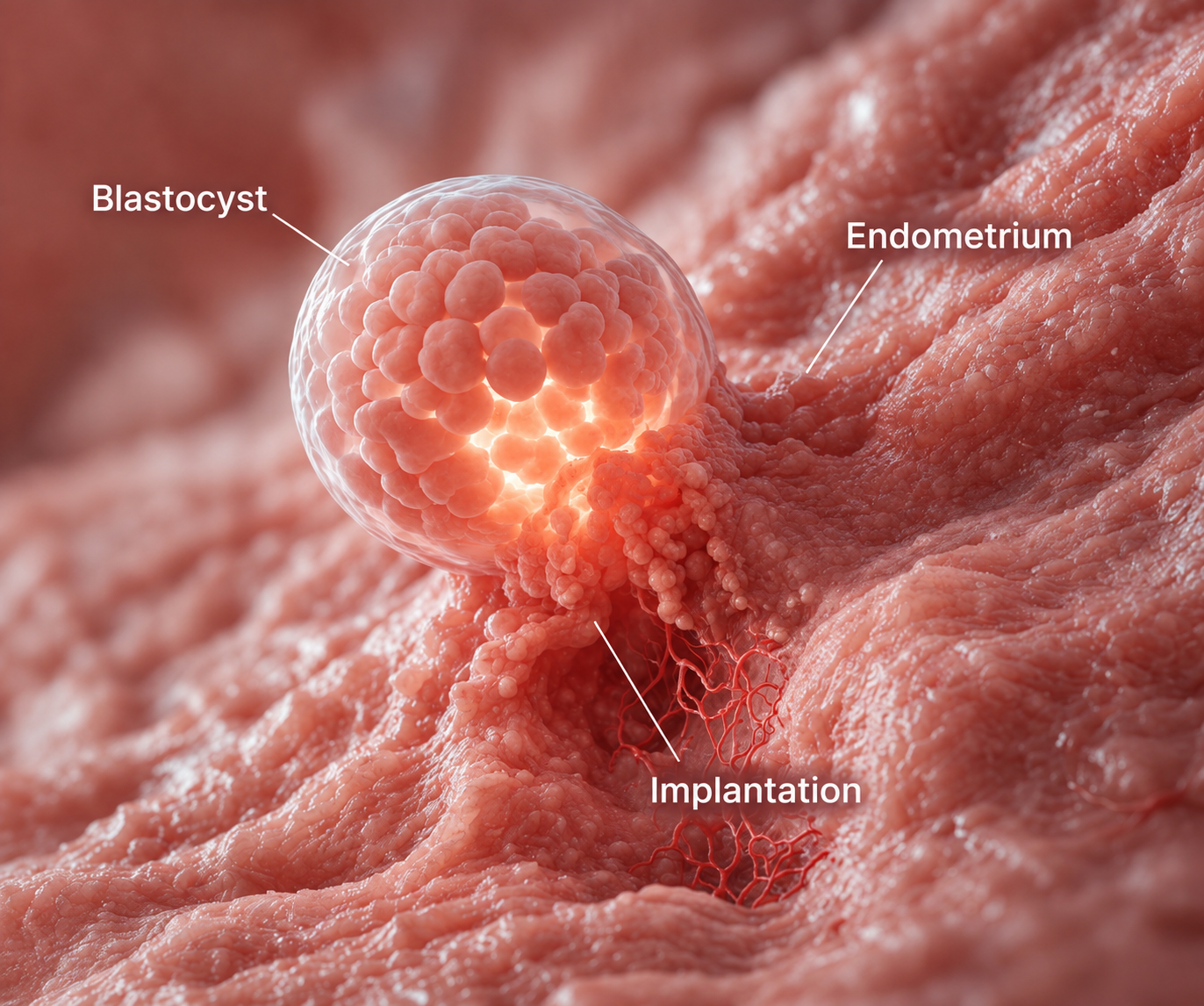
Achieving a successful implantation is the definitive beginning of pregnancy.
The endometrium is living tissue involved in embryo attachment and implantation. A thickness measurement captures only one aspect of it.
A number such as 7 or 8 mm can become an anxiety-provoking target. It should not be interpreted as an absolute boundary between possible and impossible pregnancy.
Outcomes overlap across thickness measurements. A thicker lining cannot guarantee implantation, while a thinner measurement does not prove that pregnancy is impossible.
Is the raw thickness of the endometrium truly the primary barrier?
The lining is more than a wall, but this does not make thickness clinically meaningless. A measurement should be interpreted with the cycle and the broader assessment.
Consequently, the initial phase of clinical intervention traditionally centers around hormonal manipulation.
Clinicians may review the estrogen regimen in a treatment cycle. Response varies, and a dose or route change should have an individual rationale.
Changing administration does not guarantee sudden growth. Medication decisions should not be framed as a reliable way to switch a dormant lining on.
Proposed treatments need outcome evidence
Sildenafil, pentoxifylline and aspirin have been discussed in this setting, but they should not be presented as a standard combination with a proven live-birth benefit.
A change in thickness after an intervention does not establish why the lining was thin or prove an improvement in pregnancy outcome.
PRP is an add-on with important evidence and safety limitations. Reports of growth do not establish complete regeneration or a reliable benefit for patients.
When dissecting endometrial pathologies, one non-negotiable historical variable must be evaluated.
A history of uterine procedures can prompt consideration of adhesions, but it does not itself diagnose them. Targeted evaluation and indicated treatment differ from endometrial scratching, which should not be presented as a required repair step.
What, then, are the underlying root causes driving persistent endometrial thinning?
Adhesions, endocrine factors and selected other conditions may merit evaluation. There is no universal triad explaining every thin lining or a single test that resolves every case.
There is no established universal sequence that always ranks perfusion first and thickness last. Assessment should address the actual clinical question.
The point is to interpret the number carefully, not replace it with an unmeasurable promise of perfect receptivity. Patients deserve clarity about what is known and what an intervention is expected to change.
Editor’s Note: This content is an analytical commentary prepared by a specialized fertility journalist through the collection and evaluation of domestic and international reproductive medicine research, clinical policies, and statistical data. All medical diagnoses and treatment decisions must exclusively be established through direct consultation with a qualified medical professional.
Image Source: AI-generated (ChatGPT, OpenAI) / Provided solely as a supplemental visual aid for conceptual understanding.
Evidence behind an add-on
A proposed regenerative mechanism does not establish safety or an improvement in live birth. HFEA: platelet-rich plasma add-ons.
Related reading
Chronic Endometritis and IVF: Is the Uterine Environment Being Overlooked?