
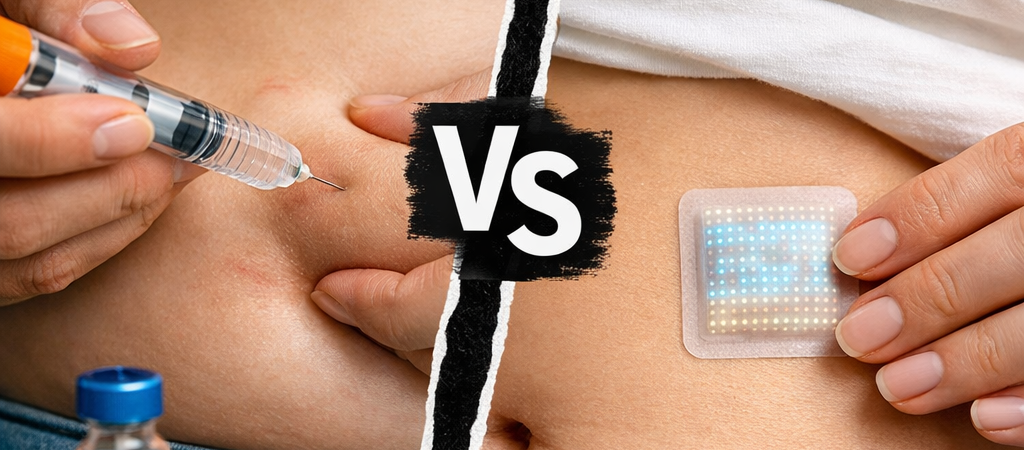
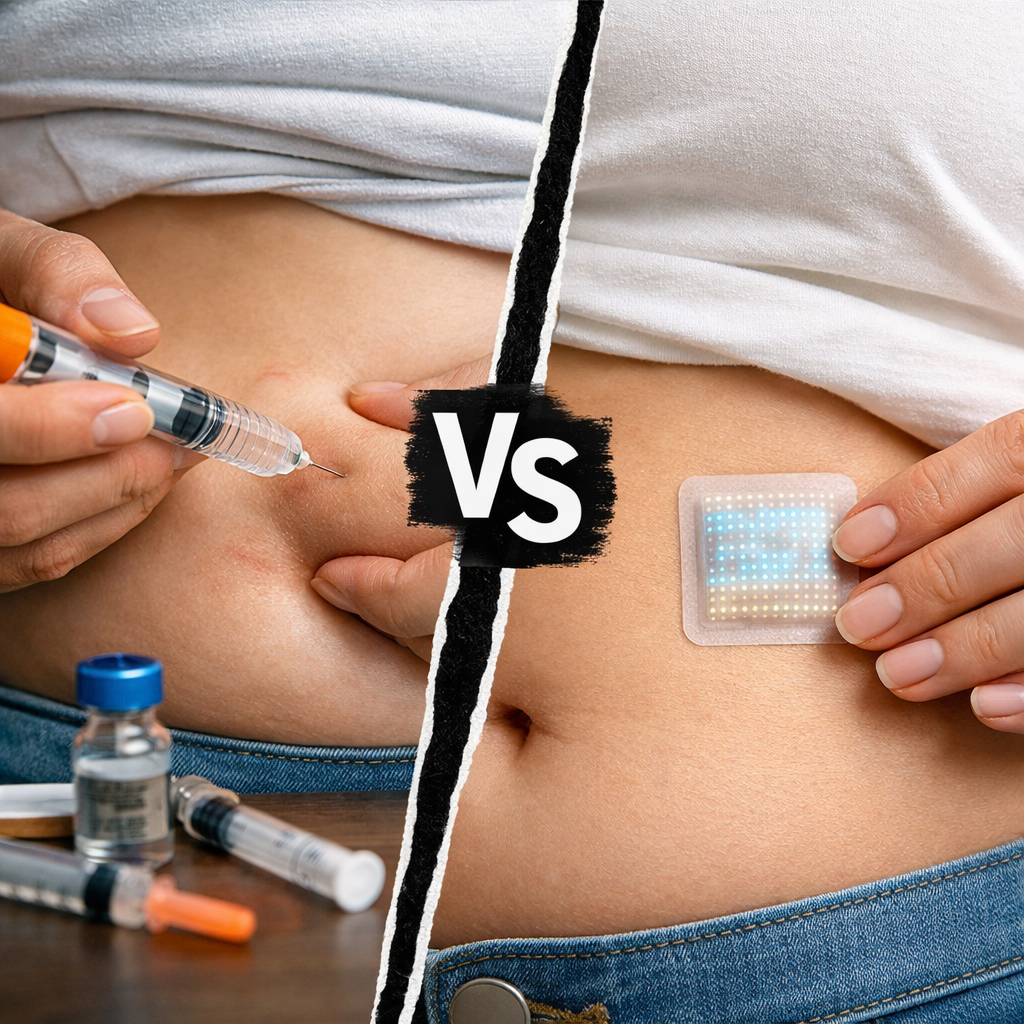
When people think of In Vitro Fertilization (IVF), the most vivid and daunting image that comes to mind is the daily regimen of injections. It is a grueling process of self-administering shots into the abdomen, adhering to strict timetables, managing bruising, and enduring persistent pain. For many patients, this physical distress becomes a psychological barrier far greater than the clinical procedure itself.
However, a breakthrough on the horizon promises to alter this reality entirely.
A technology gaining significant traction at the intersection of reproductive medicine and bioengineering is the “light-activated microneedle patch.” When applied to the skin, microscopic needles deliver medication painlessly into the dermal layer, with the drug release rate precisely regulated by specific light stimuli. In essence, it establishes a system where critical hormones can be delivered into the body without a single conventional needle.
The core of this innovation is non-invasive, targeted delivery. Traditional IVF hormone injections require repeated administration to maintain precise blood concentration levels, forcing patients to endure dozens of painful shots throughout a single cycle. In contrast, a microneedle patch can release hormones continuously through the skin or be controlled to discharge them only when necessary.
This shift signifies more than just a convenience upgrade; it challenges the traditional paradigm of medical care.
Historically, injections have been the ultimate symbol of clinical intervention—a physician-centered, hospital-bound practice where patients are expected to bear the burden of pain. A patch, however, is fundamentally patient-centered. It enables a treatment structure that is managed at home, by oneself, and entirely without pain.
In fertility care, the implications of this shift are massive. IVF is not a one-off procedure; it is a weeks-long intervention that disrupts a patient’s entire lifestyle. Throughout this journey, the distress of daily injections has consistently been a leading cause of patient stress, treatment discontinuation, and poor compliance.
A patch completely restructures this experience. When pain is eliminated, treatment retention rates naturally rise. When schedule management becomes simpler, the margin for human error decreases. Most importantly, it allows the patient to view the treatment not as an ordeal to be “endured,” but as a routine to be “managed.”
The Technical Challenges Ahead
Nevertheless, distinct hurdles remain before this becomes a clinical reality. Comprehensive data verifying the exact precision of hormone delivery, individualized dosage adjustments, and its ultimate impact on live birth rates are still lacking. Because IVF is an exceptionally sensitive field where even minute hormonal fluctuations can alter the final outcome, a more convenient delivery mechanism does not automatically guarantee superior clinical success.
Yet, the trajectory is unmistakable. IVF is evolving past the era of “enduring the needle.”
Sources: Consolidated research on microneedle-based drug delivery and photoreactive patches from international journals including Advanced Drug Delivery Reviews and Nature Biomedical Engineering.
Disclaimer: This content is provided for informational purposes, based on reporting on infertility and various public data. Medical judgments and treatment decisions must always be made in consultation with professional medical personnel. Image: AI-generated (ChatGPT, OpenAI) / Visual reference for illustrative purposes only.