
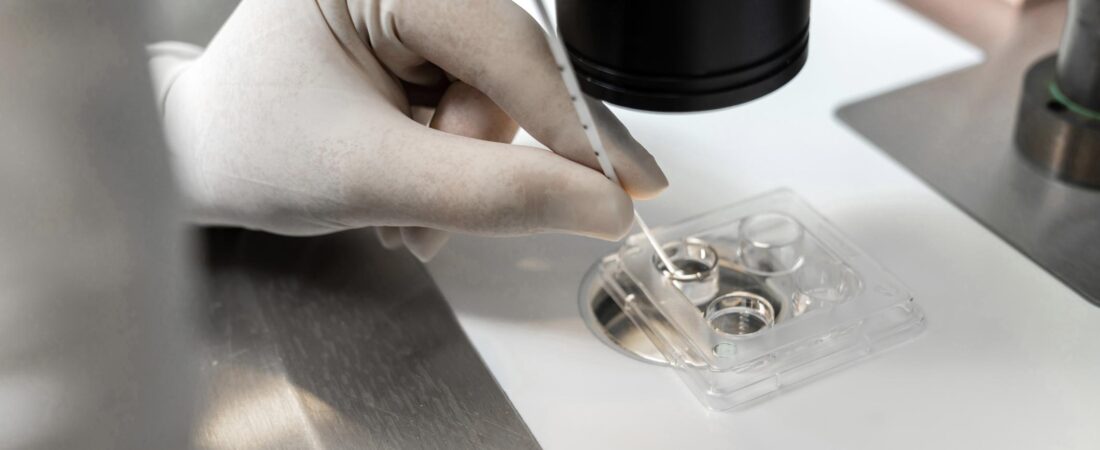
ICSI technique and laboratory quality deserve attention when fertilization or embryo development disappoints. But an embryo’s arrest does not prove operator error, and normal fertilization does not identify every later problem. A review needs cycle records, quality indicators and the wider clinical picture.
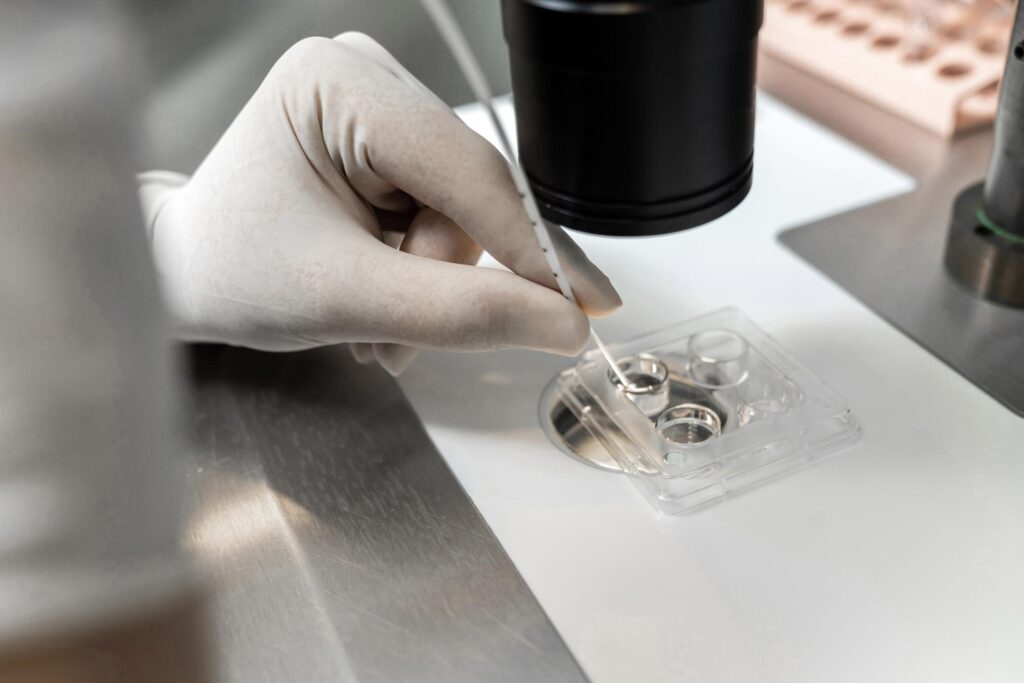
ICSI places a sperm into an oocyte during a carefully controlled laboratory procedure. The moment can look uneventful even though the work is technically demanding.
Normal fertilization is an important observation, not a guarantee that development will continue. The eventual outcome is not necessarily fixed by a single instant of handling.
Embryologist training, equipment, protocols and quality assurance all contribute to care.
A developmental arrest cannot, by itself, reveal whether an operator made an error. Claims about hidden damage require evidence rather than inference from disappointment.
Mechanical injury can occur during manipulation. Its possibility does not justify assuming that every failed embryo was forcefully punctured or mishandled.
Laboratories assess outcomes and monitor performance within documented systems. A patient-facing report may not contain every technical record.
Fertilization and later development are different endpoints. A reassuring first observation does not eliminate gamete, genetic or other biological factors.
The timing and pattern of arrest do not establish a unique cause.
Controlled technique aims to minimize disruption while achieving the intended procedure.
A dramatic fluid-pressure analogy is not a validated diagnosis of what happened inside a particular oocyte.
Comparisons of laboratory performance need suitable denominators and case-mix information. They cannot be inferred from anecdotes alone.
Sperm selection uses available observations, whose scope is limited.
Sperm DNA integrity is not fully visible through ordinary morphology and movement.
An experienced operator cannot reliably read an individual sperm’s complete genetic integrity from its swimming pattern.
A fertilized egg that later arrests should not automatically be blamed on either the sperm, egg or operator.
Timing is managed within validated laboratory procedures; there is no universal number of minutes that determines every outcome.
Standardized procedures and professional judgment support each other. Documentation is part of good practice.
Patients can ask what findings were recorded and how the team interprets them.
A cycle review may examine maturity, fertilization, developmental observations and relevant laboratory indicators.
The purpose is to identify actionable findings while acknowledging causes that remain uncertain.
The person performing ICSI matters within a broader clinical and laboratory system. No single operator is the sole determinant of live birth.
The important question is what quality assurance and transparent review the laboratory provides, rather than whether failure proves an invisible mistake.
Editor’s Note: This commentary has been comprehensively reconstructed based on publicly available reproductive medicine literature, peer-reviewed international journals, and clinical research data. All medical diagnoses and treatment plans must exclusively be established through direct consultation with a qualified fertility specialist.
Image Source: AI-generated (ChatGPT, OpenAI) / Provided solely as a supplemental visual aid for conceptual understanding.
A laboratory procedure within a wider treatment pathway
ICSI assists fertilization in relevant settings. It does not guarantee subsequent development, and an unsuccessful cycle does not by itself identify a technical cause. HFEA: intracytoplasmic sperm injection.
Related reading
IVF Laboratory Quality: Does Every Precious Egg Get the Care It Needs?