
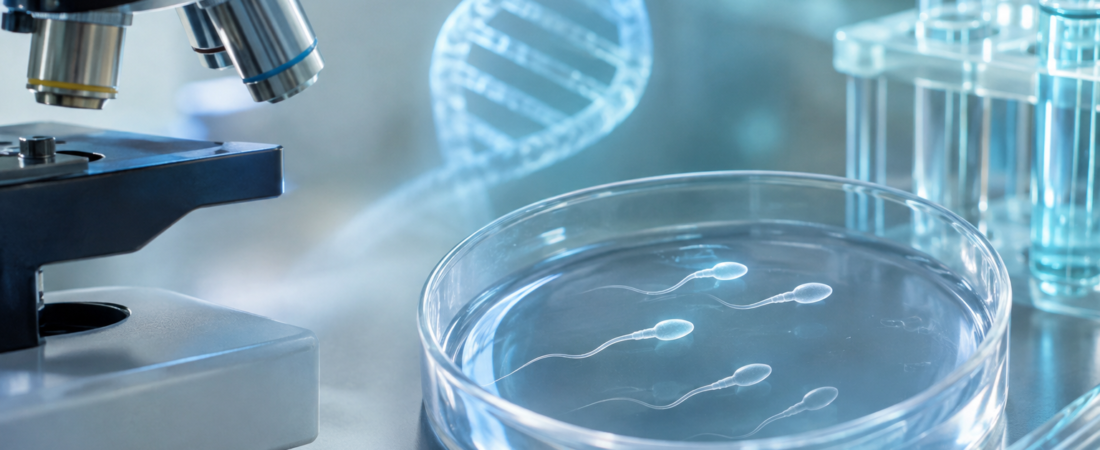

Obesity, smoking and stress may be associated with epigenetic changes in sperm. Researchers are particularly interested in small non-coding RNAs and what they might tell us about men's health before conception.
Women planning a pregnancy often take folic acid, stop drinking or smoking and pay attention to their weight. What about men? Is producing sperm enough? Researchers in reproductive medicine are exploring whether a man's health before fatherhood matters for pregnancy and birth.
One focus is the biological imprint an exposure might leave on sperm. Obesity, metabolic disease, smoking, stress and environmental pollutants may alter the systems that regulate genes in sperm. Evidence that some changes might influence an embryo after fertilization has renewed interest in men's preconception health.
A review published November 2 in Frontiers in Endocrinology examined how men's health and surroundings relate to the molecular characteristics of sperm, and what those findings could mean for fertility care and preconception counseling.
What sperm carry alongside DNA
Sperm have long been understood as the carriers of a father's genetic information. At fertilization, the egg and sperm each contribute half the DNA that provides the instructions for a new life. Researchers are learning that sperm can also carry molecular information that helps regulate how genes work.
Epigenetics studies changes in gene activity that can occur without a change in the DNA sequence. If DNA is the text of a book, epigenetic marks might be thought of as cues about which sentences to read or skip. The review examined DNA methylation, changes in histone proteins, and small non-coding RNAs in sperm. These RNAs participate in regulating gene expression without coding for proteins. Researchers are investigating their roles in sperm maturation and early embryo development.
These molecular characteristics can vary with men's health and environment. Diet, living conditions and general health may all be associated with biological features of sperm.
What obesity, smoking and stress might mean for sperm
The authors examined metabolic conditions such as obesity and diabetes, as well as smoking, alcohol, stress, pollutants, older age and testicular heat exposure. Hormonal changes, inflammation and oxidative stress are possible pathways linking these factors to sperm production and maturation. Oxidative stress occurs when reactive oxygen species overwhelm the body's defenses, increasing the potential for damage to sperm membranes or DNA.
Previous studies have linked obesity or smoking to sperm count, motility, morphology and DNA damage. Some found differences in epigenetic marks or the mix of small non-coding RNAs. Results varied across populations, environments and analytical methods. They cannot establish that a particular habit directly caused an epigenetic change.
Could a father's health affect his children?
An especially interesting question is whether sperm changes matter after fertilization. In some animal experiments, paternal diet or stress altered molecular features of sperm, and differences were associated with metabolism or development in offspring. This raises the possibility that sperm carry signals relevant to early embryonic development.
Whether the same process occurs in humans remains uncertain. Many epigenetic marks from the parents are reset after fertilization. Researchers still need to determine which changes persist and whether they affect children's health. The review emphasizes that an association between an epigenetic mark and a child's health does not establish causation. A father's obesity or stress cannot be used to predict that his child will develop a particular condition.
Why the three months before conception matter
Sperm take about three months to develop and mature. That makes the months before a planned pregnancy a reasonable time for men to review their health and habits. Stopping smoking, avoiding excessive alcohol, maintaining a healthy weight, exercising, getting enough sleep and eating a balanced diet all matter for general health. Conditions such as diabetes and obesity may also warrant medical care.
Three months of lifestyle changes cannot guarantee that any epigenetic differences will reverse or that the chance of pregnancy will rise. Research supports healthy habits, but it has not established that a particular intervention improves a future child's health. Tests that use the sperm epigenome to predict that child's health still need standardization and validation before routine clinical use.
Men's health in fertility care
Preparing for pregnancy involves both partners, including couples considering IVF or intracytoplasmic sperm injection (ICSI). Sperm and men's health deserve consideration alongside egg quality, maternal age and the uterine environment.
When a semen analysis shows a low count or reduced motility, a clinician can look beyond the numbers to discuss smoking, weight, metabolic disease, medicines and occupational exposures. Some causes of infertility, including varicocele, hormonal disorders and genetic conditions, need diagnosis and treatment beyond lifestyle changes.
This was a review of existing studies. It did not test a treatment in a new group of patients or measure how much a change in men's health might improve pregnancy or live-birth rates. Its practical message is that both partners can participate in preparing for pregnancy. Sperm begin forming and maturing long before they meet an egg.
Source: Frontiers in Endocrinology, November 2, 2026. DOI: 10.3389/fendo.2026.1970976. The research does not establish that a father's health directly causes disease in a child. Individual questions about preconception care or fertility treatment should be discussed with a qualified clinician.
Related reading: Does ZyMot improve IUI pregnancy rates with high sperm DNA damage?.
Copyright © 2026 Fertility Information TokTok Fertility News | THE FERTILITY NOTES. All rights reserved. Unauthorized republication, reproduction, redistribution, scraping, AI training and data use of any content, including articles, photographs and images, are strictly prohibited. Violations may result in legal liability.