
An Italian study compared 234 women with adenomyosis or endometriosis and 75 controls.
Superficial disease was linked to substantial pain, while some hormone-treatment responses differed by lesion location.
Endometriosis and adenomyosis can cause severe period pain and chronic pelvic pain, but symptoms vary widely. Some women mainly experience pain during menstruation; others have persistent pain or pain during sex or bowel movements.
An Italian study suggests that lesion location can help explain these differences, beyond how deeply disease invades tissue.
Published on October 7, 2026, in BMC Women's Health, the research also found some differences in hormonal-treatment response. It examined pain, not IVF success or live birth.
Comparing pain patterns by lesion location
Researchers at the University of Genoa and IRCCS Ospedale Policlinico San Martino analyzed 234 women with adenomyosis or endometriosis and 75 controls.
Within the disease group, 174 women had adenomyosis (74.4%), 89 superficial endometriosis (38.0%), 103 ovarian endometriosis (44.0%) and 131 deep endometriosis (56.0%).
These categories overlapped: 78.6% had lesions at two or more sites.
The investigators compared menstrual pain, nonmenstrual pelvic pain, pain during intercourse, urination or bowel movements, and back pain.
Superficial disease did not mean mild pain
Superficial endometriosis involves tissue similar to the uterine lining on surfaces such as the peritoneum. Although it invades less deeply than deep endometriosis, symptoms were not necessarily mild.
After considering other lesion locations, superficial disease was associated with more severe period pain, deep pain during intercourse and back pain. The reported association with pain during bowel movements was approximately 2.44-fold.
Ovarian endometriosis was associated with more severe period pain but comparatively less nonmenstrual pelvic pain and deep pain during intercourse.
Adenomyosis and some forms of deep endometriosis did not show a clear independent relationship with particular pain symptoms after other lesions were considered.
Deeper or more extensive disease therefore should not automatically be equated with worse pain. Location and the patient's symptom pattern both matter.
Some responses to hormonal treatment differed
The researchers assessed 123 women receiving hormonal treatment: 81 used progestin alone and 42 used combined estrogen–progestin treatment.
Most pain outcomes did not show clear treatment-response differences by lesion location. Some exceptions were observed.
Women with ovarian endometriosis had less improvement in nonmenstrual pelvic pain. Those with deep endometriosis in the parametrium, the tissue around the uterus, tended to have less improvement in deep pain during intercourse.
The progestin-only group had an approximately 4.03-fold reported association with less improvement in deep pain during intercourse compared with the combined-treatment group.
Treatment was not randomly assigned. These observational comparisons do not establish that one hormonal regimen is superior; symptom severity, contraindications, side effects and pregnancy plans can affect treatment selection.
Pain severity does not determine fertility prospects
Both adenomyosis and endometriosis can be relevant to infertility. Endometriomas may relate to ovarian reserve, while adenomyosis has been investigated in relation to the uterine environment, implantation and pregnancy maintenance.
This study did not directly assess natural conception, IVF success, miscarriage or live birth. More severe pain at a particular location should not be interpreted as proof of lower pregnancy prospects.
For women planning pregnancy, pain control and fertility preservation need to be considered together. Some hormonal treatments suppress ovulation, making timing relative to conception attempts important.
The study challenges assessment based only on the presence or size of a lesion. However, the relatively small population and frequent coexistence of lesions at several sites limit generalization.
Location, symptoms, treatment response and reproductive plans together provide a more useful basis for individualized care than lesion depth alone.
Study source
Anjeza Xholli, Angela Costantino, Angelo Cagnacci and colleagues, University of Genoa and IRCCS Ospedale Policlinico San Martino: “Association of adenomyosis and different endometriosis localizations to pain symptoms and their response to hormone therapy.” BMC Women's Health, published October 7, 2026. DOI: 10.1186/s12905-026-04967-1.
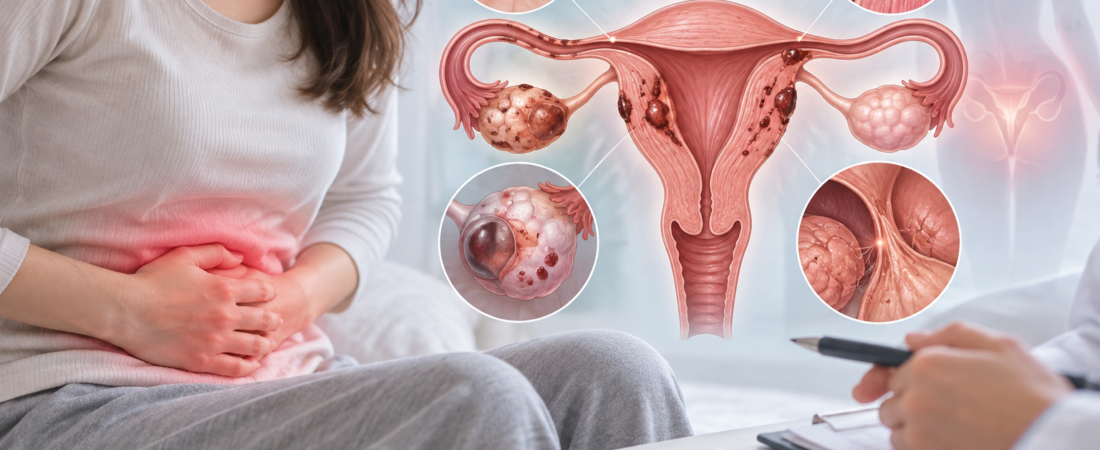
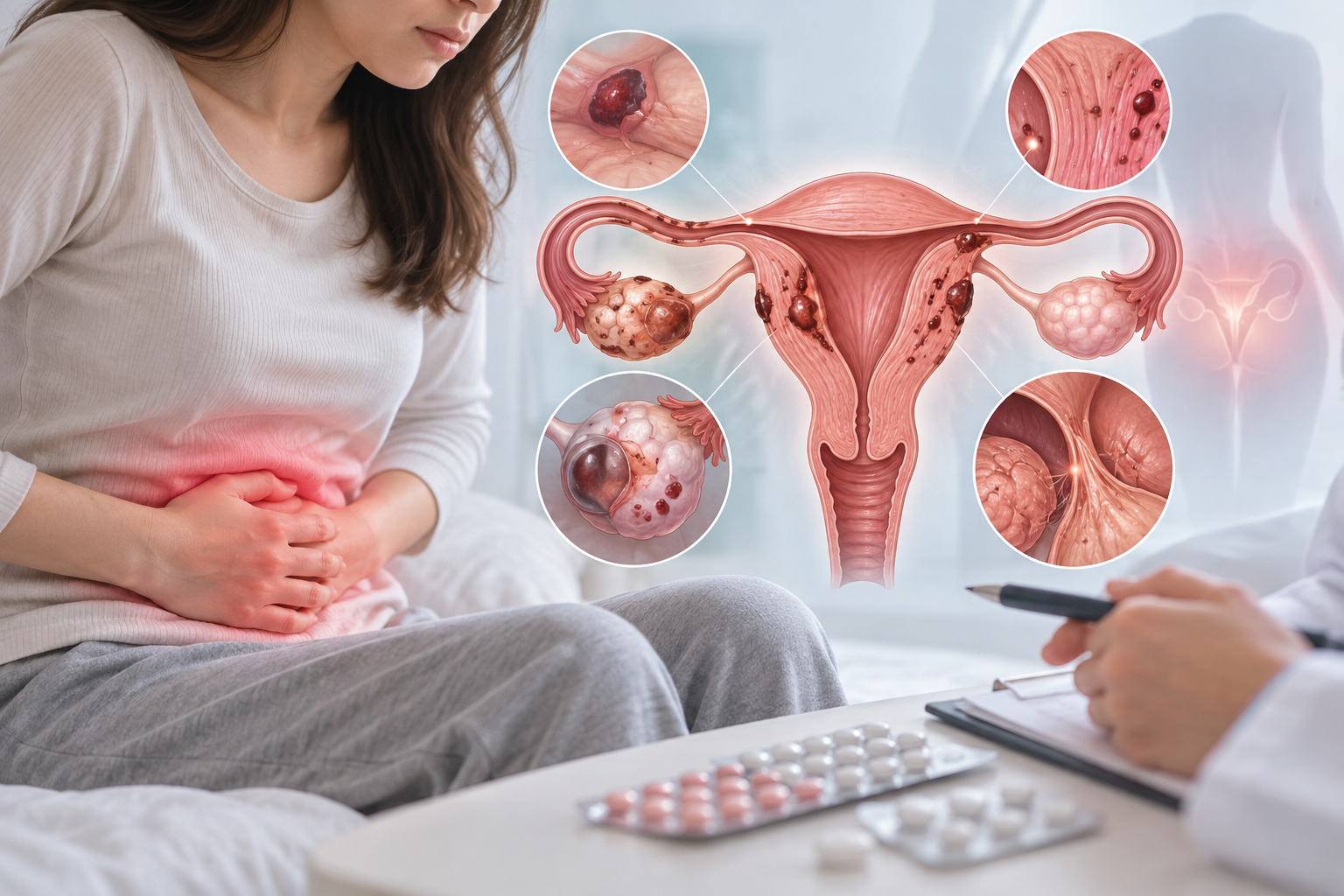
The illustration was generated using ChatGPT (OpenAI). Any people depicted are fictional.
Related reading
Endometrioma and IVF: egg retrieval and surgery decisions
Copyright © 2026 THE FERTILITY NOTES. All rights reserved. Unauthorized reproduction, copying, redistribution, scraping, AI training, or data use of any content, including articles, photographs, and images, is strictly prohibited. Violations may result in legal liability.