
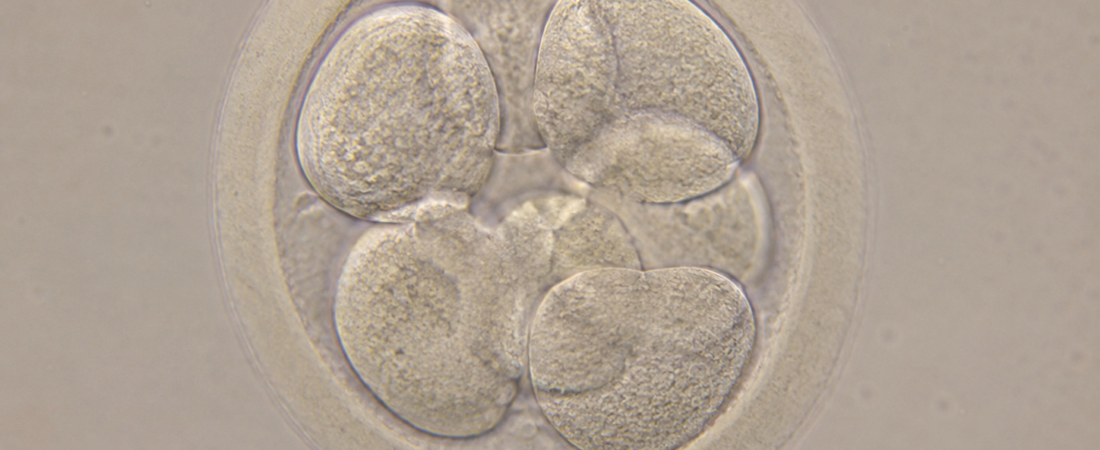
Can Day 7 blastocysts lead to live birth? A review of retrospective IVF studies found lower average success than with Day 5 or Day 6 embryos, including in euploid comparisons. Lower odds, however, do not make the chance zero—especially when few embryos are available.
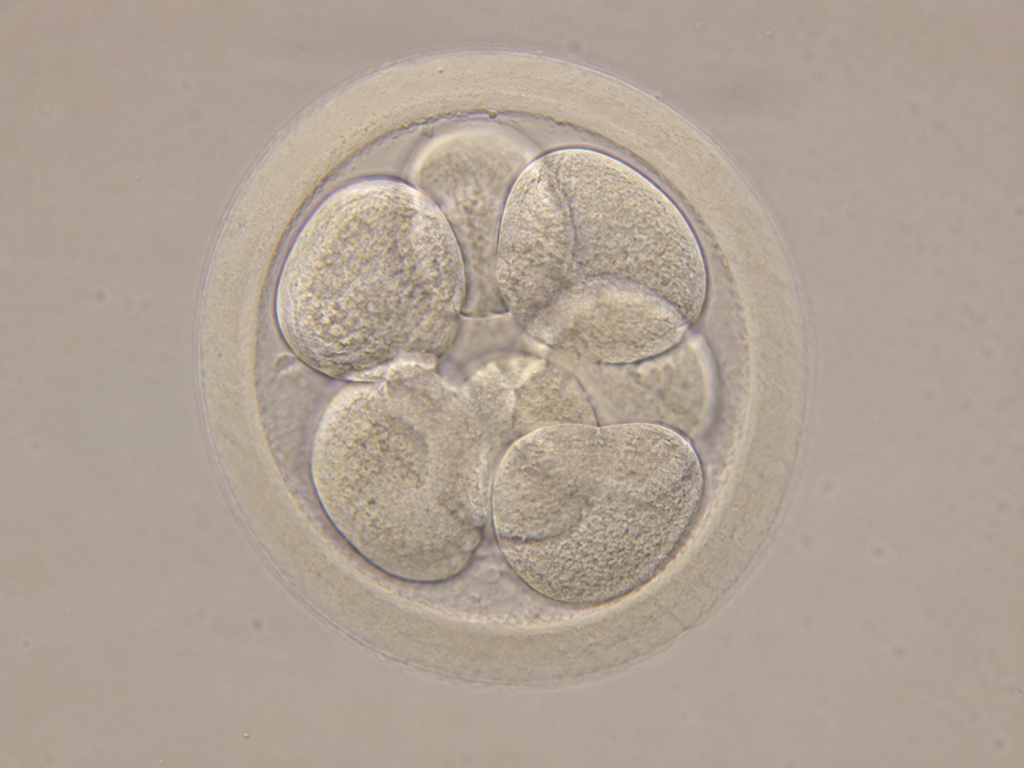
17 Studies and 2,908 Day-7 Blastocyst Transfers Analyzed: Live Birth Probability Lower Than Day-5 and Day-6 Disparity Persists Even When Comparing PGT-A Euploid (Normative Chromosome) Embryos… “Chromosomal Normality Alone Does Not Explain the Difference” Still Not ‘Embryos to Discard’: A Final Opportunity to Elevate Cumulative Childbirth Prospects for Low-Prognosis Patients
In In Vitro Fertilization (IVF), the maximum duration for extended in vitro embryo culture is generally capped at 5 to 6 days. As the late blastocyst stage approaches, intrauterine implantation must naturally proceed, which is why extracorporeal culture is typically maintained only up to the blastocyst stage.
The ideal rate of cell division is reaching the blastocyst stage by Day 5 post-fertilization. If a full 6 days are required, it is often dismissed as somewhat slow. However, recent cases of healthy live births resulting from embryos that developed into blastocysts as late as Day 7 have sparked widespread discussion.
Day-7 blastocysts can indeed lead to actual pregnancies and live births. Nevertheless, compared to Day-5 or Day-6 blastocysts, the likelihood of success is undeniably lower. What warrants even greater attention is that this disparity remained entirely intact even when researchers isolated and compared only euploid (normal chromosome) embryos that successfully passed PGT-A screening.
Published on July 22 in Human Reproduction Update, the journal of the European Society of Human Reproduction and Embryology (ESHRE), a study systematically analyzed research published up to April 1, 2026.
The research team evaluated a total of 17 retrospective studies encompassing 2,908 Day-7 blastocyst transfers, comparing pregnancy, implantation, miscarriage, and live birth outcomes against Day-5 and Day-6 blastocysts.
Statistical Findings: Success Rates Compared to Day-5 and Day-6
The results were stark. The odds ratio (OR) for live births from Day-7 blastocysts compared to Day-5 blastocysts stood at 0.23, and compared to Day-6 blastocysts, it was 0.37.
This does not mean absolute childbirth rates are 77% or 63% lower in real terms; rather, it indicates that the statistically calculated live birth odds for Day-7 embryos were roughly one-fourth of Day-5 embryos and about one-third of Day-6 embryos.
Clinical pregnancy rates were similarly lower, yielding an OR of 0.26 versus Day-5 and 0.38 versus Day-6. Implantation rates and ongoing pregnancy rates followed the same downward trajectory, while the miscarriage odds compared to Day-5 were 1.54 times higher.
The PGT-A Paradox: Why Chromosomal Normality Doesn’t Equal Equal Success
The most striking highlight of this study is the subgroup analysis focusing exclusively on embryos diagnosed as euploid (normal chromosomes) via PGT-A.
Historically, one of the primary explanations for the lower success rates of Day-7 embryos has been suspected chromosomal abnormalities.
Indeed, the analysis confirmed that the proportion of euploid embryos among Day-7 blastocysts was lower than in Day-5 and Day-6 cohorts. Consequently, one might expect that isolating euploid embryos would erase performance gaps tied to the day of blastocyst formation.
However, the findings defied that expectation.
The live birth odds for euploid Day-7 embryos compared to euploid Day-5 embryos registered an OR of 0.21, and compared to euploid Day-6 embryos, an OR of 0.36. Clinical pregnancy rates were similarly depressed at OR 0.21 and 0.36, respectively. Notably, the miscarriage odds for euploid Day-7 embryos surged to 2.78 times higher than those for euploid Day-5 embryos.
In plain terms, the simplistic formula that “since PGT-A cleared it as normal, implantation capacity must be identical whether it’s Day 5 or Day 7” did not hold true.
While PGT-A evaluates numerical chromosomal abnormalities, it does not measure every biological facet or competence an embryo possesses.
These results demonstrate that developmental speed—how rapidly an embryo reaches the blastocyst stage—carries intrinsic biological information independent of chromosomal status alone.
That said, this meta-analysis cannot definitively pin down specific underlying mechanisms, such as mitochondrial function, cellular division capacity, or metabolic profiles.
Should Day-7 Embryos Be Discarded? The Researchers’ Answer: “No”
Another vital conclusion of the study is that Day-7 embryos should never be dismissed as devoid of value.
Particularly for low-prognosis patients who yield few eggs and embryos and struggle to secure freeze-worthy blastocysts by Days 5 or 6, a Day-7 embryo is not merely a “low-grade option”—it can represent the solitary viable embryo available for transfer.
The researchers evaluated that rather than discarding Day-7 blastocysts purely due to lower success rates, clinicians should recognize that these embryos contribute meaningfully to enhancing a patient’s cumulative live birth potential.
The core message of the study is not “Day-7 embryos are useless.” Instead, while developmental milestones like Day 5, 6, and 7 remain crucial indices for prioritizing embryo selection, blastocysts that successfully survive to Day 7 still retain genuine value as embryos capable of achieving live birth.
Data concerning neonatal and perinatal outcomes remain relatively sparse.
While currently available data show no overarching alarming signals, the researchers emphasized that the limited volume of underlying data necessitates future prospective studies and long-term tracking.
Additionally, all 17 studies included in the analysis were retrospective, exhibiting considerable heterogeneity across analytical metrics, which must be factored into interpretations.
Conclusion
In IVF, a Day-7 blastocyst is an embryo that crossed the finish line late. What this study demonstrates is that while its average likelihood of success is lower due to delayed arrival, it has not forfeited its right to cross the finish line entirely.
For low-responder and low-prognosis patients for whom each individual embryo is a lifeline, the significance is profound. The perspective through which we view Day-7 embryos should not be “It became a Day-7 blastocyst, so hope is lost,” but rather “The probability has dropped, but the possibility of childbirth remains alive.” This represents the most accurate lens through which to evaluate Day-7 embryos.