
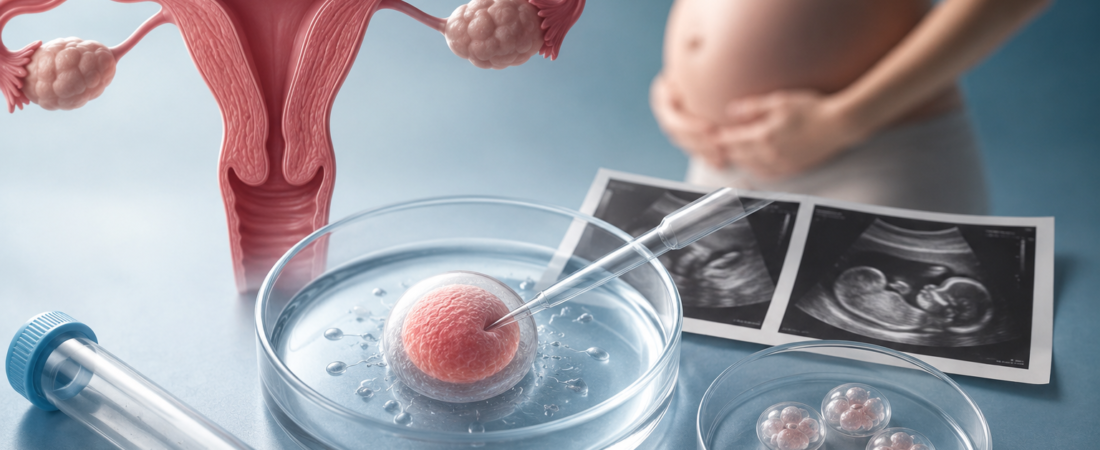
After IVF success, how do adenomyosis and endometriosis relate to pregnancy risks? A study of women who gave birth following IVF or ICSI examined preterm delivery, placental complications and hypertension. The findings shift attention from implantation to prenatal care, without predicting an individual pregnancy’s outcome.
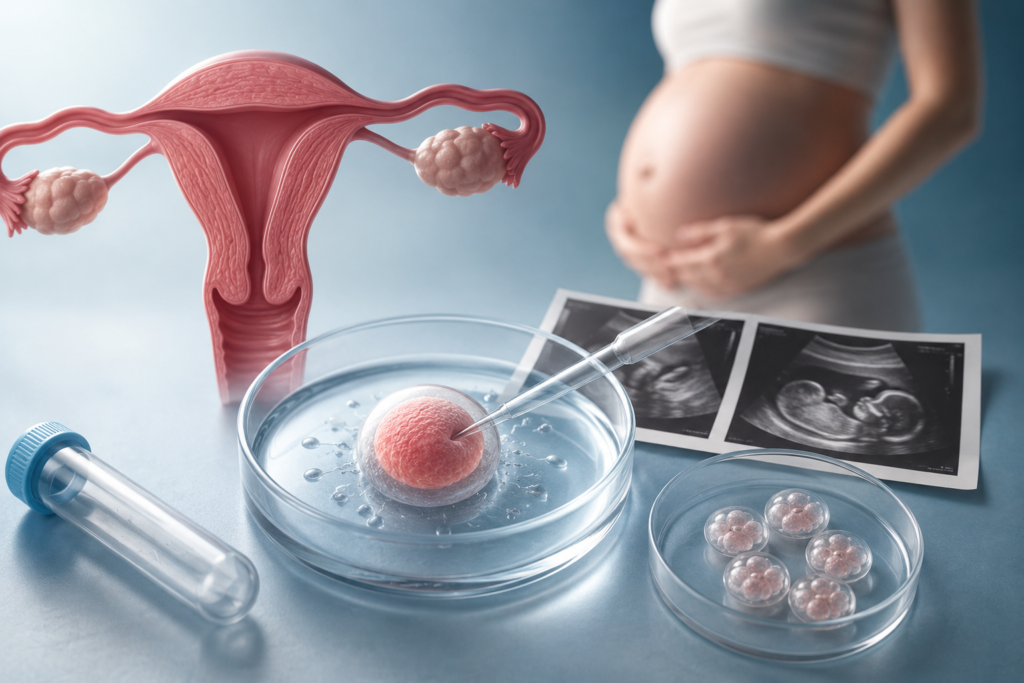
Premature Birth Rate for Women with Endometriosis or Adenomyosis at 18.9%… 1.63 Times Higher Than Women Without Conditions Placenta Previa at 9.0% · Hypertensive Disorders in Pregnancy at 13.2%… “Meticulous Prenatal Care Needed Even After Implantation”
For women who have undergone prolonged fertility treatments, seeing “two lines” on a pregnancy test feels almost like crossing a finish line. It is a pregnancy achieved only after enduring the long, grueling process of egg retrieval, fertilization, embryo cultivation, transfer, and waiting for blood test results. However, a recent study reveals that for women with endometriosis or adenomyosis, the journey does not end there.
In a study published in the August issue of the international journal Human Reproduction, researchers tracked 607 women who successfully gave birth following In Vitro Fertilization (IVF) or Intracytoplasmic Sperm Injection (ICSI). Among them, 144 had endometriosis or adenomyosis, while 463 did not have either condition.
Key Findings: Premature Birth, Placental Issues, and Hypertension
The first divergence emerged in premature births. The preterm birth rate for women with endometriosis or adenomyosis stood at 18.9%, higher than the 11.4% observed in women without these conditions—representing a gap of approximately 7.5 percentage points.
Even after adjusting for age and body mass index (BMI), the risk of preterm birth remained 1.63 times higher. The difference was particularly pronounced in “late preterm births” occurring between 34 weeks and 36 weeks and 6 days of gestation, with an adjusted relative risk of 2.56 times. Conversely, no distinct differences were identified in earlier preterm deliveries.
Placental complications drew even greater attention. Placenta previa occurred in 9.0% of women with endometriosis or adenomyosis compared to just 1.5% of those without. Adjusted risk calculations showed this to be 5.82 times higher. Antenatal bleeding was likewise more frequent in the affected group (11.8% vs. 6.5%).
Placenta previa is a condition where the placenta implants low in the uterus, partially or completely covering the cervix. Because it is associated with late-pregnancy bleeding and a higher likelihood of Cesarean delivery, continuously monitoring placental position throughout pregnancy is crucial.
Hypertensive disorders during pregnancy also showed a wide margin. They occurred in 13.2% of women with endometriosis or adenomyosis, compared to 6.7% of those without. The adjusted relative risk calculated by researchers was 2.26 times higher. Cases requiring medical consultations for pelvic pain during pregnancy similarly differed at 16.7% versus 8.6%.
Potential Underlying Mechanisms
Why do these disparities arise? Researchers suggested that chronic inflammation, abnormal uterine contractility, and alterations at the boundary zone between the myometrium and endometrium—characteristic of endometriosis and adenomyosis—may be linked to preterm birth and abnormal placentation.
The processes by which the placenta implants into the uterus and maternal blood vessels undergo remodeling may also be altered. However, this study alone cannot definitively confirm these mechanisms as direct causes.
Reassuring Context and Limitations
This does not imply that a woman with adenomyosis or endometriosis who conceives via IVF will inevitably encounter complications.
In reverse perspective, more than 8 out of 10 women with endometriosis or adenomyosis still delivered at or after 37 weeks. Furthermore, the risks of Cesarean delivery, gestational diabetes, placental abruption, and postpartum hemorrhage were not significantly elevated in this study.
The study’s limitations are also clear. It focused exclusively on non-smoking women aged 25 to 39 who underwent publicly funded IVF/ICSI cycles, and excluded women with a BMI of 30 or higher. Consequently, applying these exact figures directly to advanced maternal age pregnancies (over 40) or obese women is difficult.
Additionally, endometriosis and adenomyosis were analyzed as a single combined group, though patients with isolated endometriosis formed the larger proportion of the actual study cohort. The researchers themselves noted that women with adenomyosis alone may represent a biologically distinct population, necessitating disease-specific analyses in the future.
Conclusion: Shifting Focus from Conception to Safe Delivery
Nevertheless, the message delivered by this study is sharp. For infertile women with endometriosis or adenomyosis, achieving a successful pregnancy is not the end of treatment, but rather the beginning of a new phase of management.
The moment a fertility clinic confirms “pregnancy success” and hands care over to an obstetrician, the focus of attention needs to shift accordingly.
Beyond simply checking whether the baby is growing normally, there is a need to more meticulously monitor whether blood pressure remains stable, where the placenta has implanted, whether bleeding signs emerge, and what the risk of preterm birth looks like.
The researchers ultimately concluded that tailored prenatal care—involving early detection of hypertensive disorders and closer observation of placental complications—should be considered for pregnant women with endometriosis or adenomyosis following IVF/ICSI.
Successfully achieving implantation after a hard-fought battle does not mean all hurdles are cleared. For women with adenomyosis and endometriosis, “how to safely reach childbirth” is just as vital as “how to conceive in the first place.”