

Could hotter weather before IVF egg retrieval be linked with fewer eggs? A large observational study found small associations between apparent temperature and oocyte yield. The findings invite investigation of environmental exposures; they do not mean a heat wave destroys eggs or determines a patient’s result.

Analysis of 58,468 IVF Women: For Every 1°C Increase in Apparent Temperature, Retrieved Eggs Decrease by 0.20% Mature Eggs and Normally Fertilized Embryos Also Show Minor Declines… “Does Not Mean Heat Waves ‘Destroy’ Eggs”
For women preparing for an in vitro fertilization (IVF) cycle in the dead of summer, the weather becomes yet another factor to worry about. Large-scale research results have indicated that higher temperatures around the time of egg retrieval tend to correlate with a slight decrease in the actual number of eggs harvested.
At first glance, an IVF procedure conducted inside a temperature-controlled laboratory incubator and a heat wave outside appear entirely unrelated. However, eggs do not grow inside a lab; they mature within a woman’s body. Researchers focused precisely on this fact. They tracked the thermal environments to which women were exposed during the period when ovarian follicles grow and eggs mature, comparing those conditions with IVF outcomes.
Published on August 2, the study analyzed data from 58,468 women undergoing their first IVF or intracytoplasmic sperm injection (ICSI) cycle. The findings revealed that higher apparent temperatures prior to egg retrieval were associated with incremental decreases in the total number of retrieved eggs, mature eggs, and successfully fertilized eggs.
For every 1°C increase in apparent temperature, the total number of retrieved eggs decreased by an average of 0.20%. Mature eggs that grew to a fertilizable stage decreased by 0.17%, and so-called ‘2PN eggs’—where sperm and egg fertilized normally with two pronuclei visible—decreased by 0.19%.
Looking at the numbers alone, one might think, “A 0.2% drop for a 1-degree rise?” Indeed, the impact on any single individual is exceedingly minor. For example, for a woman projected to yield 10 eggs, a minor rise in temperature does not mean two or three eggs will suddenly vanish.
Even so, the study draws attention because it encompassed over 58,000 subjects and observed consistent directional changes across total retrievals, mature eggs, and normal fertilized embryos alike. In short, it highlights the possibility that high summer temperatures exert a subtle, minute influence on female reproductive processes.
Particularly in fertility treatments, a difference of just one or two eggs can sometimes feel monumental. While a 1% variance is practically meaningless for a woman producing abundant eggs, for someone facing low ovarian reserve who struggles to harvest a handful of eggs, even the smallest change carries significant weight.
Correlation vs. Causation: Can We Blame the 35°C Heat?
Can we conclude that “a 35°C heat wave exhausts the ovaries and reduces egg counts”? Interpreting the research findings that way would be an overstatement.
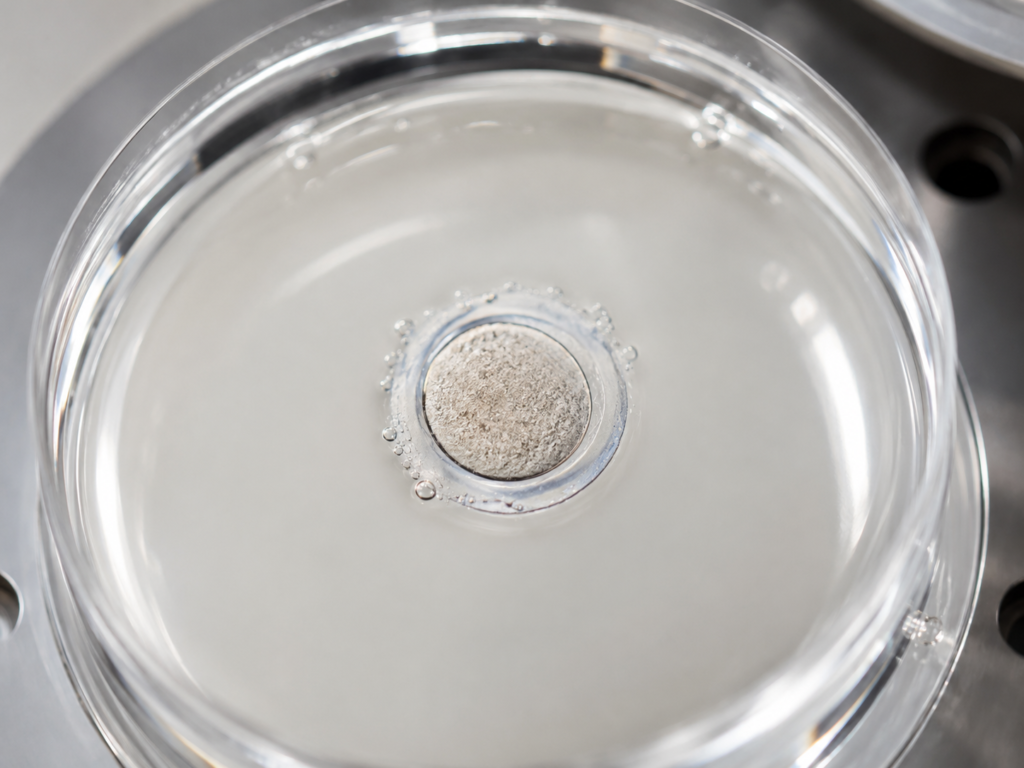
This study was an observational study analyzing existing data rather than a clinical trial deliberately assigning individuals to hot versus cool environments. Therefore, a direct causal relationship proving that high temperatures caused the reduction in egg counts cannot be confirmed. The study did not precisely measure air conditioning usage at home and work, actual time spent outdoors, or individual core body temperature changes.
For instance, even if the peak temperature reached 35°C on a given day, the actual thermal exposure of a woman working in an air-conditioned office all day differs vastly from someone working outdoors for extended hours. The ‘apparent temperature’ utilized in the study does not equate to the exact temperature experienced by a woman’s ovaries.
Consequently, these results alone provide no basis to conclude that “IVF should be avoided in the summer” or that “going outside during a heat wave damages eggs.”
Instead, the true significance of the study lies in the fact that it initiates a more detailed exploration of the relationship between climate and reproduction.
Historically, dominant factors determining IVF success rates included a woman’s age, ovarian reserve, sperm status, embryonic chromosomal health, and uterine environment. Moving forward, environmental factors such as temperature and air pollution and their impacts on germ cells and early embryonic development are poised to become critical areas of study.
This research carries even greater relevance as heat waves grow longer and more intense worldwide. It does not suggest that a hot day or two ruins eggs; rather, pooling data from tens of thousands of individuals revealed that rising temperatures and egg counts moved incrementally in tandem.
Practical Advice for Women Preparing for IVF
For women preparing for IVF, practical steps remain straightforward.
There is no need to postpone treatment schedules or feel excessive anxiety simply because it is midsummer. However, avoiding prolonged outdoor activities or dehydration during severe heat waves, maintaining adequate hydration, and managing one’s body to prevent overheating represent sensible precautions.
Ultimately, the message delivered by this study is unexpectedly simple.
Eggs may not be governed by age and hormones alone. The environment in which we breathe and live every day might leave subtle, traceable footprints.
As temperatures hover above 35°C this midsummer, researchers have begun seeking the answer to whether humans are not the only ones fatigued by the heat—and whether our ovaries are feeling the effects as well.
※ This article was synthesized based on research released in the international journal Human Reproduction on August 2, 2026. Authored by Yiyan Zeng’s research team, the paper is titled “Ambient temperature decreases the number of oocytes retrieved in assisted reproductive technology via pathways partially mediated by sex hormones.” It does not replace a specific individual’s diagnosis or treatment, and actual medical judgment must be made through consultation with a specialist.
※ Images: Created using generative AI (ChatGPT, OpenAI); depicts fictional individuals, not real people.
Related reading
Heatwaves Shake Fertility… Sperm and Eggs Also Suffer from 'Heat Stress'