
What Recent Research Shows the Real Danger Was Not ‘Menstruation’
During the summer vacation season, a familiar dilemma arises among women: whether it is safe to enter a swimming pool during their period and whether public bathhouses should truly be avoided.
While most have heard the warning that “you must never go in the water during your period,” synthesizing recent medical research reveals that the reasons behind the taboo are quite different from popular belief. The true variables determining safety are not menstruation itself, but hygiene management and facility conditions.
A recent literature review on pool-associated infections published in an international journal analyzed global infection cases reported from 2020 to 2025. The findings indicated that the primary culprits behind infections were inadequate chlorine disinfection, poor water quality management, and facility sanitation failures—not menstrual status.
While pathogens like Cryptosporidium and Legionella can cause outbreaks in poorly maintained pools, evidence showing that menstrual status alone increases infection risk has not been substantiated.
Pool vs. Public Bathhouse: What OB/GYNs Recommend
In practice, obstetrician-gynecologists do not outright ban swimming during menstruation.
Using tampons or menstrual cups correctly, changing to new products immediately after swimming, and practicing basic hygiene—such as washing thoroughly—allow most women to swim safely, according to current general recommendations. Because water pressure can temporarily make menstrual flow appear less noticeable, proper use of menstrual products remains essential since flow does not completely stop underwater.
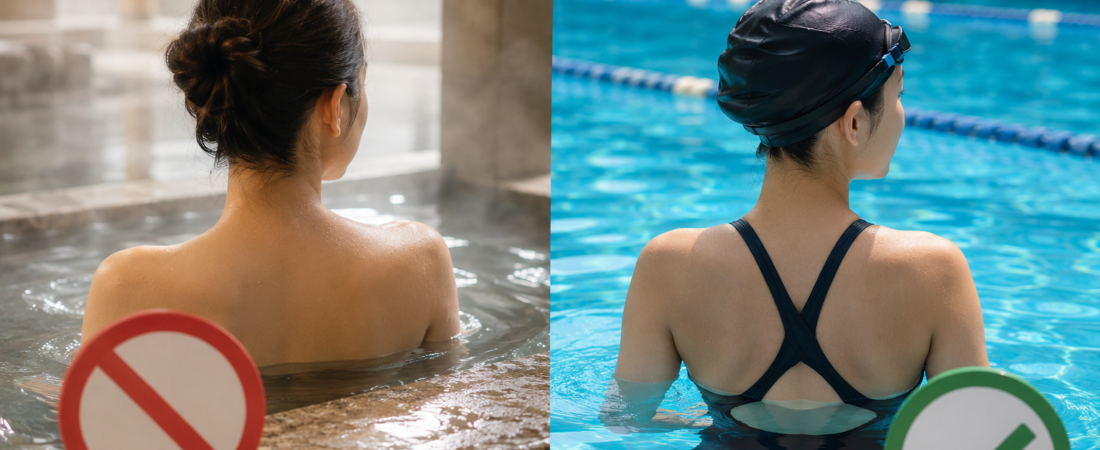
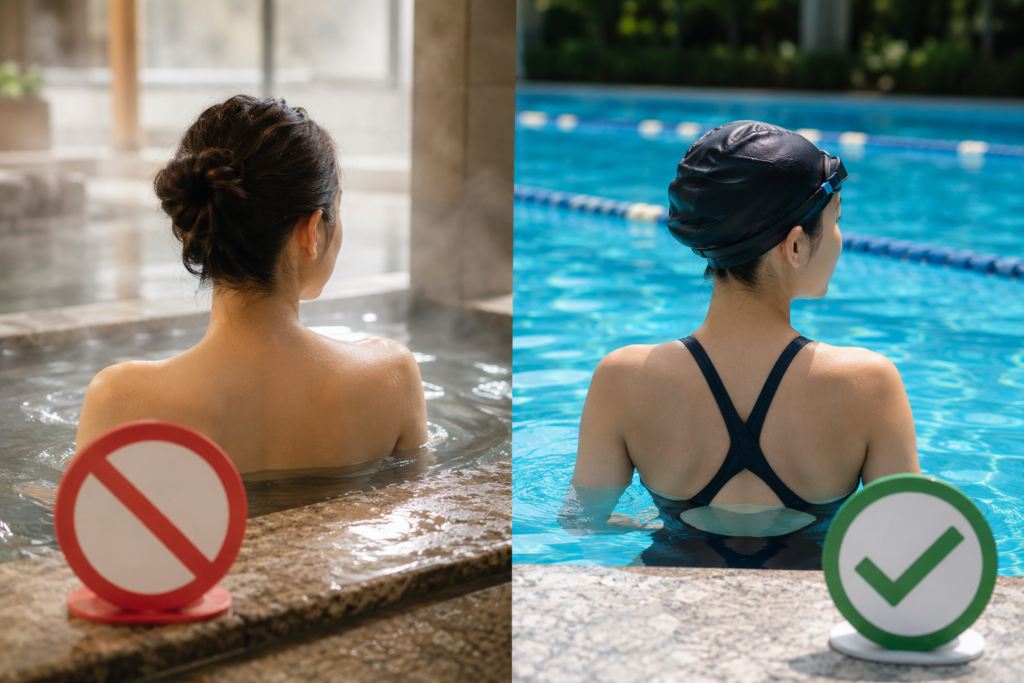
Public bathhouses, however, present a slightly different situation compared to swimming pools.
Due to the nature of communal tubs filled with hot water, menstrual flow can potentially enter the water, raising public hygiene considerations for other patrons. Furthermore, high-water temperatures can dilate blood vessels, temporarily increasing menstrual flow or causing dizziness. Consequently, experts advise postponing public bathhouse visits during menstruation.
Understanding Infection Risks and Home Baths
Exaggerated misconceptions regarding infection risks during periods also persist. While it is known that the cervix opens slightly more during menstruation, temporarily reducing natural defense mechanisms against bacteria, this does not mean swimming or bathing directly translates to infection.
Instead, prolonged exposure to contaminated water, wearing damp swimwear for extended periods, and failing to replace menstrual products on time are the factors that elevate the risk of vaginitis and skin irritation.
Bathing at home is a different matter altogether.
Experts explain that if a bathtub is kept clean, there is no reason to forbid bathing during a period. However, lukewarm water around 37°C to 39°C (98.6°F to 102.2°F) is recommended over overly hot water. On days accompanied by dizziness or heavy bleeding, taking a shower is preferable. Showers taken daily during menstruation assist with proper hygiene management.
OB/GYNs emphasize, “Rather than adhering to the outdated notion that you must strictly avoid pools and bathhouses during your period, greater focus should be placed on personal hygiene and the cleanliness of the facility. Using tampons or menstrual cups correctly, changing them immediately after use, and utilizing facilities with well-managed water quality are the most realistic preventive measures.”
The old taboo stating that “you must never enter the water during your period” is now only half-correct.
Recent research demonstrates that the true standard safeguarding health is not menstruation itself, but how clean the water is and how hygienically the facilities are utilized.
※ This article was synthesized based on literature reviews of international pool-associated infections from 2020 to 2025, recent recommendations from obstetrician-gynecologists, and infection prevention guidelines from international health organizations. It does not replace a specific individual’s diagnosis or treatment, and actual medical judgment must be made through consultation with a specialist.
※ Images: Created using generative AI (ChatGPT, OpenAI); depicts fictional individuals, not real people.