
European ART Surpasses 1.15 Million Cases… Rising Trends in Single Embryo and Frozen Embryo Transfers Fresh Embryos May Still Be More Advantageous for Women with Diminished Ovarian Reserve
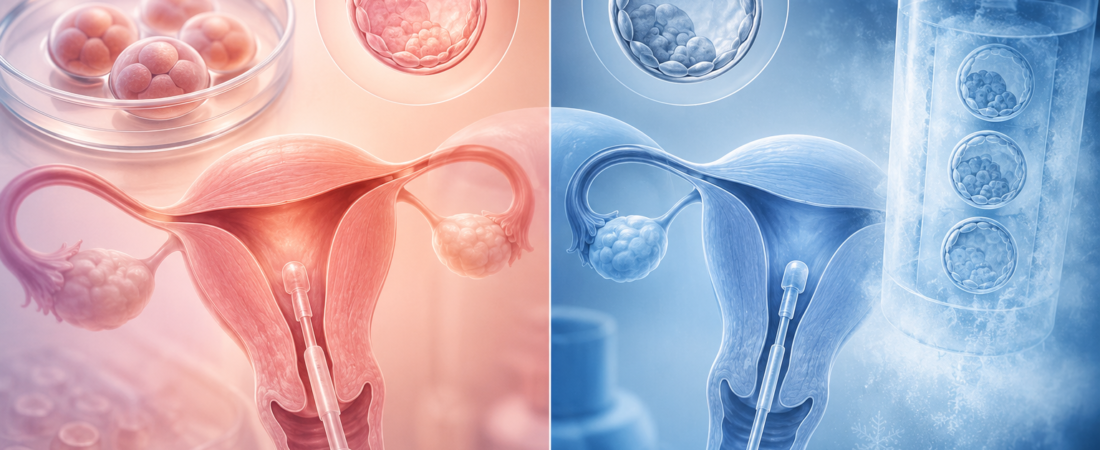
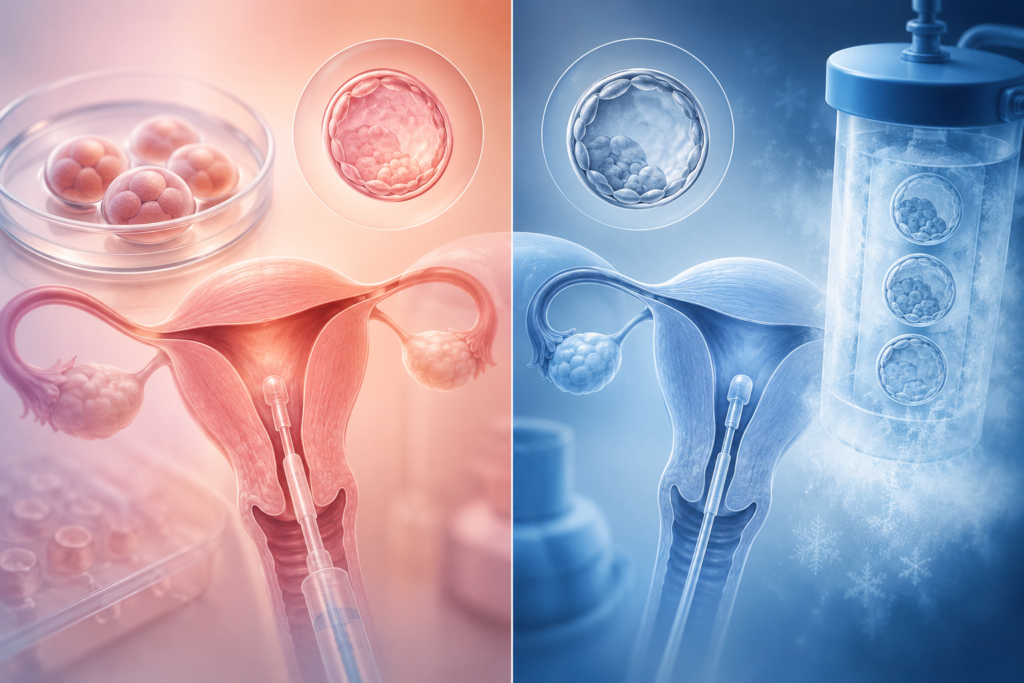
The global trend in In Vitro Fertilization (IVF) treatment is changing rapidly. In the past, ‘Fresh Embryo Transfer’—where embryos are transferred to the uterus immediately after collection—was the norm. Recently, however, ‘Frozen Embryo Transfer (FET),’ where embryos are first cryopreserved and then transferred in a subsequent cycle, has become the new standard.
According to the latest statistics released by the European Society of Human Reproduction and Embryology (ESHRE), the number of Assisted Reproductive Technology (ART) procedures across Europe has exceeded 1.15 million per year, with the proportion of frozen embryo transfers steadily increasing. Meanwhile, birth rates have remained stable or even shown improvement.
There are several reasons for the expansion of frozen embryo transfer. By freezing embryos first, the transfer can be performed in a more natural uterine environment after the impact of hormones elevated during ovarian stimulation has faded. It is easier to synchronize the developmental timing of the endometrium and the embryo, and it offers significant safety advantages by reducing the risk of Ovarian Hyperstimulation Syndrome (OHSS). Additionally, the significant advancement in vitrification (an ultra-rapid freezing technique) has increased post-thaw survival rates, which has also contributed to the spread of frozen embryo transfer.
However, “Frozen” Is Not Always Superior for Everyone
Experts emphasize that this shift does not apply equally to all infertile patients.
A representative example is women with Diminished Ovarian Reserve (DOR). Patients with DOR obtain fewer eggs and embryos in a single retrieval cycle. Because freezing and thawing can sometimes result in embryos that do not survive or show reduced developmental potential, many experts suggest that choosing fresh embryo transfer may be more advantageous when it is difficult to secure a sufficient number of embryos.
In particular, for women with diminished ovarian function, a strategy of considering fresh transfer at an earlier stage—with a relatively shorter culture period rather than long-term culture—is often utilized in clinical practice. This is because the longer the culture period, the more likely the number of surviving embryos will decrease.
Of course, these treatment strategies vary depending on the patient’s age, ovarian function, number of embryos, and history of recurrent implantation failure. The consensus in the field of reproductive medicine is that customized treatment for each individual is more important than applying the same method to all patients.
Experts advise, “While frozen embryo transfer is clearly becoming the central pillar of IVF globally, it does not mean that freezing is always superior to fresh transfer. In particular, for women with diminished ovarian reserve, factors such as the number and state of the embryos must be comprehensively considered to decide individually on fresh versus frozen transfer, as well as the duration of culture.”
The direction of global IVF is moving toward the ‘Frozen Era.’ However, not all roads lead to the same destination. Infertility treatment is also evolving into ‘precision medicine’—finding the most suitable strategy for each patient rather than a single ‘correct’ answer.
※ This article was written based on ART statistics released by ESHRE and recent reproductive medicine research and clinical trends. It does not replace a specific individual’s diagnosis or treatment, and actual medical judgment must be made through consultation with a specialist.
※ Images: Created using generative AI (ChatGPT, OpenAI); depicts fictional individuals, not real people.