
Trillions of Sperm and 500 Eggs: How Life Begins
People often think of sperm and eggs by the same standards when facing fertility challenges. However, a peek into the world of reproduction reveals that men and women are designed with entirely different strategies from the very beginning.
Men prepare for life through a process of constant, lifelong production, while women live by consuming a predetermined supply set at birth.
First, let’s look at men. Sperm are created continuously, much like products rolling off an assembly line in a factory. After puberty begins, the testicles produce tens to hundreds of millions of sperm every single day.
A healthy adult male can create over 100 million, sometimes as many as 200 to 300 million, sperm per day. This production does not happen only in the 20s; it continues into the 50s, 60s, and even past 70. While volume and motility may decrease with age, the factory itself never closes down.
The calculations are staggering. Assuming a daily production of 100 million sperm from age 15 to 80, the total number produced in a lifetime easily exceeds 2 trillion. Some estimates suggest the actual number could reach between 3 trillion and 10 trillion.
The concept of a “trillion” is hard to grasp. Considering the global population is about 8 billion, the number of sperm a single man produces in his lifetime is hundreds of times the current world population.
Women are the exact opposite. Instead of constant production, the female body has chosen the method of gradually using a pre-prepared asset.
Women are born with most of the eggs they will use in their lifetime already in their ovaries while still in their mother’s womb. During the fetal stage, there are about 6 to 7 million eggs, but this drops to around 1 to 2 million by birth. By the time puberty arrives, only about 300,000 to 500,000 remain.
An even more surprising fact is that not all of these hundreds of thousands of eggs are ovulated.
In reality, it is known that a woman ovulates only about 400 to 500 eggs in her lifetime. This calculation roughly aligns with the assumption of one ovulation per month over a fertile period of 35 to 40 years. The remaining hundreds of thousands of eggs vanish naturally without ever getting the chance to be ovulated.
Reproductive medicine experts, whom I have met while covering the fertility field for a long time, often use this analogy: sperm is a game of quantity, while eggs are a game of quality.
It means men have chosen a strategy of creating and competing with trillions of sperm, while women have chosen a strategy of concentrating reproductive potential into a tiny number of eggs.
This is why a woman’s age is considered a critical variable in pregnancy.
While a man’s sperm also undergoes changes in motility and DNA damage rates as he ages, a woman’s situation is different because the total number of usable eggs physically decreases as time passes. Human reproduction is a system much more sensitive to “time” than we imagine.
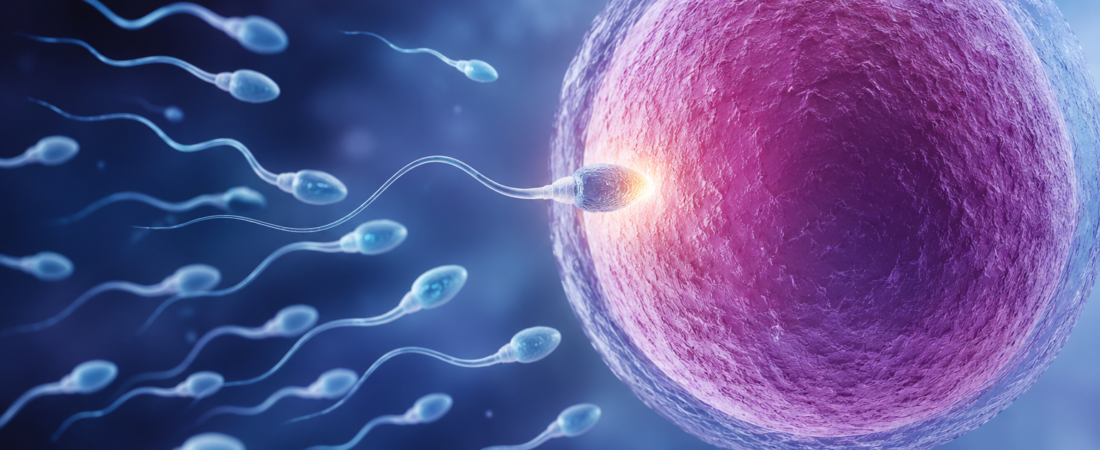
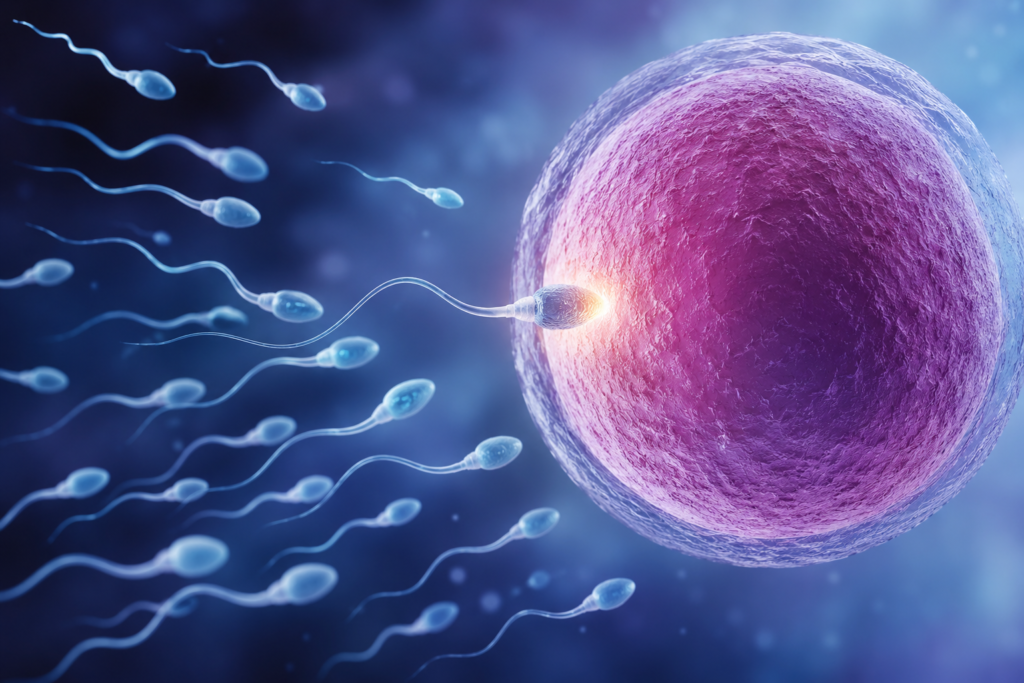
Looking back, the process of a single baby being born is by no means a given. While trillions of sperm are created and lost, and hundreds of thousands of eggs disappear, a single sperm and a single egg meet to begin a new life.
It is estimated that about 117 billion people have been born on Earth throughout human history. Every one of those countless lives was born through such a combination of probability, competition, coincidence, and miracles.
The fact that we are reading this text right now might be the result of a miraculous outcome—having passed a competition of trillions to one. Life is far rarer, and therefore far more wondrous, than we think.