
The Brain Stores First Love as an ‘Important Event’
A song from long ago drifts out of a radio by chance. In just a few seconds, memories travel back decades. The alleyways walked in school uniforms, the scenery flashing past a bus window, friends laughed with, and the face of a first love from long ago all come back vividly.
Memories are not stored in sequence like photos. The phenomenon where a single song calls back the entire past is an interesting clue into how the human brain stores memory.
Many say they cannot forget their first love. But strictly speaking, it is more likely that what they cannot forget is not the person, but the time of their own life that existed alongside that person.
The human brain attaches special meaning to the experience of ‘the first.’
For most, first love is an event where one experiences intense excitement, fear, happiness, and loss all at once. During this process, neurotransmitters like dopamine, noradrenaline, and oxytocin are released, and the hippocampus (responsible for memory) and the amygdala (which processes emotion) deeply imprint that moment. First love remains for a long time not just because the love itself was special, but because the brain recorded it as an important event in one’s life.
Interestingly, the most powerful key to waking those memories is music.
The brain does not store just people and events. It bundles the season of the time, the smell of the street, the color of the light, and even the music that was playing into a single context. Thus, an old song becomes a switch that reactivates entire forgotten memories.
While a photo shows a single scene, music makes time flow. During the few minutes the melody plays, the emotions of that time are revived as well. We are not just recollecting the past; we are briefly stepping back into that time.
There is a period when this phenomenon appears especially strongly. In neuroscience, the late teens to mid-20s are called the ‘reminiscence bump.’ This period is concentrated with life-changing events such as first love, college entrance, military service, and one’s first job. This is why it is common for people over sixty to sing along to a song they enjoyed at twenty after hearing just the first few notes, while failing to recall what they ate for lunch yesterday.
From the perspective of reproductive medicine, first love also holds special significance. Strong attachment formed for the first time during the period following puberty, when sex hormones are actively secreted, is not mere romance. As testosterone, estrogen, dopamine, and oxytocin work simultaneously, the brain records this experience as vital information for survival and reproduction. It is a memory designed not to be easily forgotten.
In fact, many dementia patients who cannot remember recent events can still sing along to songs from their youth or clearly state the name of their first love. This is because memories combined with emotion and music are stored in much deeper layers than mere facts or knowledge.
We often say, “First love remains for a lifetime.” However, a more accurate expression is this: It is not that the first love remains, but that the ‘self’ who viewed the world for the first time through that love remains.
Why a Single Song Awakens Decades-Old Memories
This is also why one feels a heavy heart upon hearing a song. Music is not an art that tells the past, but a medium that allows us to meet our past selves again. That is why when people think of their first love, they remember the melody before the face, and the air of that season before the name.
Human beings are beings living toward the future. However, our brain never lets important moments drift away. It weaves love, music, and youth all into a single memory, only to bring it out again one day along with a song that happens to drift by.
Perhaps the reason we cannot forget our first love is not because that love was eternal. It is because the time of our lives when we were most youthful, most pure, and most full of possibility is contained within that love. What we ultimately long for is not the person, but our own self from a time we can never return to.
Then, one question remains: Does thinking of first love really improve reproductive function?
The answer is, “It might to a small extent, but not in the way you expect.”
Thinking of first love does not increase sperm count or rejuvenate ovarian function. However, happy memories and excitement can stimulate the brain’s reward circuit, influencing the secretion of neurotransmitters like dopamine and oxytocin. There is a possibility that this helps relieve tension and lower cortisol, which is raised by stress. Given that chronic stress can lower reproductive hormone secretion and libido, it is fully understandable that warm memories and stable emotions send positive signals to the body.
Perhaps first love is not a cure that directly boosts reproductive function, but a ‘psychological switch’ that helps our bodies remember the days when we were healthiest and most full of vitality. The moment we smile listening to the music of that era, the brain briefly recalls “the me of that time.” Reproduction is not just a matter of hormones; it is a human instinct that moves alongside one’s desire for life, attachment, and the heart’s longing to love.
Therefore, thinking of one’s first love is not just nostalgia for the past, but can be a small trigger that awakens long-forgotten vitality. Even if we cannot turn back time, our bodies remember the traces of that excitement longer than we think.
※ This article was written based on neuroscience research regarding the impact of memory, emotion, and music on the brain, as well as reproductive medicine and evolutionary biology research regarding reproductive hormones and attachment formation. It does not replace a specific individual’s diagnosis or treatment, and actual medical judgment must be made through consultation with a specialist.
※ Image: Created using generative AI (ChatGPT, OpenAI); depicts fictional individuals, not real people.
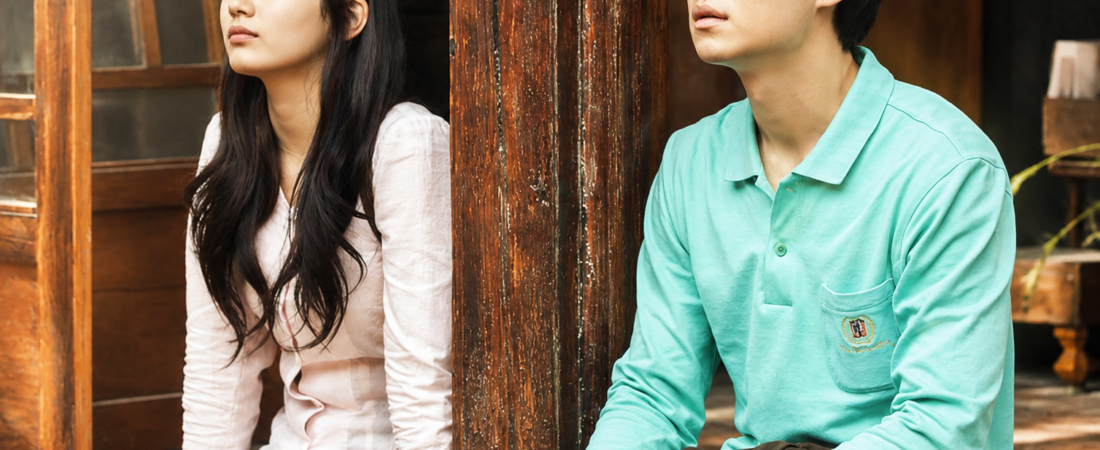
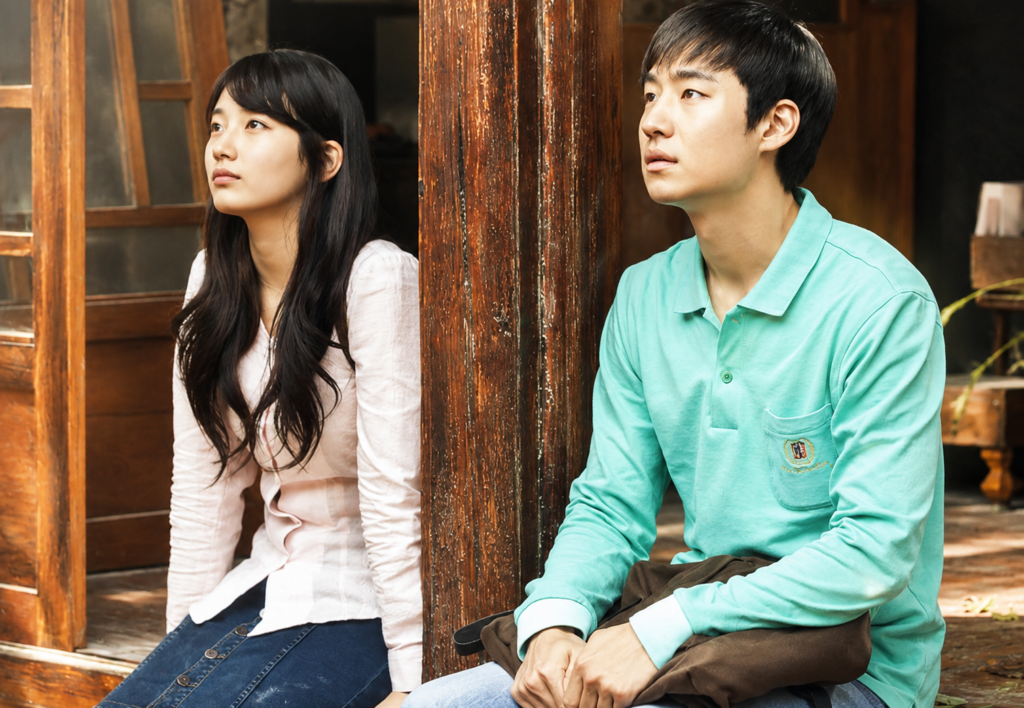
※ Photo description: A scene from the 2012 Korean movie <Architecture 101>. (Courtesy: Naver)