
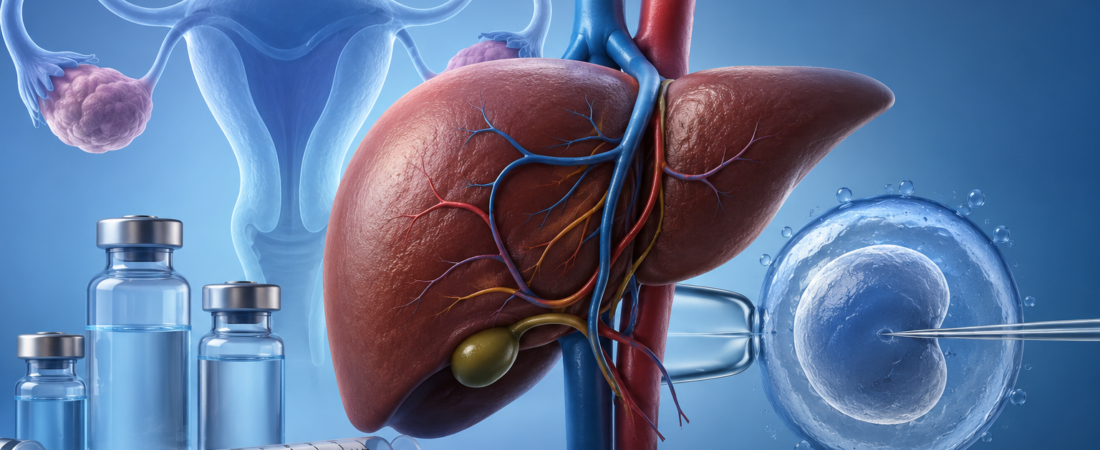
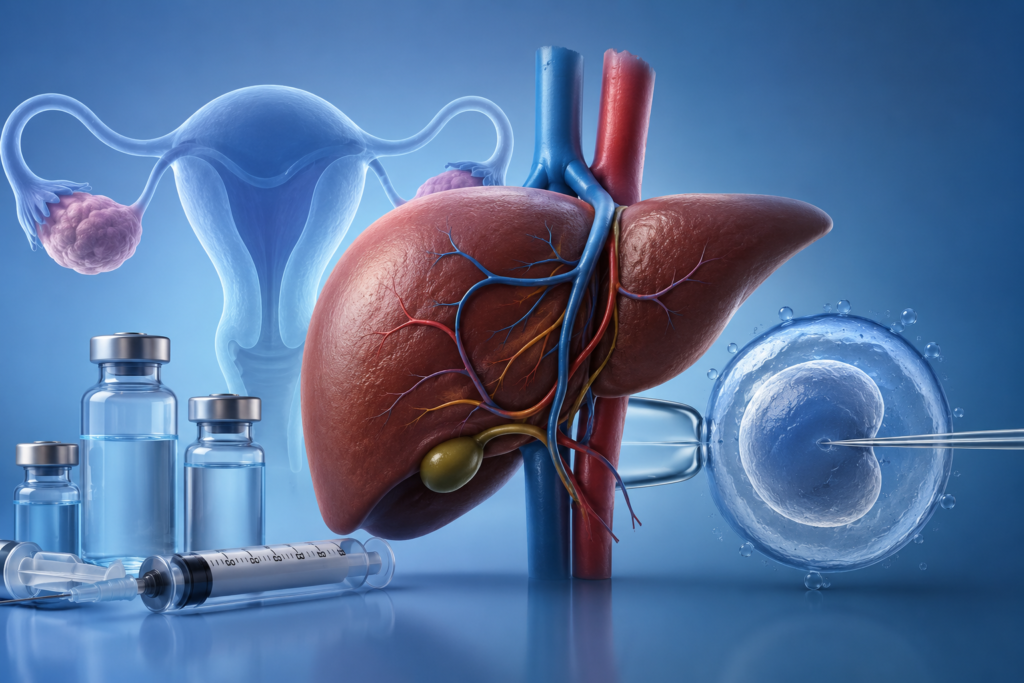
Patients preparing for In Vitro Fertilization (IVF) are often puzzled when their doctors pause the process due to elevated liver enzymes. “My liver is a bit unwell,” they wonder, “but what does that have to do with pregnancy?”
While the public focus remains on the uterus, ovaries, and sperm, fertility specialists are increasingly looking at the “metabolic state of the entire body.” At the heart of this metabolic environment lies the liver.
The Liver: More Than Just a Detoxifier The liver should not be dismissed as merely a hangover-processing organ. It is a massive chemical plant that processes the body’s hormones and medications. In IVF, the liver’s role becomes even more critical. IVF is an aggressive hormonal therapy; it creates an “artificial, high-concentration hormonal storm” inside the body. Estrogen levels rise to heights unseen in a natural cycle, and the liver is the primary organ responsible for metabolizing these hormones.
If liver function is impaired, drug metabolism is disrupted. Medications may linger in the body longer than intended, or cause reactions that deviate from medical predictions. For a physician, this is the most undesirable scenario: “We have administered the medication, but we cannot predict how the body will react.” Under these conditions, delaying the procedure is often the most medically prudent decision.
The Danger of Normalizing Elevated Liver Enzymes Many patients treat elevated AST/ALT levels lightly. They attribute it to simple fatigue, lack of sleep, or excessive intake of health supplements. However, in reality, these numbers may be signaling underlying issues such as fatty liver disease, insulin resistance, obesity, pre-diabetes, chronic inflammation, or drug-induced liver injury. An elevated liver enzyme level is not just a sign of a “tired liver”; it is a warning light indicating that the body’s entire metabolic system is faltering.
The Silent Risk: ‘Thin’ Fatty Liver Young women are increasingly susceptible to fatty liver disease. Once considered a condition of middle-aged, heavy-drinking men, it is now an epidemic driven by sedentary lifestyles, high sugar intake, extreme dieting, and the excessive consumption of health supplements. “Thin fatty liver” is common, and many patients mistakenly believe they are safe simply because they do not consume alcohol. Fatty liver is now a lifestyle-driven metabolic disease.
The Risk of OHSS Fertility specialists are particularly cautious about Ovarian Hyperstimulation Syndrome (OHSS). If the ovaries react too aggressively to stimulation, fluids can leak from blood vessels, leading to ascites and hyperviscosity of the blood. In severe cases, this affects the liver, kidneys, and lungs. If the liver is already compromised, the risks associated with OHSS escalate significantly. Thus, physicians must weigh the risks: “Is proceeding with the procedure right now truly in the patient’s best interest?”.
Liver Status and Egg Quality The state of the liver is intricately linked to egg quality through insulin resistance. Insulin resistance associated with fatty liver disease is closely tied to Polycystic Ovary Syndrome (PCOS), ovulatory dysfunction, and reduced egg quality. Elevated liver enzymes can be a signal that the entire “reproductive environment” is being compromised.
Conclusion: Prioritizing the Body Over Speed Patients often view IVF as a race. However, medical treatment should not be a gamble based on impatience. The goal of IVF is not merely to see two lines on a pregnancy test, but to prepare the body to sustain a pregnancy.
Putting a high-intensity hormonal regimen into a body where liver function is failing can be an extremely dangerous gamble. Sometimes, the decision to delay IVF is not a failure, but the most realistic and safe path to a successful outcome.
Sources: American Society for Reproductive Medicine (ASRM) guidelines; European Society of Human Reproduction and Embryology (ESHRE) resources; American Association for the Study of Liver Diseases (AASLD) recommendations; studies on NAFLD and insulin resistance in reproductive medicine; clinical reports on OHSS and IVF medication safety.
Disclaimer: This report is based on international liver disease and reproductive medicine research. It does not replace individual medical advice. Please consult your specialist for decisions regarding your specific clinical condition.