
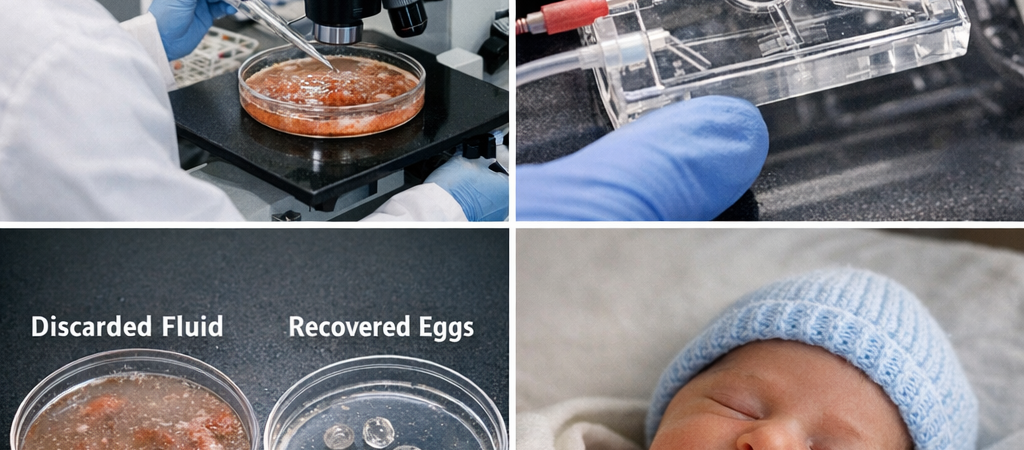
When embarking on an In Vitro Fertilization (IVF) cycle, most women wait for one critical piece of information: “How many eggs were retrieved today?” That number is widely considered the starting point of the entire process, leading many to believe, “What we retrieved today is everything.”
But what if this fundamental assumption were challenged?
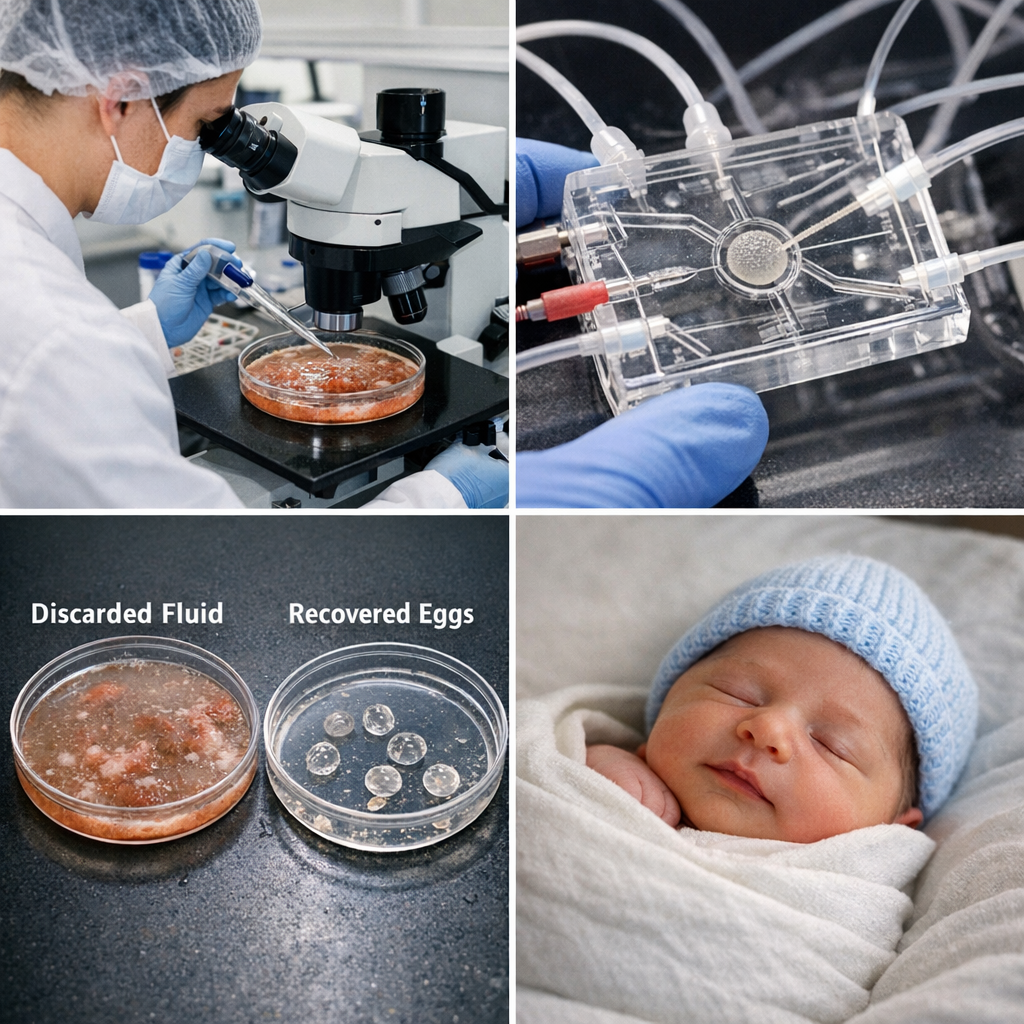
A 2026 study published in Nature Medicine directly confronts this belief. Until now, the process of egg retrieval in IVF labs has remained surprisingly simple: aspirating follicular fluid and manually searching for eggs within it. The challenge is that this fluid is far from clear. It is a murky mixture of blood, tissue, and cellular debris. The embryologist must manually scan this mixture under a microscope to locate each egg. While this process relies heavily on the expert’s skill, it faces an inherent limitation: you can only retrieve what is visible to the human eye.
However, a recently developed technology promises to transcend this limitation. By utilizing a microfluidic device, the follicular fluid can now be processed to automatically filter out and isolate structures containing eggs. In essence, it serves as a precision filter that detects what was previously missed.
The results were astonishing. Eggs were discovered in follicular fluid that had already been labeled as “processed” and discarded by the lab. More importantly, these newly salvaged eggs were successfully fertilized, developing into embryos that led to viable pregnancies and births.
This suggests that our current IVF process may suffer from “invisible losses.” For patients with a low egg count, this difference is not just about a single digit—it is a variable that can fundamentally change the outcome of their treatment.
The message of this research is clear: We have long believed we were retrieving every available egg, but in reality, we may have been missing a portion of them all along.
Of course, this technology is not yet the standard in every fertility clinic. It requires the adoption of new equipment, additional costs, and further clinical validation. For now, it serves as a signpost for the future rather than the current standard of care. IVF is shifting away from being dependent solely on human experience and sensory perception, moving toward a more systematic, “fail-safe” process.
We have often said that fertility treatment is a game of probability. However, we are now forced to re-examine how those probabilities are calculated. Are we truly exhausting every possible opportunity?
Ultimately, the question comes back to one sentence: “Was the number of eggs retrieved truly the maximum that could have been achieved?”
Disclaimer: This content is provided for informational purposes, based on reporting on infertility and various public data. Medical judgments and treatment decisions must always be made in consultation with professional medical personnel. Image: AI-generated (ChatGPT, OpenAI) / Visual reference for illustrative purposes only.