
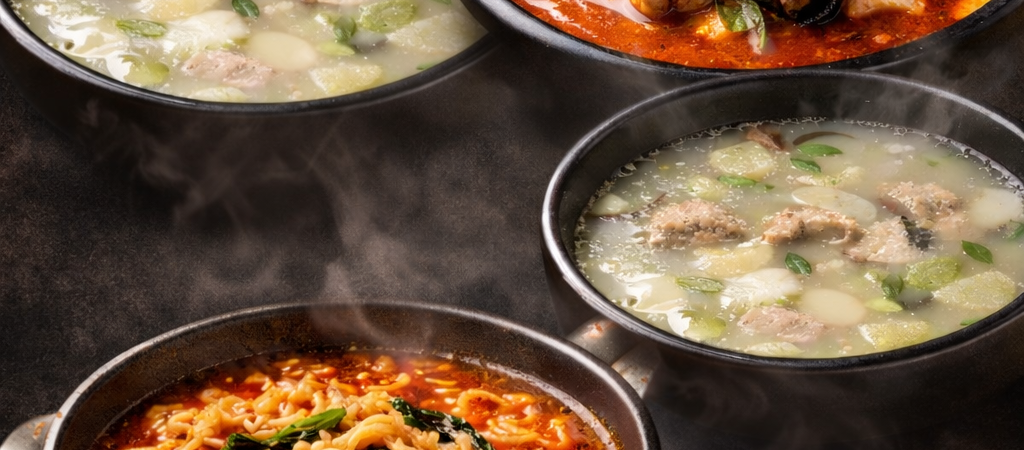
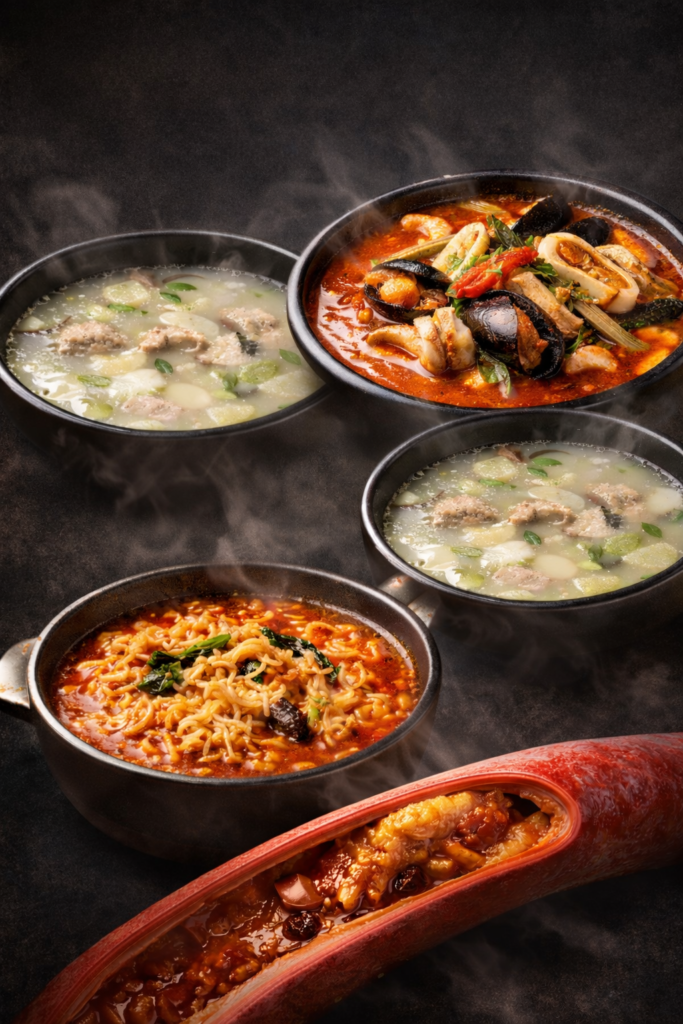
Blood vessels age. The problem is not that they age, but the alarming speed at which they do—and the most common accelerator is not a disease, but the dining table. It is not an exotic illness, but the everyday meal that resets our “vascular age.” Common staples in the Korean diet, such as Jjamppong (spicy seafood noodle soup), Seolleongtang/Gomtang (beef bone soups), and Ramyeon (instant noodles), are deeply embedded in our culture, yet they represent a trio of threats to vascular health.
The Triple Threat to Vascular Integrity
- Jjamppong: An assault of grease and sodium. The dish relies on a combination of lard, pork fat, and high sodium content to deliver its signature “fire flavor.” This combination directly irritates vascular endothelial cells; salt triggers blood pressure spikes, while lipids induce oxidative stress. The vessel wall, subject to chronic inflammation, loses its elasticity, effectively being “scoured” with every bowl.
- Seolleongtang & Gomtang: The myth of the “healthy, clear broth.” These soups are deceptive. Long-simmered beef bones release high levels of saturated fat into the broth, which is then typically paired with excessive added salt. This dual burden—fat accumulation on vessel walls and salt-induced hypertension—subjects the vascular system to chronic strain.
- Ramyeon: A structurally engineered risk. With its high glycemic load from refined carbohydrates, massive sodium concentration, and saturated fats, a single bowl can acutely disrupt blood pressure, glucose metabolism, and inflammatory pathways simultaneously. It is not merely “unhealthy”; it is a catalyst for rapid vascular aging.
Vascular Aging: The Silent Crisis Vascular aging is painless. That is what makes it so treacherous. A single bowl of Jjamppong or Ramyeon does not result in a collapse, but the cumulative effect of these repeated insults hardens and narrows the vessels over time. Health is not a grand choice; it is the aggregate of repeated, daily habits. Your meal today is quite literally deciding the age of your vessels years from now.
When Circulation Fails, Reproduction is “Deprioritized”
When systemic circulation falters, reproduction is the first function to be abandoned. The body is a master of priority: in times of oxygen or nutrient scarcity, blood flow is diverted to the brain and heart, while the ovaries and testes are deprioritized. Biology has deemed reproduction less urgent than immediate survival.
The downstream consequences are severe. With compromised blood flow, oocytes fail to mature, and sperm lose their viability. It is not just about the numbers; it is about the “quality.” Hormone signaling becomes muffled; the brain’s commands weaken, ovulation wavers, and testosterone levels plummet.
Furthermore, the lack of oxygen leads to a state of oxidative stress. Sperm DNA becomes fragmented, and oocytes suffer from increased chromosomal errors. Even if fertilization occurs, the environment is fundamentally ill-equipped to support a healthy embryo.
In the end, poor circulation is not just a marker of fatigue—it is a physiological verdict. It is the body’s way of saying: “The conditions for creating life are not currently met.”
Sources: World Health Organization (WHO); American Heart Association (AHA); NEJM (Sodium & Cardiovascular disease); The Lancet (Diet & Cardiovascular risk); ESHRE (Lifestyle & Reproductive Health); Human Reproduction; Fertility and Sterility; CDC.
Disclaimer: This content is provided for informational purposes, based on reporting on infertility and various public data. Medical judgments and treatment decisions must always be made in consultation with professional medical personnel. Image: AI-generated (ChatGPT, OpenAI) / Visual reference for illustrative purposes only.