
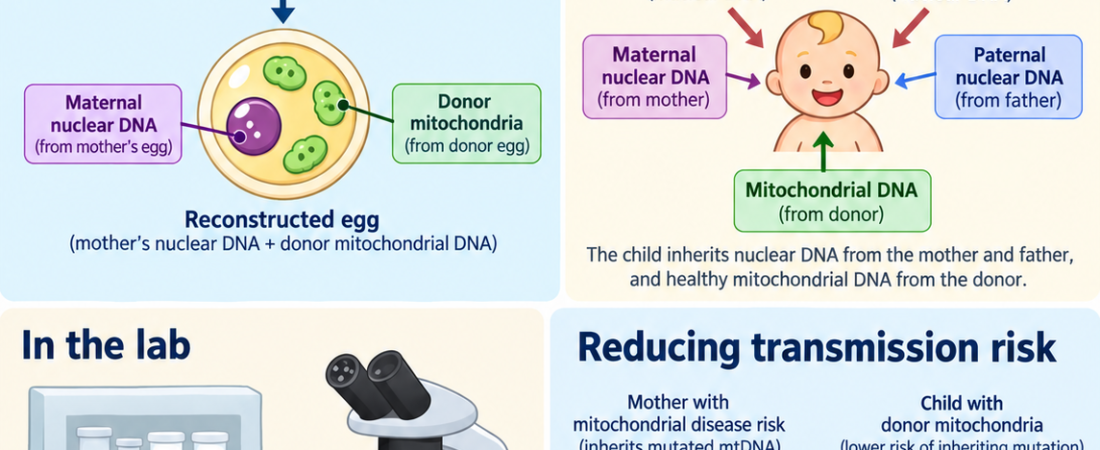
Mitochondrial donation aims to reduce transmission of serious mitochondrial disease in selected families. The phrase “three-parent baby” can obscure the distinction between nuclear DNA and mitochondrial DNA. Regulated clinical use does not remove the need for counseling and long-term follow-up.
While conceiving a child has long been viewed as the domain of nature, contemporary reproductive medicine is gradually redrawing those boundaries. A technology recently gaining international attention is “Mitochondrial Donation” (MD). A clinical pathway report published in The New England Journal of Medicine in 2025 has confirmed that this technology is moving beyond the experimental stage and entering the realm of real-world clinical application.
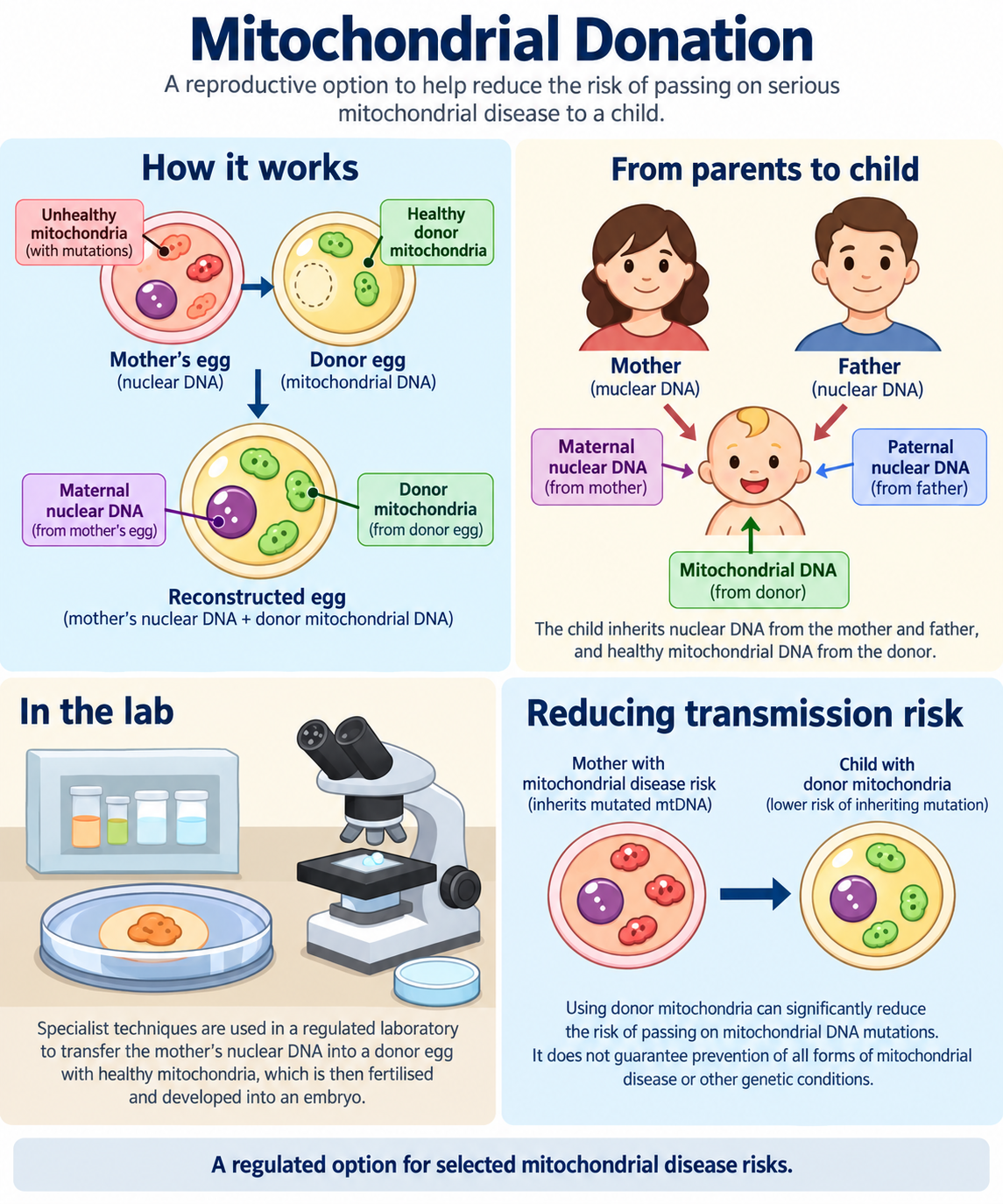
The aim is to retain intended-parent nuclear genetic material while using donor mitochondria to reduce a specific disease-transmission risk.
Mitochondria support cellular energy production and contain their own DNA. Pathogenic variants in maternally inherited mitochondrial DNA can cause serious disease.
The donor contribution is mitochondrial DNA rather than an equal third share of nuclear inheritance. “Core identity” is not a scientific category that can be assigned to one genome.
This approach can reduce transmission risk in selected circumstances. It should not be described as eliminating every mitochondrial disease risk or guaranteeing an unaffected child.
However, this is where the conversation becomes complex. Where should we draw the line? While preventing disease is a compelling goal, overstepping this boundary risks spiraling into the contentious debate over “designer babies.” Furthermore, the critical question of long-term safety remains unanswered, as sufficient long-term data has yet to be accumulated.
Through the lens of a fertility specialist journalist, this technology clearly signals the future direction of the field. Reproductive medicine is moving beyond the technology of “achieving pregnancy” and toward the question of “what kind of pregnancy are we creating?”
Mitochondrial donation is a specialized disease-risk-reduction pathway, not a general method for improving egg quality or treating all infertility.
Ultimately, the question converges on a single point: How much are we willing to intervene? The technology is already within our reach; what remains is the weight of human choice.
Disclaimer: This content is provided for informational purposes, based on reporting on infertility and various public data. Medical judgments and treatment decisions must always be made in consultation with professional medical personnel. Image: AI-generated (ChatGPT, OpenAI) / Visual reference for illustrative purposes only.
Disease-risk reduction in a regulated setting
Mitochondrial donation is intended for selected families at risk of serious mitochondrial disease. It is not a general treatment for age-related infertility. HFEA: mitochondrial donation treatment.
English visual adaptation: AI-generated conceptual illustration. It is not a clinical image, product endorsement or photograph documenting the cited study.