
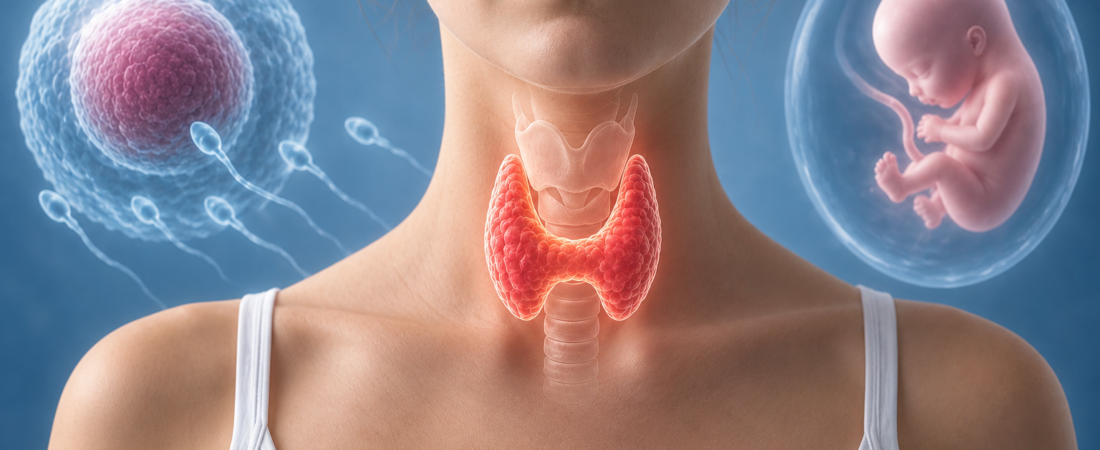
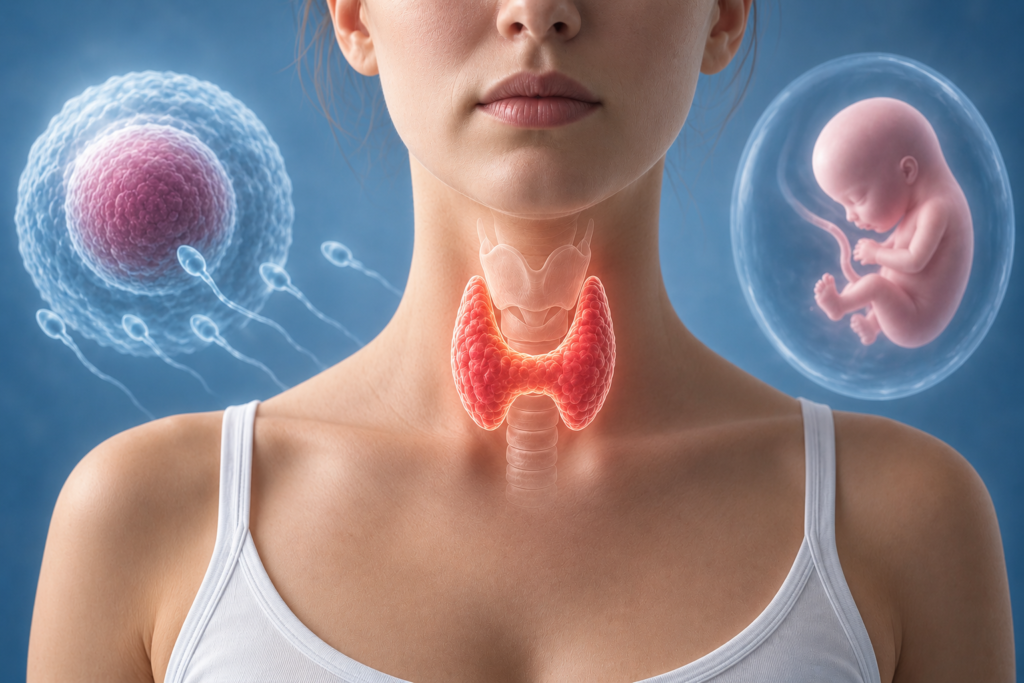
Many perceive the thyroid as a localized organ, primarily relevant when managing weight or fatigue. However, in the realm of reproductive endocrinology, the thyroid is viewed as the “silent conductor” of the body’s metabolic and reproductive orchestra. When this conductor falters, the entire symphony of conception, implantation, and early fetal development can fall out of rhythm.
The Metabolic Engine of Reproduction Thyroid hormones dictate the body’s metabolic rate. Yet, their influence extends far beyond energy levels. They are deeply embedded in the complex cycle of ovulation, the preparation of the uterine lining (endometrium), and the critical early stages of embryonic development. If the “engine speed” of the body is off, even by a small margin, the reproductive system often shifts into a state of suboptimal functioning.
The ‘Normal’ Trap: Internal Medicine vs. Fertility Care A point of frequent confusion for patients is the discrepancy between “normal” results in a general check-up and the “optimal” range required for fertility.
- General Medicine: Focuses on the presence or absence of a clinical disease.
- Fertility Care: Focuses on creating an environment tailored for pregnancy. In IVF, we look for extreme precision. Even if a TSH (Thyroid Stimulating Hormone) level is within a standard “normal” range, a slight elevation may be suboptimal for implantation. Clinicians target these fine-tuned ranges because, in the high-stakes environment of fertility treatment, we cannot afford to leave any metabolic variable to chance.
The Complexity of Thyroid Autoimmunity Beyond hormone levels, we increasingly focus on thyroid autoantibodies (such as anti-TPO). Even when thyroid function is normal, the presence of these antibodies can signal a systemic immune imbalance. Recent research suggests that such autoimmune markers may be linked to recurrent implantation failure or early pregnancy loss, serving as a sign that the body’s immune system is perhaps too “vigilant” and needs careful modulation.
The Shift Toward Integrated Management Reproductive medicine has evolved from an embryo-centric approach to a systemic approach. We no longer ask, “Is the embryo healthy?” but rather, “Is the host environment ready to receive it?”
- Metabolic Synchronization: Balancing the thyroid ensures that the uterus is metabolically “primed” for implantation.
- Immune Regulation: Monitoring thyroid health helps us understand the broader immune landscape of the body.
- Preventing Complications: Proper thyroid management is crucial not just for conception, but for the safety of the pregnancy itself, particularly in the first trimester when the fetus relies on maternal thyroid hormones.
Conclusion: Pregnancy as a Systemic Symphony Pregnancy is not a localized event occurring solely in the uterus; it is a manifestation of your entire body’s systemic health. The thyroid acts as a master regulator, ensuring that every organ is synchronized for the monumental task of creating life.
If your fertility specialist is focusing on your thyroid, do not feel discouraged—you are being cared for with the precision that reproductive success demands. By stabilizing this subtle, quiet regulator, you are clearing the path for a healthier implantation and a safer, more sustainable pregnancy. Your reproductive journey is a symphony; let the conductor be at its best.
Sources: Guidelines from the American Thyroid Association (ATA) regarding thyroid disease during pregnancy; American Thyroid Association and Korean Thyroid Association clinical recommendations; clinical consensus on thyroid management in IVF.
Disclaimer: This report is for informational purposes. Thyroid management in the context of fertility is highly specialized. Always discuss your laboratory results and treatment plan with your reproductive endocrinologist, as standard ranges vary significantly.