
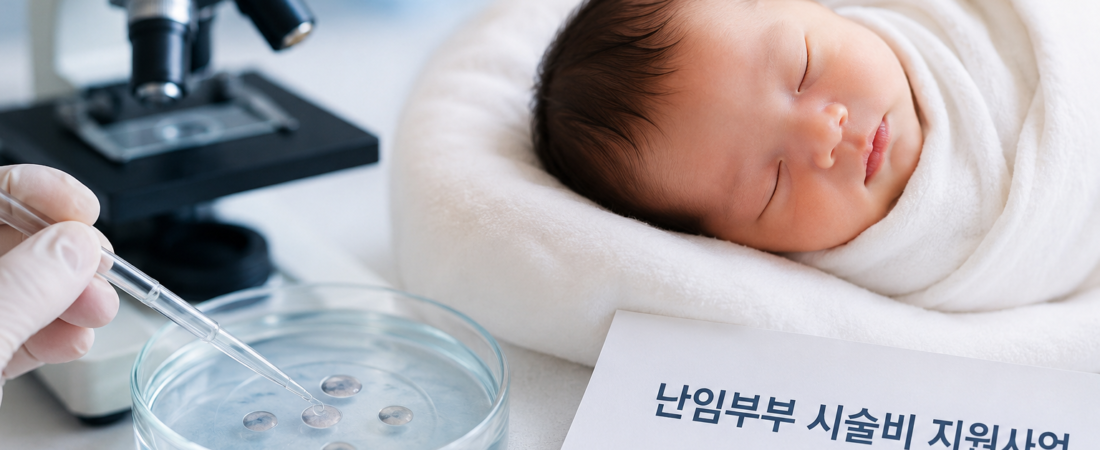
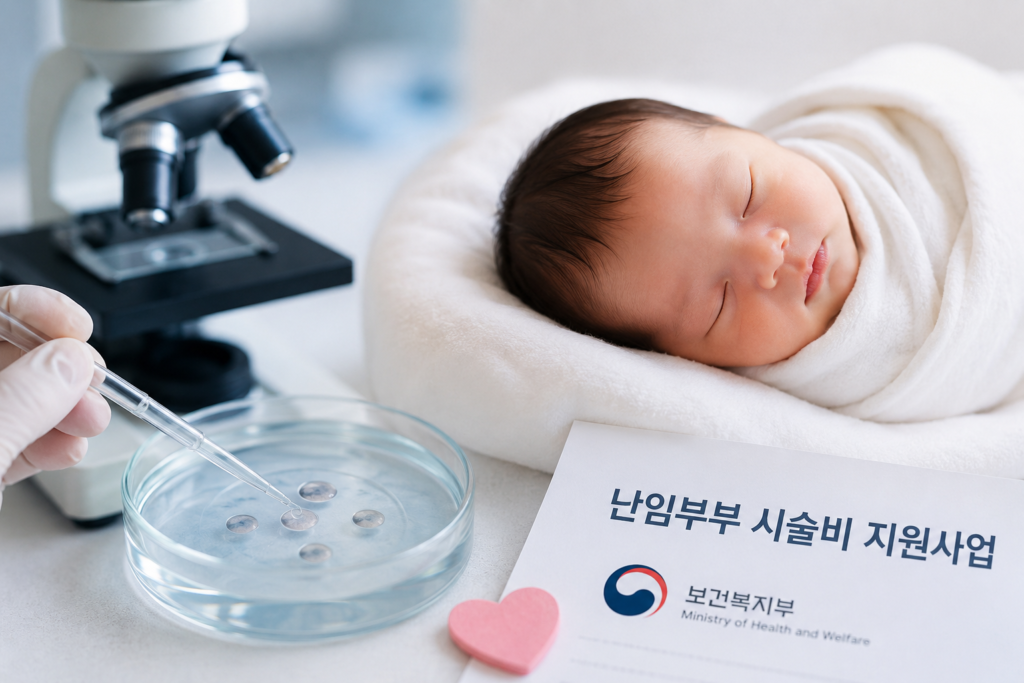
In South Korea, In Vitro Fertilization (IVF) is no longer a niche medical choice reserved for a small subset of the population. It has evolved into a vital pillar of the nation’s demographic structure. Recent data from the Ministry of Health and Welfare reveals a startling reality: in 2025, nearly 19.2% of all newborns in Korea—approximately 49,000 babies—were born through government-supported fertility treatments. One in every five newborns now enters the world via IVF or other assisted reproductive technologies (ART).
The Accelerated Shift The growth trajectory is steep. The number of births through fertility support programs has surged by roughly 31% in a single year, and nearly threefold since 2020. What was once perceived as a “specialized medical intervention” is now the core medical framework sustaining Korea’s birth rate in an era defined by delayed parenthood.
The Driver: The Reality of Delayed Childbearing The primary catalyst for this shift is the rising average maternal age. As the societal window for childbearing moves into the mid-to-late 30s, the biological constraints of reproductive health—specifically the decline in ovarian reserve and chromosomal stability—become the standard medical challenge. For couples whose natural conception window has narrowed, IVF has become the “standard medical protocol” for navigating delayed childbirth.
The Critical Challenge: Balancing Success and Safety With the normalization of IVF comes a new clinical imperative: safety. Roughly 26% of births via fertility treatments involve multiple gestations (twins or higher-order births). While multiple births were once viewed as a “shortcut to success,” the medical community now identifies them as a high-risk factor for preterm delivery and neonatal complications.
Following a global trend established over the last decade, reproductive experts are now aggressively advocating for Single Embryo Transfer (SET). With the maturation of embryo culture and cryopreservation technologies, clinicians can now achieve high pregnancy rates with a single, healthy embryo, eliminating the risks associated with multiple pregnancies.
The Evolution of IVF: From “Success Rates” to “Systemic Health” The future of IVF is moving beyond the simple goal of “conception.” It is expanding to encompass:
- Embryonic Integrity: Ensuring the genetic and structural health of the embryo.
- Maternal Wellness: Prioritizing the health of the mother and preventing preterm labor.
- Endometrial Optimization: Managing the environment in which the embryo develops.
A Global Phenomenon This is not a uniquely Korean phenomenon, but a global transformation. Worldwide, it is estimated that over 12 million individuals have been born via ART, with 500,000 to 700,000 new arrivals every year. IVF babies are no longer “extraordinary exceptions”; they represent a monumental, structural change in how humanity brings life into the world.
As South Korea grapples with unprecedented demographic shifts, IVF stands as an essential component of the nation’s social and medical infrastructure. The challenge for the coming years will be to ensure that this technology—which now accounts for a significant portion of the population—is managed with the highest standards of safety, ethics, and long-term health for both mother and child.
Sources: Ministry of Health and Welfare (South Korea) data; Global reproductive health statistics; assisted reproductive technology (ART) clinical trends.
Disclaimer: This content is provided for informational purposes, based on public health and reproductive statistics. Medical judgments and treatment decisions must always be made in consultation with professional medical personnel. Image: AI-generated (ChatGPT, OpenAI) / Visual reference for illustrative purposes only.