

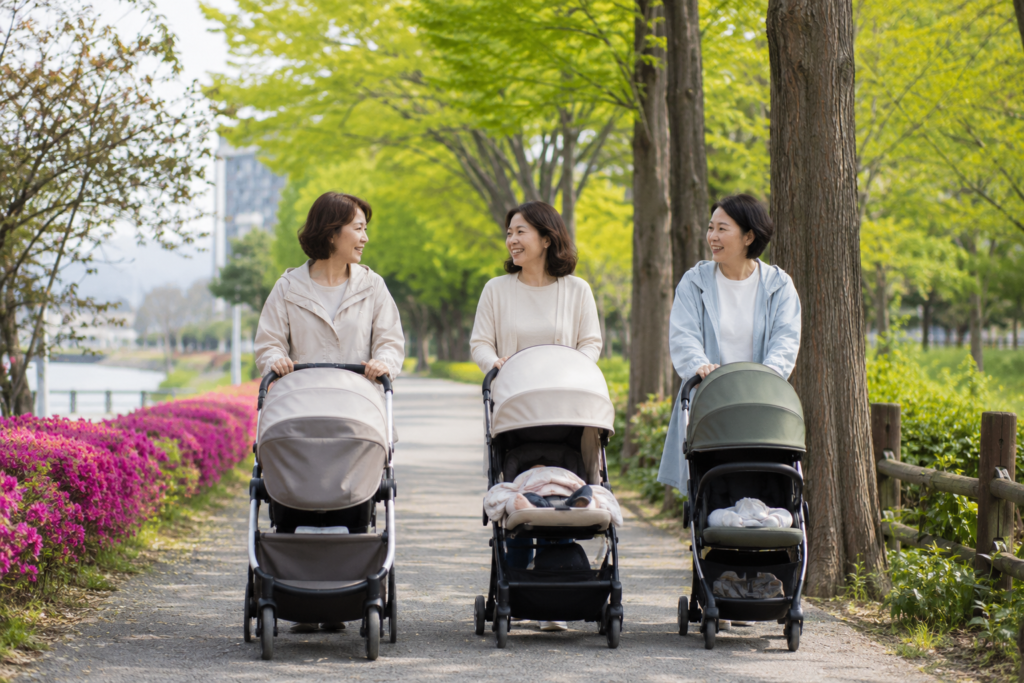
Increasing Cases of Childbirth in Your 50s? Mostly IVF with Egg Donation
Recently, news of women in their 50s getting pregnant and giving birth has appeared frequently in international media. Stories that sound like a grandmother holding her grandchild, only for it to be revealed as a new mother with her newborn, are no longer strange. With the synergy of medical advancements and rising maternal age, childbirth in one’s 50s—once considered a medical exception—is gradually becoming a reality.
In fact, U.S. vital statistics show that births to women aged 50 and over have increased several-fold compared to the late 1990s. A similar phenomenon is appearing in countries with active egg donation programs, such as Israel, Spain, and throughout Europe. Some analysts suggest we are approaching an era where advanced maternal age is no longer “news.”
However, we must address a crucial point here: an increase in childbirths among those in their 50s does not mean that natural pregnancies at that age have become common.
In actual reproductive medicine practice, a significant portion of pregnancies in women in their 50s are the result of In Vitro Fertilization (IVF) using donor eggs. A woman’s uterus can maintain a pregnancy after menopause through hormonal therapy, but the ovaries are a different story.
Women are born with a finite supply of eggs they will use throughout their lifetime; both the quantity and quality of these eggs decrease with age. In particular, the probability of obtaining a healthy egg without chromosomal abnormalities drops sharply after the mid-40s.
In other words, the core of pregnancy in one’s 50s is the egg, not the uterus. While many people only see the result—”a baby born to a 50-year-old mother”—the medical assistance of egg donation and IVF is frequently the silent partner behind the scenes.
For this reason, experts are wary of the “myth of natural pregnancy in your 50s” that is spreading like a trend. Because news of celebrity pregnancies or dramatic success stories is consumed as if they were commonplace phenomena, women may become overconfident about their own reproductive potential.
In reality, the medical community is more concerned about pregnancy complications than the mere possibility of conception. As age increases, so do the risks of gestational hypertension, preeclampsia, gestational diabetes, preterm birth, and cesarean sections. The mother’s risk of cardiovascular disease also rises. Even if the pregnancy itself is successful, ensuring a safe delivery is a separate issue.
Nonetheless, the reason for the increase in births among those in their 50s is clear: the age of marriage and childbirth is being delayed worldwide. Economic factors, the burden of career breaks, the rise in remarriages, and the emergence of diverse family structures are acting together to continuously push up maternal age. While 35 was once classified as “advanced maternal age,” we now live in an era where pregnancy in your early 40s is no longer considered extraordinary.
Advancements in reproductive medicine are also playing a significant role. With progress in embryo cultivation technology, preimplantation genetic testing (PGT), egg cryopreservation, and egg donation programs, pregnancies that were once impossible are now becoming achievable. Medicine is clearly pushing the boundaries of reproduction little by little.
However, medicine cannot turn back time. Whether it is egg freezing or egg donation, there is still no technology that completely overcomes the reality of biological aging. Therefore, experts emphasize that what is more important than success stories of late-age childbirth is an accurate understanding of one’s own fertility.
Childbirth in your 50s is no longer a miracle, but it is not something possible for everyone either. Today, medicine has made it possible for even a post-menopausal uterus to support a pregnancy, but it has not yet reached the point of stopping the clock of the ovaries. The truth hidden behind the statistics of increasing births in the 50s lies exactly at that point: medicine has widened the door to life, but it has not been able to stop the clock of biology.