
“The Uterus is Not Sterile”: A ‘Good Microbiome’ is Needed to Carry a Baby
Women preparing for In Vitro Fertilization (IVF) always ask the same question:
“Will I get pregnant if I just make a good embryo?”
For a long time, reproductive medicine answered this with a near-definitive “Yes.” Creating better eggs, selecting higher-grade embryos, and transplanting them into the uterus at the most precise moment were the cores of IVF technology.
However, the global reproductive medicine community has recently turned its gaze elsewhere. It is no longer just about the embryo; it is about the ‘uterine ecosystem’ that receives the embryo. As studies consistently show that invisible microorganisms can determine the success or failure of implantation, the endometrial microbiome has emerged as the hottest research topic in the IVF field.
Just over a decade ago, it was conventional medical wisdom that the uterus was a sterile environment. While countless bacteria exist in the vagina, the uterus was considered an isolated space where no microorganisms lived. Consequently, infertility treatments meticulously examined egg quality, embryo grades, endometrial thickness, and hormone levels, but microorganisms in the uterus were not even considered subjects of research.
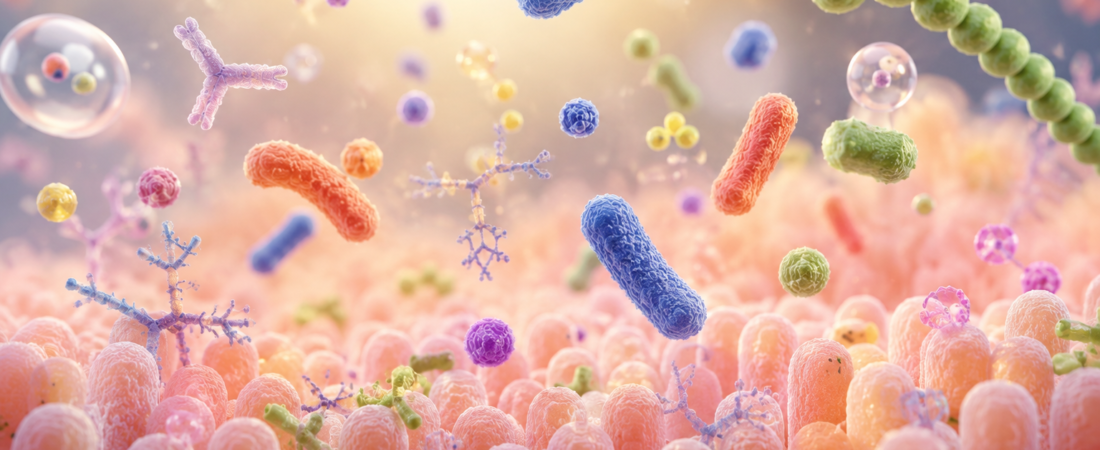
However, as next-generation genetic sequencing technology has advanced, this long-held common sense has begun to shake. It has been proposed that a unique, albeit small, microbial community exists in the endometrium and that it may influence immune responses, inflammation, and endometrial receptivity. Today, the concept that “the uterus is not sterile, but a low-biomass environment” is gaining traction.
The microorganism researchers are most interested in is Lactobacillus. Known commonly as a probiotic, this bacterium produces lactic acid to maintain an acidic environment and suppresses the proliferation of pathogenic bacteria. While long recognized as vital for vaginal health, recent studies have consistently reported that an environment dominated by Lactobacillus in the endometrium is associated with better embryo implantation, pregnancy, and birth outcomes. Conversely, research is growing to suggest that in environments where Lactobacillus is scarce and a variety of other bacteria are mixed, local inflammation and immune imbalances occur, making implantation difficult.
This is also changing how recurrent implantation failure (RIF) is viewed. Until now, if pregnancy failed after transplanting several high-grade embryos, clinicians primarily suspected chromosomal abnormalities in the embryo, uterine malformations, or blood coagulation disorders. Recently, however, studies comparing the endometrial microbial composition of RIF patients with that of women with successful pregnancies have identified ‘invisible microorganisms’ as a new candidate for the cause. Notably, some studies found that women who did not achieve pregnancy had higher microbial diversity and a lower proportion of Lactobacillus in their endometrium.
Does increasing ‘good bacteria’ improve pregnancy rates? It cannot be concluded definitively yet. Some medical institutions are performing endometrial microbial tests and attempting to improve the microbial environment using antibiotics, probiotics, and prebiotics. Meta-analyses and systematic reviews published so far have indicated that while probiotics show the potential to increase pregnancy rates, evidence is currently insufficient to draw statistically consistent conclusions. This is because test methods and treatment strategies vary from study to study, leading to mixed results.
For this reason, the global reproductive medicine community urges both expectation and caution. While the endometrial microbiome is clearly one of the most promising areas of infertility research, it is not yet a standard test or treatment that all infertility patients must undergo. Because the amount of microorganisms in the endometrium is very small, there is a possibility that vaginal bacteria may be introduced during the sampling process, and international standards for what constitutes a “normal” microbial composition have yet to be established. Recent reviews emphasized that while endometrial microbiome testing is clinically fascinating, standardization of testing methods and verification through large-scale clinical trials are still required.
Nevertheless, it is clear that the paradigm of reproductive medicine is shifting. For a long time, IVF was a “technology for creating good embryos.” Now, it is evolving into a medical discipline that also works to create a uterine environment capable of nurturing those embryos. Immune cells, blood flow, hormones, chronic inflammation, and invisible microorganisms have all appeared as protagonists in the process of implantation.
No matter how good the seed is, it is difficult for it to sprout in barren soil. What reproductive medicine is just beginning to realize is no different. The race to conception is no longer a race solely for the embryo. The invisible ecosystem within the uterus waiting for the embryo may be another key to determining the start of a new life.
※ This article was written based on the latest research published in journals including Reproductive Medicine and Biology, Human Reproduction, Reproductive Biology and Endocrinology, and Reproductive BioMedicine Online. It does not replace specific individual diagnosis or treatment, and actual medical judgment must be made through consultation with a specialist.
※ The images used in this article were created using generative AI (ChatGPT, OpenAI) and depict fictional individuals, not real people.