
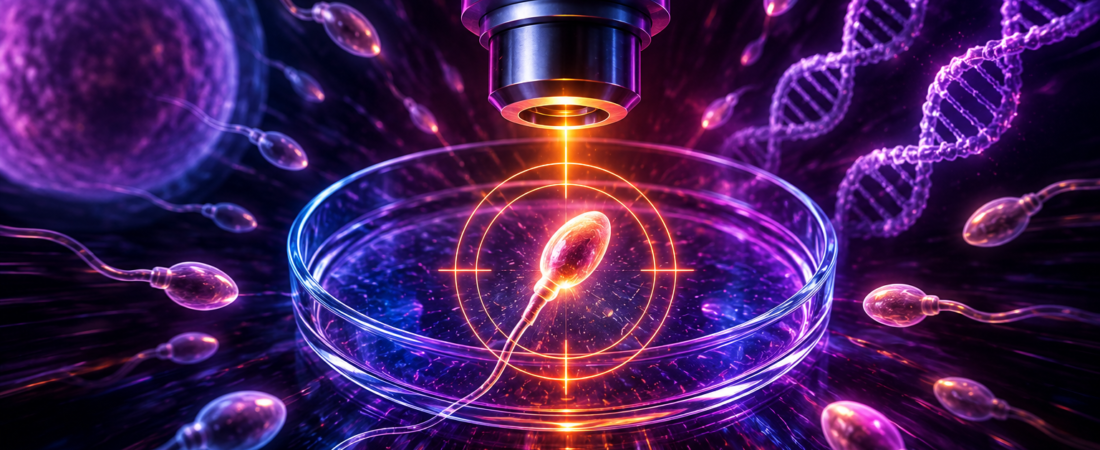
In the world of In Vitro Fertilization (IVF), it is tempting to believe that the process of selecting sperm is a straightforward matter of picking the “best-looking” cell under a microscope. However, clinical reproductive medicine is far more nuanced. While an embryologist scans thousands of moving sperm through an ICSI (Intracytoplasmic Sperm Injection) microscope, they are not merely looking for a healthy exterior—they are performing a high-stakes, real-time assessment that currently lacks a perfect diagnostic tool.
The Limitations of the Human Eye At standard ICSI magnifications (200x–400x), an embryologist can evaluate morphology and motility. Yet, this is akin to judging a vehicle by its paint job while knowing nothing about the engine. A sperm cell with a perfect shape and vigorous movement can still harbor high levels of Sperm DNA Fragmentation (SDF)—genetic damage that can lead to fertilization failure, arrested embryo development, or miscarriage.
Advanced techniques like IMSI (Intracytoplasmic Morphologically Selected Sperm Injection), which magnifies sperm up to 6,000x to inspect the nuclear vacuole, offer more detail. However, even IMSI cannot provide a definitive readout of a sperm’s chromosomal health. We have yet to invent a tool that can “see” the genetic integrity of a single sperm in real-time without damaging it.
The Role of Embryological Expertise Because technology has its limits, the final selection process remains deeply dependent on the experience and intuition of the embryologist.
- Integrated Assessment: An expert embryologist synthesizes multiple variables—subtle nuances in motility patterns, minute irregularities in head shape, and the presence of cytoplasmic droplets—that an automated system might overlook.
- The Power of Experience: Much like a seasoned athlete who makes split-second decisions based on years of practice, an experienced embryologist develops a clinical “feel” for selecting the most promising gamete. This is particularly crucial in complex male factor infertility cases, such as those involving oligozoospermia (low sperm count) or TESE (Testicular Sperm Extraction), where the pool of available sperm is exceptionally small.
The Rise of AI: A New Partner, Not a Replacement Artificial Intelligence is rapidly entering the laboratory. AI algorithms can analyze movement patterns and morphology at a scale and consistency the human eye cannot match. While AI is proving to be a superior analytical partner, it still shares the fundamental limitation of the microscope: it cannot “see” the DNA. As of now, the most successful outcomes arise from a hybrid model: AI-driven data analysis combined with the expert manual confirmation of a seasoned embryologist.
Why Personnel Matters More Than Ever In the era of high-tech fertility clinics, patients often focus on whether a clinic possesses the latest incubators or microscopes. However, the true “secret sauce” of a high-success IVF lab is the tenure and volume of its embryology team.
The ability to successfully pick one viable sperm out of thousands is a skill refined through tens of thousands of cycles. In challenging cases, the difference in clinical outcome often comes down to the individual at the microscope. Does the embryologist have the experience to spot a hidden defect? Do they have the technical finesse to handle fragile, surgically retrieved sperm?
Conclusion: Precision is a Human Endeavor IVF is a technological marvel, but its success remains profoundly human. Until we reach a day where molecular diagnostics can be performed on single sperm without loss of viability, the “art” of selection will remain a pillar of reproductive medicine. The best fertility labs are not just those with the best equipment; they are those that invest in the human expertise to wield that equipment with the precision of a master craftsman.
Sources: Recent literature on reproductive medicine, male fertility diagnostics, DNA fragmentation studies, and international IVF laboratory standards.
Disclaimer: This report is for informational purposes. Clinical procedures should always be discussed with your reproductive endocrinologist or embryology team.