
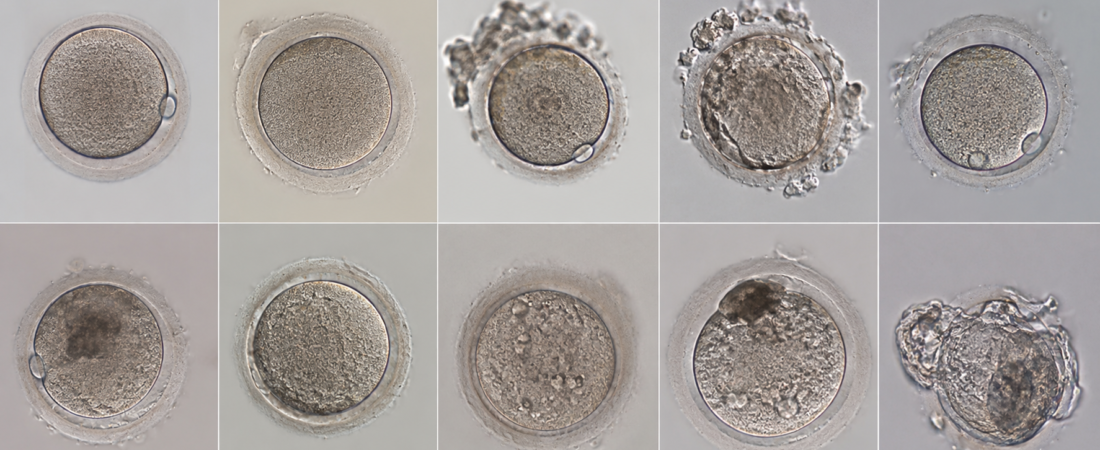
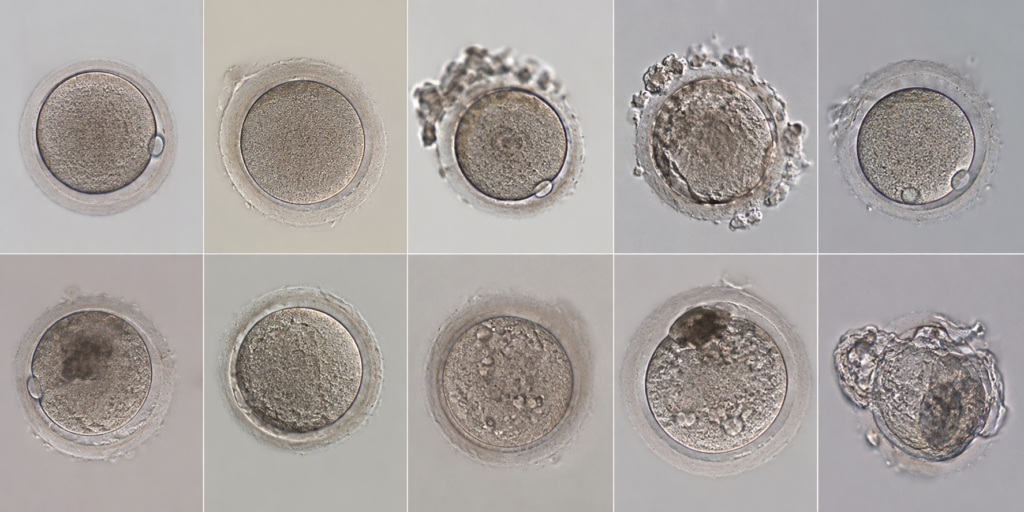
“Your egg looks beautiful.”
Just a decade ago, this was a phrase commonly heard in fertility clinics. Doctors explained that a “good egg” was one that was large, round, and had clean, transparent cytoplasm. In embryology labs, morphological evaluation was the most important standard, and patients were more likely to ask, “Did my eggs look beautiful?” rather than, “Did my eggs retrieve well?”
At the time, this was not an incorrect judgment, as the visual information visible under a microscope was almost the only standard for evaluating egg health. However, reproductive medicine has made astonishing progress over the past ten years, and with it, the definition of a “good egg” is being completely rewritten.
Today, reproductive medicine views what is happening inside the egg as more important than its outward appearance. No matter how perfect an egg looks, if there is a chromosomal abnormality, it is highly likely to fail at implantation or result in a miscarriage even if fertilization occurs. Conversely, even if an egg’s appearance is somewhat ordinary, if its chromosomes are stable and its internal functions are healthy, it can develop into a healthy embryo, leading to a successful pregnancy and birth. It has become clear that a microscope can show the “face” of an egg, but it cannot fully reveal its vitality.
Therefore, the most critical factor evaluated today is chromosomal normality.
Eggs are cells that exist in the ovaries before a woman is even born, aging as they endure time for decades. As age increases, the ability to accurately divide chromosomes decreases, which becomes a major cause of fertilization failure, recurrent miscarriage, and pregnancies with chromosomal abnormalities. Ultimately, we have entered an era where a “good egg” is evaluated not by its size, but by how accurately it can transmit genetic information.
The second focus is mitochondria.
Mitochondria are often called the powerhouses of the cell, but their significance is far greater in an egg. Immediately after fertilization, an embryo undergoes rapid cell division, and almost all the energy required for this process is supplied by the mitochondria stored in advance by the egg. If energy is lacking, the embryo’s development can stall even if fertilization occurs. This is why reproductive medicine often uses the term ‘energy’ when discussing egg quality. Ultimately, a good egg is also an egg with sufficient energy.
Cytoplasmic maturity has also become an important evaluation criterion.
In the past, the focus was on whether the nucleus was mature, but now the readiness of the cytoplasm is assessed as well. The cytoplasm stores substances necessary for the early embryo to survive post-fertilization, such as proteins, RNA, growth factors, and nutrients. Until the embryo fully activates its own genes, the cytoplasm prepared by the egg acts as the first nursery for life.
Recently, the field of epigenetics has also provided a new way to view egg health.
If genes are the blueprint of life, epigenetics acts like a switch that decides when and how to read that blueprint. Constant research shows that lifestyle environments—such as lack of sleep, obesity, smoking, drinking, chronic stress, blood sugar abnormalities, and chronic inflammation—do not change the genes themselves, but they can influence how those genes function. This means that a good egg is not created overnight, but is the result of healthy habits accumulated over a long period.
As such, the concept of a good egg is rapidly evolving from a morphology-centered focus to a function-centered one, and further to a molecular biology-centered one. If the goal of fertility treatment in the past was simply to retrieve many eggs, the priority has now shifted to obtaining healthy eggs.
Consequently, fertility treatment is changing from a level of simply inducing ovulation to a holistic approach that emphasizes weight management, blood sugar control, regular exercise, sufficient sleep, balanced nutrition, and the management of chronic inflammation. A good egg is not the product of healthy ovaries alone; it is the result of the health of the entire body.
In the future, as AI-based egg evaluation, metabolic analysis, mitochondrial function analysis, and epigenetic research continue to advance, the standards for a “good egg” will continue to be renewed. Yet, one truth remains unchanged: visual shape under a microscope cannot fully explain the potential of life.
A good egg is no longer just one that is large, round, and transparent. A truly good egg is one with stable chromosomes, sufficient energy production, mature cytoplasm, and the readiness to start a healthy life. Reproductive medicine is moving, quietly but clearly, beyond the era of looking at the shape of an egg toward the era of reading its life force.
※ This article was written by referencing research results from international reproductive medicine journals and the latest trends from organizations such as the European Society of Human Reproduction and Embryology (ESHRE) and the American Society for Reproductive Medicine (ASRM). It does not replace specific individual diagnosis or treatment, and actual medical judgment must be made through consultation with a specialist.
※ Image: Created using generative AI (ChatGPT, OpenAI); depicts fictional individuals, not real people.