
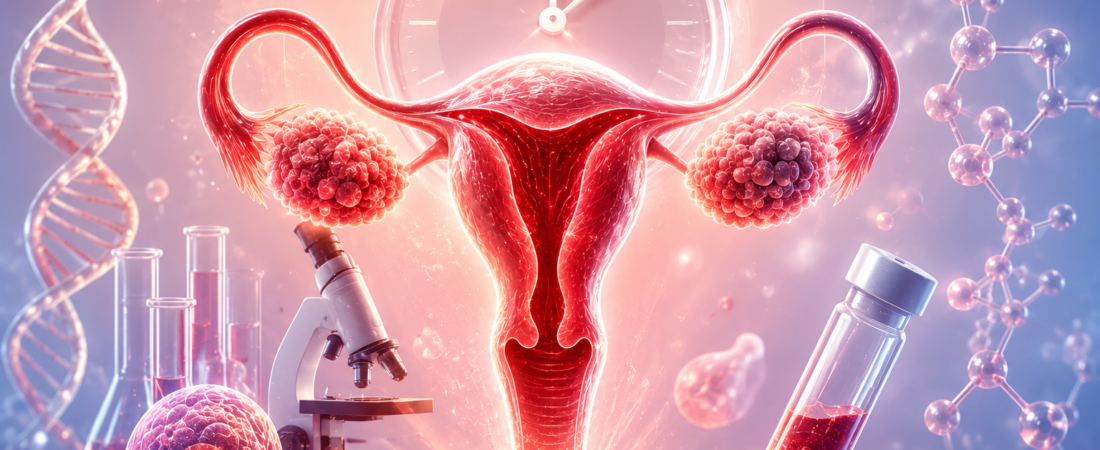
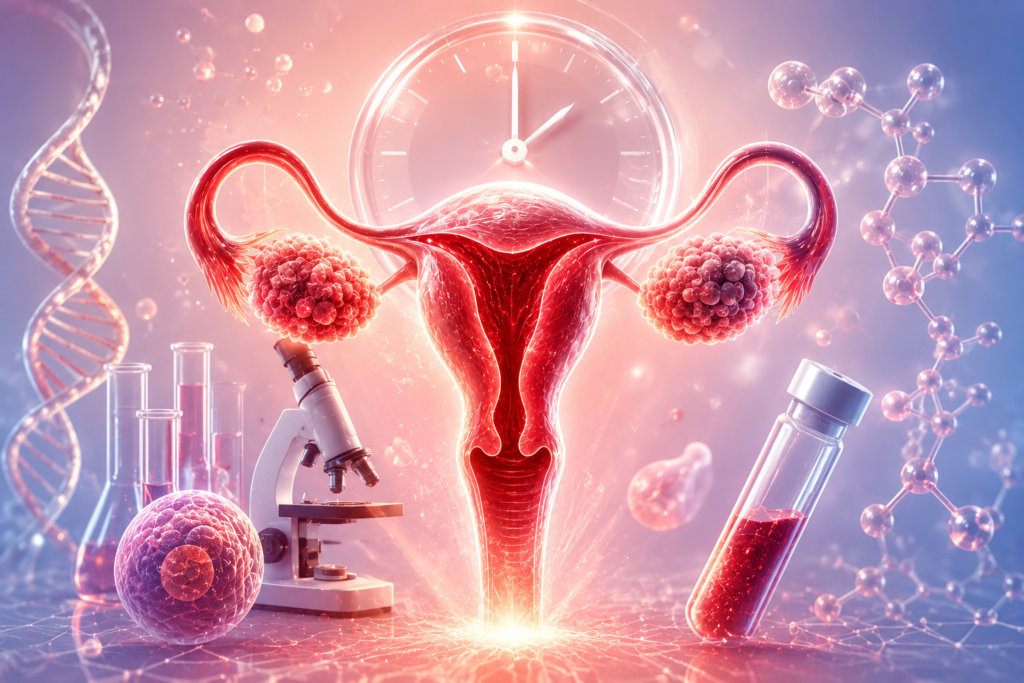
Aging is inevitable, but modern medicine is now shifting its focus from merely managing decline to actively delaying it. While the field of “longevity medicine” has historically focused on the brain, heart, and skin, a quiet revolution is taking place in reproductive health. Researchers are now targeting the organ that ages faster than any other: the human ovary.
The Paradigm Shift: From Selection to Preservation For decades, IVF technology has been a game of selection—extracting a cohort of eggs and choosing the “best” among them to maximize success rates. However, the next generation of reproductive science is pivoting toward “Ovarian Longevity.” The goal is no longer just to find a healthy egg; it is to keep the ovary itself healthy for longer.
This approach is rooted in a critical biological reality: a woman is born with a finite pool of follicles that steadily depletes throughout her life. By the time a woman reaches her mid-30s, both the quantity and the quality of her oocytes decline sharply. If we could slow the rate of follicle loss or preserve the functionality of the ovarian tissue, we could theoretically extend the window of female fertility and improve overall healthspan.
Beyond Reproduction: The Ovarian-Endocrine Link The importance of ovarian health extends far beyond reproduction. The ovaries are powerful endocrine organs, secreting estrogen and progesterone that are vital for bone density, cardiovascular health, brain function, and metabolic stability. The increased risk of osteoporosis, heart disease, and cognitive decline in women who experience premature ovarian aging underscores this fact. Keeping the ovaries functional for longer is not just a fertility strategy; it is a holistic strategy for women’s health.
Emerging Therapeutic Frontiers While still in the early stages of research, several groundbreaking strategies are currently being explored:
- Rapamycin: Originally an immunosuppressant for organ transplants, it regulates the mTOR pathway, which has shown potential in slowing the rate of follicle activation and “burning” through the egg reserve too quickly.
- Fibrosis Inhibition: As ovaries age, the tissue becomes fibrotic and stiff, reducing blood flow. Researchers are testing anti-fibrotic agents to restore a healthy environment for follicles.
- NAD+ Restoration: NAD+ plays a critical role in mitochondrial function and DNA repair. Restoring NAD+ levels may help combat the cellular decline that drives oocyte aging.
- Photobiomodulation (Red Light Therapy): This approach aims to boost mitochondrial energy and blood flow to the ovaries, showing promise as a non-invasive tool for functional support.
The Path Forward: Caution and Scientific Rigor It is vital to temper excitement with clinical reality. None of these interventions are currently validated as standard-of-care treatments for reversing human ovarian aging. We are at the dawn of a new frontier, and the jump from experimental models to clinical practice is significant. The medical community emphasizes that we must verify not only the efficacy of these treatments but also their safety, including potential long-term genetic and epigenetic impacts.
Conclusion: A New Era of Women’s Health We are witnessing a fundamental change in reproductive medicine. We are moving from an era of “picking the best egg” to one of “protecting the ovary.”
If science succeeds in safely delaying ovarian senescence, it will be the most significant breakthrough in reproductive history since the inception of IVF. It would mean that women could protect their reproductive and general health well into the future, potentially changing the standard of care for a woman’s entire lifespan. The day may soon come when the ovary is recognized not just as a reproductive organ, but as the primary organ of longevity for women.
Sources: Emerging research on ‘Ovarian Longevity’; studies on mTOR inhibitors (Rapamycin) and mitochondrial health in reproductive aging; international reproductive medicine literature reviews.
Disclaimer: This report is for informational purposes. These therapeutic approaches are currently under investigation and are not standard medical treatments. All reproductive health decisions should be discussed with a board-certified reproductive endocrinologist.