
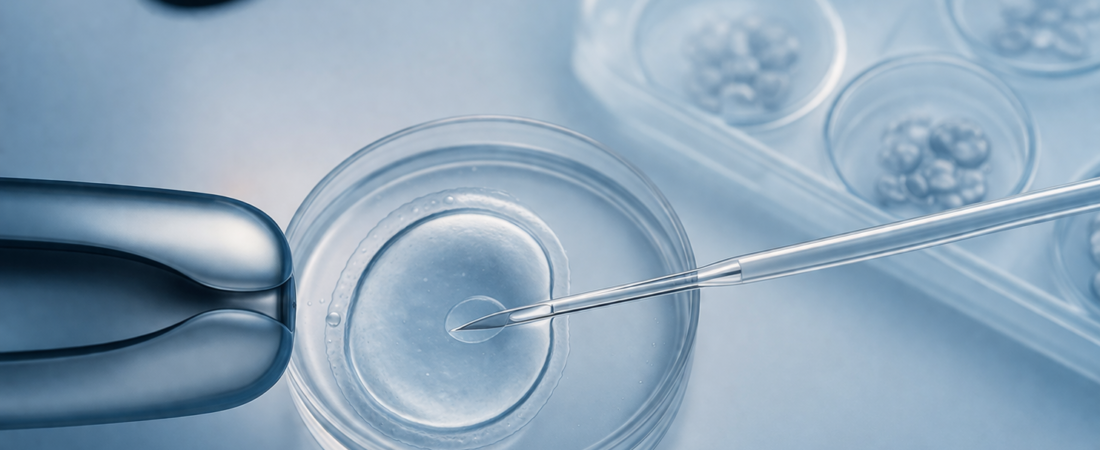
At 47, the question is not “How many eggs are left in the ovaries?” but rather, “How many of these eggs are capable of resulting in a healthy pregnancy?” While an ovary at this age might still contain thousands of follicles, the gap between the number of eggs and the potential for a live birth is dictated by a ruthless biological reality: chromosomal integrity.
The Evolution of the Oocyte As a woman ages, her eggs do not merely disappear—they transform. The machinery responsible for accurate chromosomal division during meiosis weakens, and the mitochondria, the cell’s energy powerhouses, become less efficient. By age 45, the percentage of chromosomally normal eggs often drops to 5% or less. At 47, the probability of encountering a viable egg requires a shift in perspective from “hopeful expectation” to “statistical persistence.”
The ‘Survival of the Fittest’ Strategy: Natural vs. Stimulated Cycles Many patients note that their natural cycles seem to produce “better” follicles than stimulated IVF cycles. This is not a coincidence.
- Natural Cycles (The Filtered Selection): In a natural cycle, the ovary recruits a cohort, but the internal “quality control” mechanism selects only the healthiest follicle for ovulation. It is the result of a rigorous survival process—only the fittest follicle reaches the finish line.
- Stimulated Cycles (The Probability Strategy): IVF stimulation acts differently. It intervenes to rescue follicles that would naturally have regressed. You are essentially increasing the sample size of your lottery ticket draw. While the average quality of these eggs may be lower than that of the single, naturally selected egg, you have increased the absolute number of opportunities to find that elusive, viable one.
Strategic Choices at 47 At this stage of the reproductive journey, the strategy is no longer about “optimizing” the body in the traditional sense; it is about maximizing the odds.
- Quality-Focused (Natural/Modified Natural): This strategy waits for the most robust, naturally filtered egg. It is a slow, high-precision path that relies on the body’s innate filtering ability.
- Probability-Focused (IVF Stimulation): This strategy prioritizes the “multiple tickets” approach. By attempting to retrieve more eggs, you hope to increase the statistical likelihood of catching one that has retained its chromosomal integrity.
Conclusion: Persistence as a Strategy Reproduction at 47 is not an act of creation; it is an act of discovery within a sea of probability. We are not “making” healthy eggs; we are searching for them.
If you are 47 and pursuing pregnancy, understand that the results are not a reflection of your lifestyle, your effort, or your willpower. They are a reflection of a biological system navigating an advanced statistical threshold. Persistence is the only clinical strategy that maintains your window of opportunity. Whether you choose the path of natural selection or the path of probability through IVF, the goal remains the same: finding that one, rare, and viable egg hidden within the complexity of the reproductive clock.
Sources: Data on oocyte aneuploidy rates by age (Hassold & Hunt, Nature Reviews Genetics); cumulative live birth rates and IVF attempts (Malizia et al., Fertility and Sterility); international guidelines on late-reproductive-age fertility (ASRM, ESHRE).
Disclaimer: This report is for informational purposes. Achieving pregnancy at age 47 is medically complex. Please consult with a reproductive endocrinologist to conduct a realistic assessment of your unique clinical profile and reproductive options.