
- A ‘star infertility doctor’ in Mongolia, Russia, and Central Asia
- Sponsoring children of low-income families and schools for the deaf in Mongolia since 2017
- Performed a cumulative total of over 40,000 IVF procedures domestically and internationally, enhancing national prestige through medical skills
- A ‘researching doctor’ with over 100 published papers alone
- A doctor must always learn with a humble attitude and stay vigilant against oneself
“In 2023, the year following the outbreak of the Ukraine War, a Russian woman came to me, saying she desperately wanted to have a baby with her husband, who had to go to war as a soldier. Seeing her arrive with a laboratory tube containing her husband’s sperm taped to her belly button, I could tell how desperate she was. Because it was during wartime, she came all the way to Gwangju by taking a ship across the East Sea instead of an airplane. After undergoing in vitro fertilization (hereafter IVF), she returned to Vladivostok, and a while later, news arrived that she had successfully become pregnant. I was so grateful and proud of her that it brought tears to my eyes.”
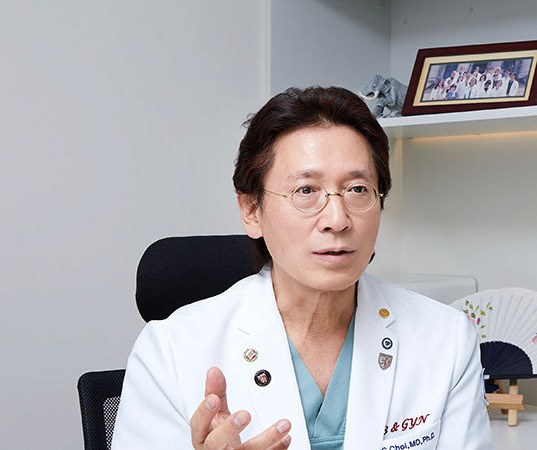
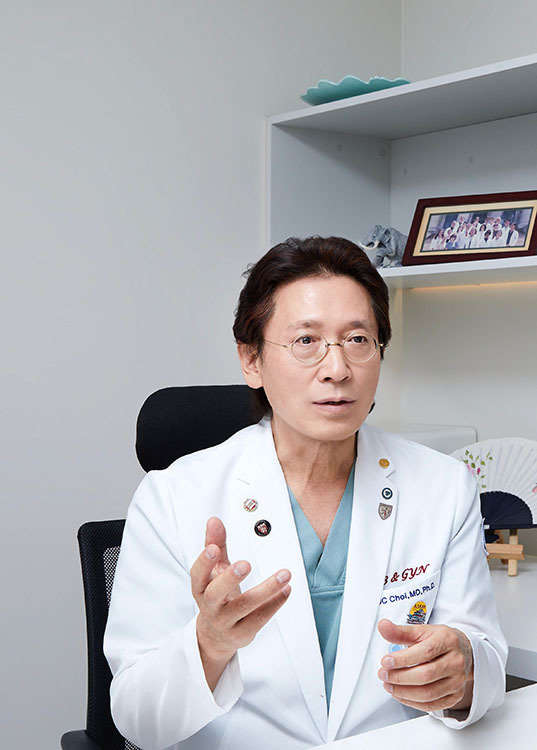
Director Choi Bum-chae of CL Hospital, who has been active as an infertility specialist since 1993, spoke with reddened eyes. At CL Hospital in Gwangju Metropolitan City, there is an endless stream of foreign patients flying thousands of kilometers to meet him. It makes perfect sense, as Director Choi is known as a ‘star infertility doctor’ in Mongolia, Russia, and Central Asia. This is because he is not simply a doctor who is good at IVF, but a hospital manager and an international medical collaborator who has spread infertility treatments and life-saving medical skills, transcending borders and races.
How was Director Choi able to establish himself as a leading figure in ‘Korea-Mongolia life diplomacy’ in Mongolia, where medical infrastructure is poor? We met with him and heard about his global 15-year journey of traveling back and forth between Korea and Mongolia hundreds of times since 2010, bringing countless lives to bloom.
The unanimous voice of 2,000 people: “Dr. Choi (Choi B-chae) must come”
Q. Is there a special reason that led you to provide infertility treatment abroad? “In 2010, a senior colleague of mine was establishing a hospital in Mongolia, so I tagged along just to observe, and by chance, I visited the local National Center for Maternal and Child Health. Even though it was a state-run facility, there was a drastic shortage of incubators, so they could hardly save premature babies born at 8 months of pregnancy. I was deeply shocked and made a resolution. As soon as I returned to Korea, I thought to myself, ‘I must send incubators and surgery-related materials to Mongolia.’”
Q. After first opening your clinic in 2000, you operated both infertility treatments and obstetrics (delivery) together. But I heard you sent all your major facilities to Mongolia. “At that time, Mongolia’s medical situation was at the level of our country in the 1970s and 80s. There were many infertile couples, but the IVF field was almost a barren land. So, well-off infertile couples in Mongolia would go all the way to Korea, Japan, Taiwan, and Singapore to receive IVF. I wanted to give away all the facilities needed for delivery to Mongolia, and have local infertility patients come here to receive IVF. That was exactly around the time when Korea’s medical tourism began in earnest.”
Q. Are there many Mongolian couples who came to Korea’s CL Hospital to receive IVF procedures? “Roughly about 500 couples.”
Q. It seems like it would cost a lot of money for a Mongolian to come to Korea for the procedure. “There were patients who sold their used cars or disposed of the livestock they raised to raise the money for IVF costs. When I found out about that later, my heart felt so uncomfortable…. I wanted to somehow repay the Mongolian infertile couples who trusted me and came from far away, insisting they must get their IVF procedure from ‘Dr. Choi (Choi Bum-chae)’. That is exactly the reason why I opened the ‘Mongolia CL Hospital (MONCL FERTILITY CENTER)’ in Ulaanbaatar, Mongolia, in March 2017. If there is a hospital in Mongolia that treats infertility with the latest facilities and advanced IVF, wouldn’t it save them the trouble of taking a plane locally and coming all the way to Korea?”
Q. Does Mongolia grant permission for foreigners to open private hospitals? “It is so hard to get a license and permission that there is a saying, ‘It is a task as difficult as planting an orchid on a boulder.’ I met with various people, including politicians, pharmaceutical companies, corporations, and medical school professors, to co-found the hospital with a local partner, but none of them were of any help. Politicians tried to take the lead (in establishing and operating the hospital) using their power, pharmaceutical companies wanted to be the main players acting like they knew medicine, and professors only had the will but lacked the funds. Thinking that things couldn’t go on like this, I set out to directly obtain permission as an independent medical corporation, and after a persistent challenge of a year and a half, I was able to open Mongolia CL Hospital.”
Q. What was the secret? “The saying ‘You reap what you sow’ turned out to be true. The infertile couples who succeeded in getting pregnant after receiving IVF from me in Korea actively stepped forward. Joined by their families, relatives, friends, and acquaintances, a whopping 2,000 people became my fans and my strongest supporters in Mongolia. They raised a single voice saying, ‘Mongolia needs an infertility clinic with the latest facilities, and Choi (Choi Bum-chae) must come.’”
Q. It seems that giving infertile couples a baby was not the entirety of their gratitude. “I steadily did medical volunteer work for 7 to 8 years. Actually, in Mongolia, they do not welcome ‘self-satisfying short-term volunteering’ where people just come blindly, hand out medicine, and conduct medical treatments. They want a long-term system that directly builds local infrastructure and provides continuous medical services. In that regard, Japan’s medical volunteer work is thoroughly ‘investment-centric,’ so they appreciate it. This is because they continuously educate local medical staff to create a foundation for self-reliance. The ‘Mongolia-Japan Hospital’ affiliated with the Mongolian National University of Medical Sciences (MNUMS), built with the support of the Japan International Cooperation Agency (JICA), is a good example. It is Mongolia’s highest-level national hospital designed entirely in a Japanese style, from medical equipment and systems to educational programs.”
Q. Is the medical volunteer work that CL Hospital carried out in Mongolia similar to Japan’s approach? “The latest facilities can be equipped as long as you have money, but an infertility clinic cannot be properly operated if it is not backed by the medical staff’s procedural experience and high-quality education for culture researchers and nurses. So, I brought local Mongolian doctors to Korea and directly trained them for 6 months to a year. I had them experience the entire process from controlled ovarian hyperstimulation to egg retrieval and embryo transfer, while also letting them learn culture techniques. The number of Mongolian doctors who received training at CL Hospital alone reaches about 30. Also, from 2010 to 2018, I visited Mongolia about 50 times, simultaneously conducting direct education and medical treatments locally.”
Merit for contributing to the development of public healthcare in Mongolia for over 10 years
Q. I heard you are still continuing to sponsor local Mongolian doctors. “Since 2014, I have been giving scholarships and donations to the Mongolian National University of Medical Sciences every year. As a special privilege, scholarship recipients are invited to CL Hospital and provided with opportunities to experience and research assisted reproductive technologies like IVF. Since 2017, we have also been giving help to children from low-income families and schools for the deaf in Mongolia, and starting in 2024, we established the ‘CL Academic Award’ to encourage excellent achievements every year. The prize money is 5 million tugriks. By local standards, it is an amount equivalent to about three months’ salary.”
Q. There must also be hardships you experience while operating an overseas branch hospital. “Because of the COVID-19 pandemic, I couldn’t go to Mongolia for 3 years. I had no choice but to entirely entrust the hospital operation to the local corporate head, and even though communication was possible via KakaoTalk, a corner of my heart was always anxious. After agonizing over it, I carefully sent a text message to the local official saying ‘Sehanyeonhu Jisongbaekjihujo (歲寒然後知松柏之後凋)’. This is a verse from the Zihan chapter of the Analects, meaning that only after the harsh winter passes does one know that pine and cypress trees do not wither. It contains the meaning that while all trees look green normally, when winter comes, you can tell who stays green until the end.”
Q. I am curious about the contents of the reply. “The reply came back saying, ‘I will not commit Galtaegieo (竭澤而漁).’ This is an ancient idiom meaning that one will not do the foolish act of draining all the water from a pond to catch fish. In other words, it was a statement containing the mindset of not betraying for momentary profit. I was truly grateful. So, even in the midst of the spreading COVID-19, we expanded the hospital’s size from 160 pyeong (529㎡) to 360 pyeong (1,190㎡). Since it was a time when all foreign companies were withdrawing due to COVID-19, the Mongolian people were even more amazed.”
His contributions established in Mongolia are remarkable. So much so that he received the ‘Order of Merit in the Field of Health and Medical Care’ (2017) and the ‘Order of the Polar Star’ (2019) from the Mongolian government. The Order of the Polar Star is the highest-grade state order awarded when there is outstanding merit contributing to the development of public healthcare in Mongolia for over 10 years. Cases of a foreign doctor receiving this order are extremely rare, hard to find since the founding of Mongolia. Director Choi was recognized for his great merit in significantly contributing to the population growth of Mongolia by treating about 2,000 infertile couples in Mongolia.
Q. Are there many infertile couples in Mongolia? “Because the remarriage rate is high, there are increasingly more of them. There is a trend of older newlyweds increasing. Also, as more young people earn money abroad, the social atmosphere has become more open and free.”
Q. How were the Mongolian people when observed up close? “Mongolia’s population is only 1/15th of Korea’s, roughly around 3.5 million people. Economically, it is also poor. Its per capita GDP (Gross Domestic Product) is 1/10th of Korea’s, at about the $4,600 level. Even so, their pride as descendants of Genghis Khan is truly immense. The survival instinct and self-reliance spirit of their nomadic ancestors seem to be embedded in their DNA. Also, they have almost no resistance toward foreigners, and their language acquisition ability is amazingly outstanding. Because it is a typical matrilineal society, the influence of women is great. Even if they are poor, they are laid-back and do not worry in advance about raising children. Their persistence, self-control, and patience are extraordinary. Perhaps because the wealth gap is not yet severe, they tend to live independently without comparing themselves to others.”
Q. As a doctor and hospital manager who has successfully expanded overseas, what is the biggest problem with Korea’s medical tourism? “For medical tourism to settle successfully, a for-profit hospital system is necessary. In Singapore or Thailand, medicine already forms a pillar of their industry. Most hospitals in our country are centered around university hospitals or private clinics, making it a difficult structure for intensive investment in medical tourism. This is because the operating system is tied to a non-profit structure, reducing scalability. Ultimately, even if we have good technology and manpower, we have no choice but to face a structural limit where they cannot lead to industrial competitiveness.”
A consistent persistence shining brighter than numbers
Q. Haven’t dermatology and plastic surgery already established themselves as medical tourism products? “Dermatology and plastic surgery procedures have short lengths of stay and high medical costs, making it an advantageous structure for medical tourism. However, the case of IVF is different. The treatment process is complex and takes at least a month, making it difficult to bundle tourism and treatment together. It is not easy for anyone to take a month-long vacation.”
Director Choi is a living witness who has shared the pulse of the developmental history of domestic infertility medicine over the past 30-plus years. Having performed a cumulative total of over 40,000 IVFs, the record of researching a generation’s reproduction remains at his fingertips. He is not a simple ‘operator’, but a ‘researching doctor’ who has carried out clinical practice and research in the field of reproductive immunology in parallel. The papers he has published so far alone exceed 100, and he has consecutively won paper awards from international societies such as the American Society for Reproductive Medicine (ASRM), the Canadian Fertility and Andrology Society, and the Japan Society for Reproductive Medicine. He has also won academic awards seven times from domestic infertility societies. However, what shines brighter than the numbers is the evaluation from those around him: “his steady persistence in dedicating his enthusiasm to infertility treatment”. Director Choi’s conviction is as follows:
“A doctor must always learn, and guard against oneself. Even if it seems like you know everything, in reality, there is much more that you do not know. Therefore, you must be humble, and especially more so in front of money. A doctor should not be blinded by hospital profits to issue unnecessary prescriptions or exploit a patient’s anxiety. No matter how much insurance is applied, IVF is a long journey where a retry is inevitable once you fail. To prevent the patient from getting exhausted in that process, unnecessary burdens must be relieved through the best prescriptions and tests. Only then can an infertile couple have the persistence and courage to say, ‘We will not give up until we achieve pregnancy.’”
Choi Bum-chae
- Graduated from Chosun University College of Medicine, Doctor of Medicine / Honorary Doctor of Business Administration
- Assistant Professor of Obstetrics and Gynecology at Sungkyunkwan University School of Medicine
- Order of the Polar Star by the President of Mongolia (2019)
- Presidential Commendation for South Korea’s Overseas Medical Expansion (2023)
- Winner of the Best Paper Award at the American Society for Reproductive Medicine (ASRM) (1997, 1999), among others.