
Endometriosis is a representative barrier to pregnancy and a leading condition that triggers infertility.
The disease occurs when endometrial tissue, which normally lines the inside of the uterus, flows backward with menstrual blood and implants itself on structures outside the uterus—such as the ovaries, rectum, or bladder—causing chronic inflammation. It affects approximately 10% to 15% of women of reproductive age and stands as one of the most significant culprits behind female infertility.
Patients with endometriosis often suffer from debilitating pain, including severe dysmenorrhea (menstrual cramps), dyspareunia (painful intercourse), and chronic pelvic pain, which disrupts both daily living and intimate relationships. While interventional procedures like sclerotherapy can reduce the size of the lesions, severe cases require surgical removal via laparoscopy. However, the condition is notorious for its exceptionally high recurrence rate.
Because endometrial tissue naturally thickens every month in response to estrogen (E2) secreted as eggs mature, the misplaced tissue outside the uterus is also driven to expand by E2 during each ovulatory cycle. Unless a patient enters a temporary state of amenorrhea—such as during pregnancy or breastfeeding—menstrual blood continues to flow retrogradely, causing repeated cycles of implantation and growth.
Statistically, the recurrence rate stands at 5% to 20% within just one year post-surgery, and surges to about 40% after five years. For this reason, the reproductive medicine community has recently placed a strong emphasis on the clinical importance of long-term medical management using oral medications.
Dr. Sung Hoon Kim, a professor at Asan Medical Center in Seoul, advises:
“Long-term management is absolutely critical after surgery to prevent endometriosis from returning. Due to the biological nature of the disease, 50% to 60% of patients experience a recurrence within five years, making continuous suppression through pharmacological therapy an absolute necessity.”
With the recent introduction of generic options to the oral endometriosis treatment market, clinicians and patients now have a wider array of bioequivalent prescription choices.
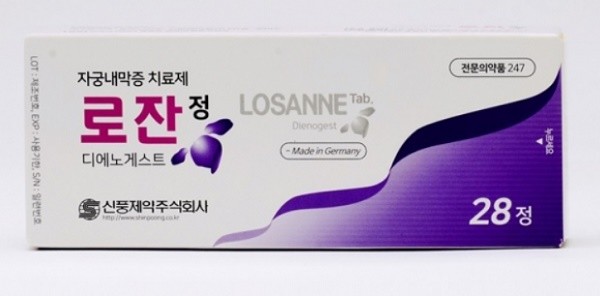
A prominent generic competitor entering this space is ‘Rozan Tablet’ (dienogest 2 mg), developed by the global German pharmaceutical company Helm A.G. and marketed domestically by Shin풍 Pharm.
Taken once daily, ‘Rozan’ rapidly alleviates the debilitating pain associated with endometriosis. Clinical data indicates that continuous administration induces decidualization of the endometrial tissue, effectively causing the endometriotic lesions to atrophy and significantly lowering the risk of recurrence.
Dr. Sung Hoon Kim further notes:
“While this medication shares the exact same active ingredient and dosage as the original brand-name drug, it is manufactured as a film-coated tablet with a reduced physical size, making it easier for patients to swallow while delivering identical therapeutic efficacy. Endometriosis is a highly prevalent condition that affects roughly one in ten women of childbearing age. Therefore, if you experience unusually severe menstrual cramps or chronic pelvic pain during your period, it is vital to visit a specialist promptly to establish a tailored long-term treatment plan.”