

As Sunlight Fades, Serotonin Drops and Stress Hormones Rise
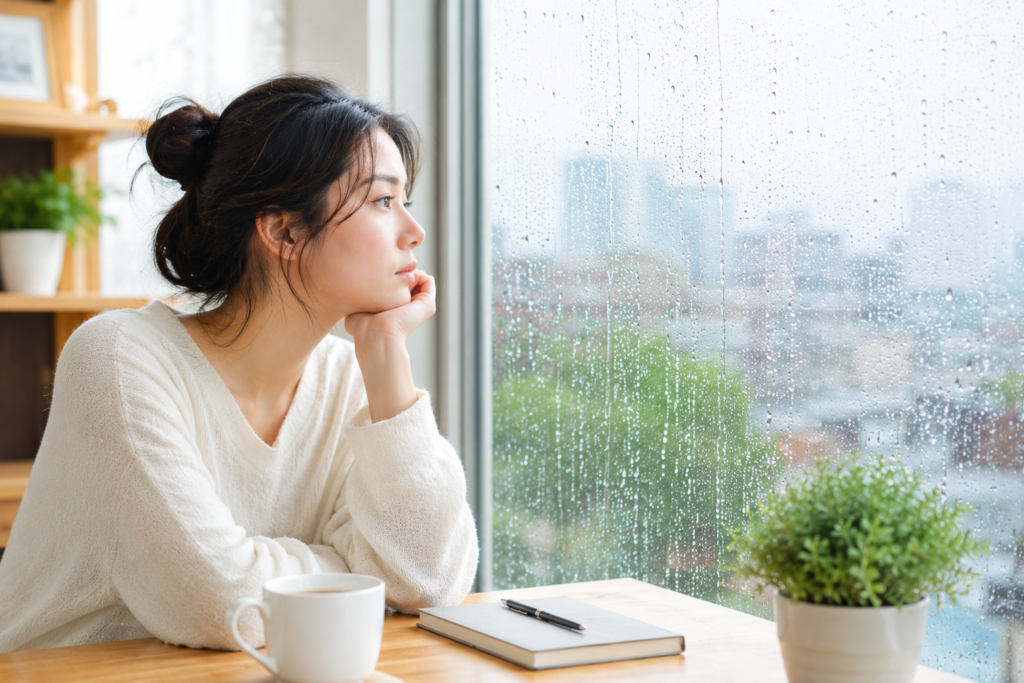
What if the rain continues for days? The world outside the window is completely ash-gray, and even though it is morning, your body feels as heavy as if it were the middle of the night. You feel irritable for no reason, and tears well up without cause. We casually brush it off, saying, “It’s just because of the rain.”
Medicine, however, does not view this change as mere sentimentality. The rainy season does not just change your mood; it is a season that can create a chain reaction, shaking your brain, hormones, sleep, stress levels, and even reproductive function.
For couples preparing for pregnancy, the rainy season is not just another season. Women undergoing fertility treatment often say, “My confidence is unusually low this month,” “I keep crying for no reason,” or “I’m not sure if I should continue treatment” during the rainy season.
Men also experience disrupted bodily rhythms as lethargy and sleep deprivation repeat. While it may seem like a coincidence, a sophisticated biological clock that connects sunlight and hormones is hidden in the background.
Our bodies are more faithful to sunlight than we think. When morning sunlight enters our eyes, the brain receives a signal that ‘the day has begun’ and increases the secretion of serotonin. While serotonin is commonly called the ‘happiness hormone,’ it is, in fact, a key neurotransmitter that maintains not only emotional stability but also motivation, focus, and biological rhythms.
However, during prolonged cloudy days like in the rainy season, serotonin production decreases, while the secretion of melatonin, the sleep hormone, increases. This is why you feel sleepy, tired, and unmotivated even during the day.
This change does not end with just mood. When stress persists, the stress hormone cortisol increases, and the hypothalamus adjusts the body’s energy usage to prioritize survival. In that process, the secretion of GnRH, the starting point of reproductive hormones, is affected, and subtle changes can occur in the balance of LH (Luteinizing Hormone) and FSH (Follicle-Stimulating Hormone). While this may not be a major issue for a healthy person, even small changes can be significant for women who have experienced diminished ovarian reserve, ovulation disorders, or recurrent implantation failure.
Recent studies show the connection between stress and reproductive function more concretely. The Human Reproduction Update (2024) analyzed that chronic stress and sleep disorders can alter the function of the hypothalamic-pituitary-gonadal (HPG) axis, affecting ovulation and the balance of reproductive hormones. Another study reported that women who maintained sufficient sleep and stable biological rhythms showed higher treatment compliance and more positive overall outcomes during IVF. The research team explained that lifestyle habits broken by stress might have a greater impact on pregnancy success than stress itself.
Men are no exception. Recent reproductive medicine studies have consistently shown that sleep deprivation and chronic stress reduce testosterone secretion and can negatively affect sperm motility and DNA stability. When you add the high humidity, sweltering heat, and tropical nights that hinder deep sleep during the rainy season, the environment in which sperm are produced is also difficult to keep in optimal condition. This reinforces the fact that pregnancy is not a process a woman prepares for alone.
Of course, we cannot conclude that the rainy season immediately lowers pregnancy success rates. There is no evidence that a high number of rainy days leads to poor IVF results. However, rainy season blues can lead to sleep deprivation, sleep deprivation heightens stress, and stress can become the link that shakes reproductive hormones and lifestyle rhythms. Ultimately, the problem is not the rain, but the body’s rhythm that has collapsed because of the rain.
This is why fertility specialists advise that you should manage your lifestyle rhythms more consciously during the rainy season. Even on cloudy days, opening the curtains in the morning to receive enough natural light and walking for 20–30 minutes during a break in the rain can help your biological clock begin to function properly again. Going to bed at a consistent time, reducing the habit of looking at your smartphone late at night, and eating regularly also help maintain the balance of reproductive hormones.
Rain falls on everyone. But even while experiencing the same rainy season, some endure the season, while others lose their body’s balance. Pregnancy is not a process achieved solely by eggs and sperm. How your brain perceives sunlight, how your body manages stress, and your daily sleep and lifestyle habits are all connected to the single life-phenomenon of pregnancy. This is why you should accept the rainy season blues not as a simple matter of mood, but as a small warning signal sent by your body.
※ This article was written to help general readers understand the topic based on clinical experience in obstetrics/gynecology and reproductive medicine, as well as the latest research data. It does not replace a specific individual’s diagnosis or treatment, and actual medical judgment must be made through consultation with a specialist.
※ The images used in this article were created using generative AI (ChatGPT, OpenAI) and depict fictional individuals, not real people.