
A study of 35 women found higher inflammation-related gene activity in cumulus cells from poor responders.
The activity was associated with AMH, follicle counts and retrieved eggs, but it is not yet a treatment target.
Poor ovarian response during IVF can mean retrieving only one or two eggs despite repeated stimulation injections, while another woman produces more than ten. A small study suggests that some of this variation may be connected to the biological condition of cells surrounding the egg.
Published online on October 3, 2026, in the Journal of Gynecology Obstetrics and Human Reproduction, the study found greater activity of the inflammation- and cell-death-related gene TNF-α in women who responded poorly to ovarian stimulation.
Its activity was also associated with anti-Müllerian hormone (AMH), follicle counts and the number of eggs retrieved. These findings provide a possible clue to the biology of poor ovarian response, rather than a proven way to increase egg yield.
Why do some ovaries produce fewer eggs after stimulation?
IVF stimulation uses hormones to encourage several follicles to develop. Each follicle is a small fluid-filled structure within the ovary in which an egg grows; adequate follicular development increases the chance of retrieving a mature egg.
Some women develop few follicles and yield fewer eggs than expected despite appropriate stimulation. This is termed poor ovarian response.
Age, reduced ovarian reserve and previous ovarian surgery can contribute. Yet women of similar ages and with similar reserve-test results can still respond differently.
The new study looked for an explanation in the cells surrounding the egg, rather than focusing solely on the egg itself.
Comparing 20 normal responders with 15 poor responders
Researchers at the Faculty of Medicine, Chulalongkorn University in Thailand studied 35 women undergoing IVF: 20 classified as normal responders and 15 as poor responders.
They compared blood, follicular fluid and cumulus cells. Cumulus cells surround the egg and support its growth and maturation by supplying nutrients and exchanging signals.
The team examined genes involved in inflammation and cell death, together with molecules that regulate gene activity, to look for cellular differences associated with ovarian response.
Higher TNF-α activity in cells surrounding the egg
The most notable difference was found in the cumulus cells. Activity of TNF-α, which is involved in inflammation and cell survival or elimination, was significantly higher in poor responders.
Within the ovary, signaling involving this gene may influence communication between cells and the environment in which follicles develop.
The finding extended beyond a difference between two groups. Gene activity was statistically associated with AMH, the number of small follicles visible on ultrasound and actual egg yield.
It was also associated with miRNA-181, a small RNA involved in regulating the activity of other genes.
This suggests that ovarian response may reflect not only the remaining follicle pool but also the biological state of the surrounding cells. However, greater gene activity does not prove that it directly caused fewer eggs to be retrieved. The study demonstrated associations, not cause and effect.
Could changes in cell survival affect follicle growth?
As an egg grows, it continually exchanges signals with nearby cells. Some cells survive while others are removed through normal physiological processes.
Programmed cell death, or apoptosis, occurs naturally during follicular development. If its regulation changes, follicle development could potentially be affected.
The inflammation-related gene examined here participates in those processes. The relationship between its activity and regulatory small RNA was of particular interest because it could connect cellular changes in poor responders with follicular growth.
Further research must establish whether these changes actually interfere with follicle development or affect egg maturation.
Could this add information beyond AMH and antral follicle count?
AMH and antral follicle count are commonly used to assess ovarian reserve and help anticipate stimulation response. AMH indirectly reflects the follicle pool, while antral follicle count measures small follicles visible on ultrasound.
These tests inform stimulation planning, but they cannot explain every reason for a low egg yield.
Examining gene activity in cumulus cells might eventually add information about the biology underlying different responses. The observed relationship with actual egg yield could support research into more precise subgroups of poor responders.
There is a practical limitation: cumulus cells are generally obtained during egg retrieval. Whether they could inform a useful test before retrieval remains unproven.
This is not yet a treatment for increasing egg yield
The study offers a biological clue, but clinical application requires further validation. With only 35 participants, the findings need to be reproduced in larger groups.
Greater activity of an inflammation-related gene does not by itself establish chronic ovarian inflammation. Gene expression, an actual inflammatory response and altered follicular function are related but distinct concepts.
Crucially, this was not a clinical trial testing whether suppressing inflammation increases egg yield or pregnancy rates. It cannot establish that anti-inflammatory drugs or immune-modulating treatments are effective for poor ovarian response.
Nor should all poor responders be assumed to share the same biological cause.
The study's contribution is to widen the research focus beyond age and AMH to the cellular environment around the egg. Egg yield affects the number of opportunities for fertilization and embryo development. Understanding how these cellular differences relate to ovarian response may eventually help distinguish underlying causes and develop more individualized stimulation strategies.
Study source
Porntip Sirayapiwat and colleagues at Chulalongkorn University, Thailand: “Analysis of cell apoptosis makers (TNF-α and GABRA-1), related non-coding RNAs and pro-inflammatory cytokine (Interleukin-6) in patients with normal and poor ovarian response undergoing in vitro fertilization.” Journal of Gynecology Obstetrics and Human Reproduction, article 103294, published online October 3, 2026. DOI: 10.1016/j.jogoh.2026.103294. PMID: 42829082.
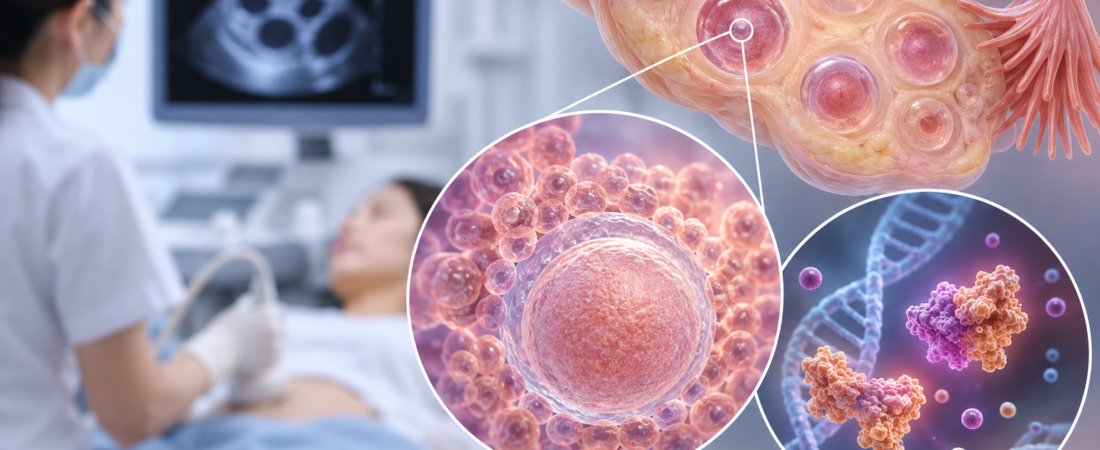
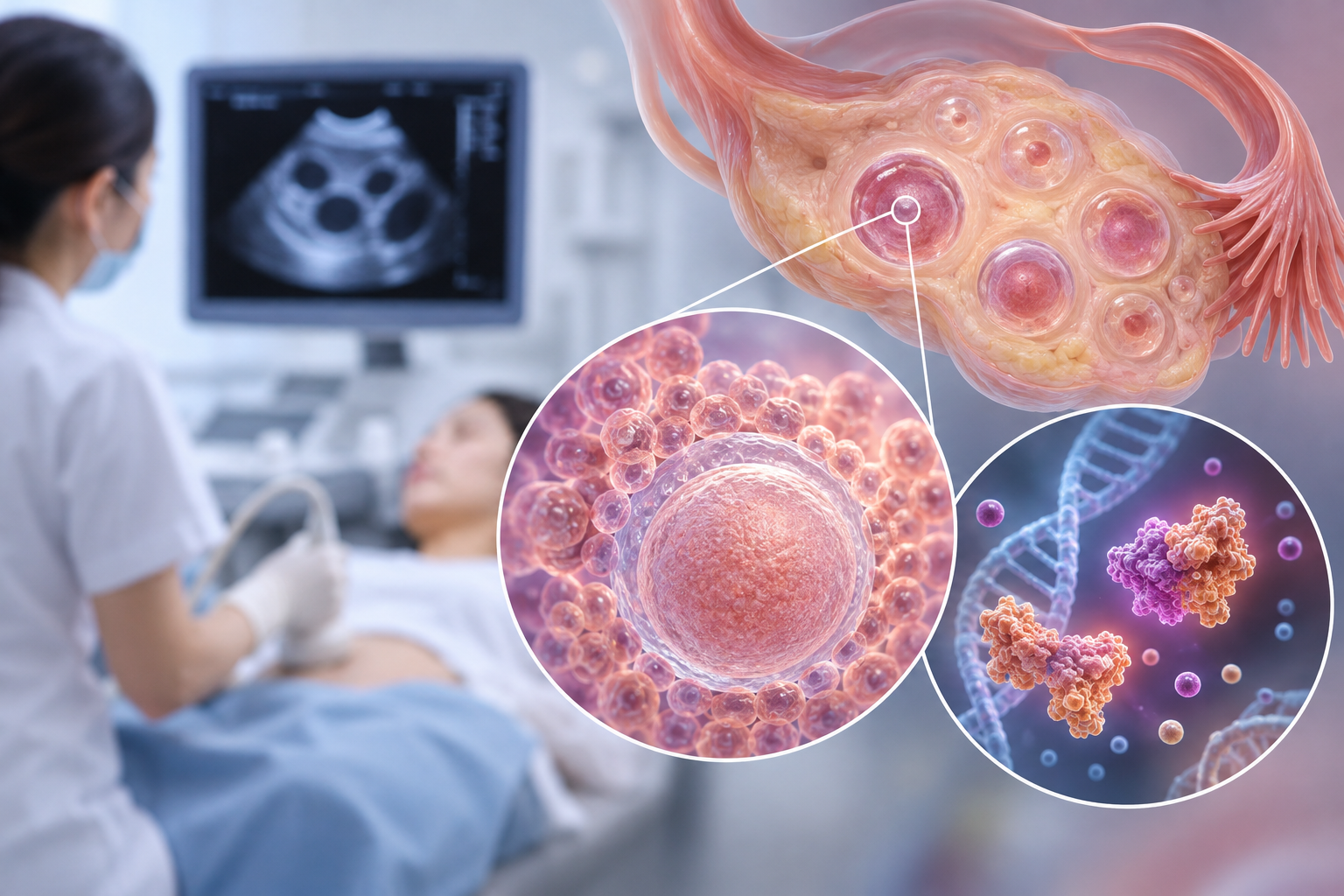
The illustration was generated using ChatGPT (OpenAI). Any people depicted are fictional.
Related reading
Low AMH and egg quality: why egg numbers and per-embryo outcomes differ
Copyright © 2026 THE FERTILITY NOTES. All rights reserved. Unauthorized reproduction, copying, redistribution, scraping, AI training, or data use of any content, including articles, photographs, and images, is strictly prohibited. Violations may result in legal liability.