
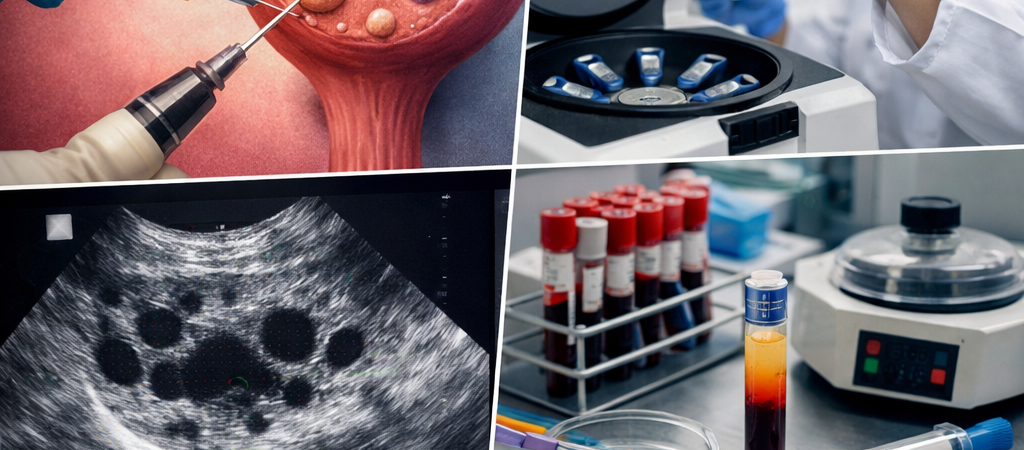
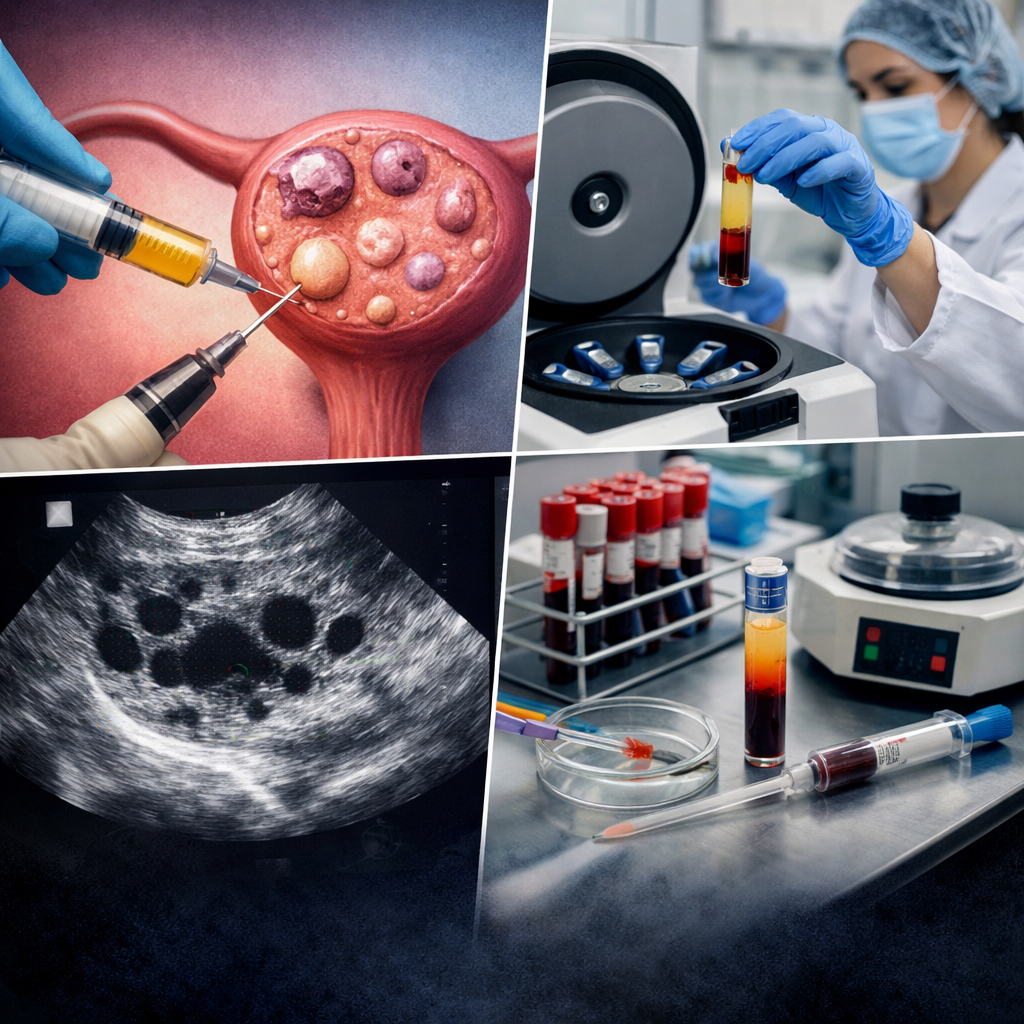
In the landscape of modern fertility treatment, a new term is spreading rapidly: Ovarian PRP (Platelet-Rich Plasma). By concentrating platelets to harness their growth factors and injecting them into the ovary, this therapy seeks to induce tissue regeneration. For women with diminished ovarian reserve (DOR) who have exhausted conventional options, this has been hailed as a potential way to “reawaken the ovary.”
Originally utilized in dermatology and orthopedics for tissue repair, the technology has transitioned into reproductive medicine. Some studies have reported positive signals: improvements in Anti-Müllerian Hormone (AMH) levels, an increased follicle count, and enhanced ovarian responsiveness. Some reports even suggest a response improvement rate of 30–40%.
However, mainstream reproductive medicine remains cautious, and for good reason: the biological premise—that an ovary can “regenerate” depleted follicles—challenges the fundamental dogmas of reproductive biology. Consequently, the scientific community is debating whether the observed changes are true regeneration, a transient stimulatory effect, or simply statistical noise within the data.
Crucially, clinical evidence regarding live birth rates—the ultimate measure of success—remains limited. While an increase in the number of follicles is documented, there is insufficient evidence confirming that this translates into higher egg quality. A recurring criticism in the literature is the lack of consistency in reported results.
Major professional bodies, including the European Society of Human Reproduction and Embryology (ESHRE) and the American Society for Reproductive Medicine (ASRM), have yet to endorse PRP as a standard treatment. They maintain that the evidence base, specifically from randomized controlled trials, is insufficient to verify long-term safety and efficacy.
The Disconnect Between Clinic and Academy
Why, then, is PRP spreading so quickly? Experts point to the “desperation gap.” Patients facing advanced maternal age or severe DOR have few, if any, evidence-based options left. When conventional protocols fail, the search for new alternatives—even those on the frontier of clinical possibility—becomes an imperative.
However, the risk of “therapeutic optimism” is significant. Terms like “regeneration” or “rejuvenation” can exert a powerful influence on patients’ clinical decisions, potentially overshadowing the limitations of the technology. Given the costs and the time investment, clinicians stress that the distinction between a “promising research avenue” and “established medicine” must be made transparent.
At present, Ovarian PRP is best categorized as an exploratory therapeutic strategy. While it may show promise for certain subsets of patients, it is not yet a generalizable cure. As fertility treatment is essentially a battle against time and probability, the arrival of each new technology necessitates a rigorous balance between hope and verification.
Sources: Pandarethes N et al., “Clinical application of platelet-rich plasma in ovarian rejuvenation therapy,” Stem Cell Research & Therapy; Safari S et al., “Effects of intra-ovarian PRP injection in patients with diminished ovarian reserve,” Archives of Gynecology and Obstetrics.
Disclaimer: This content is provided for informational purposes, based on reporting on infertility and various public data. Medical judgments and treatment decisions must always be made in consultation with professional medical personnel. Image: AI-generated (ChatGPT, OpenAI) / Visual reference for illustrative purposes only.