
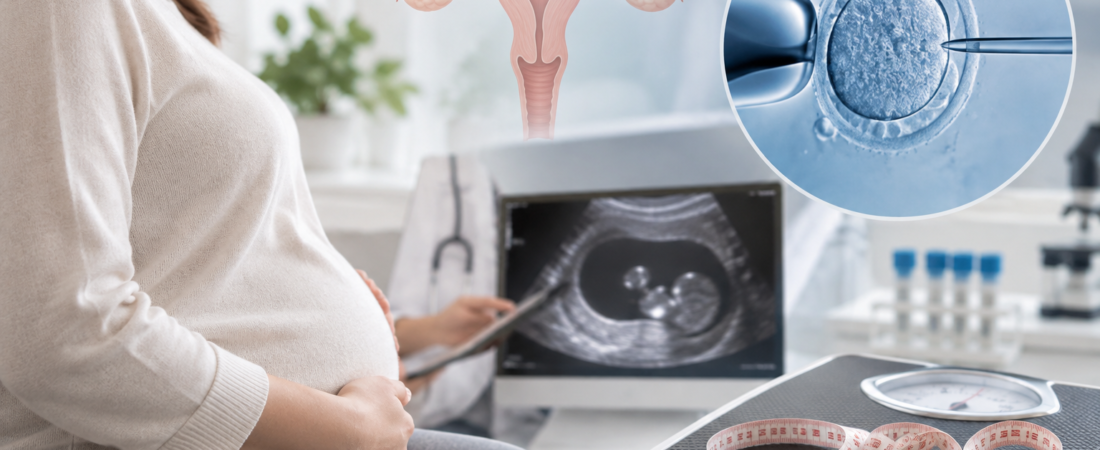
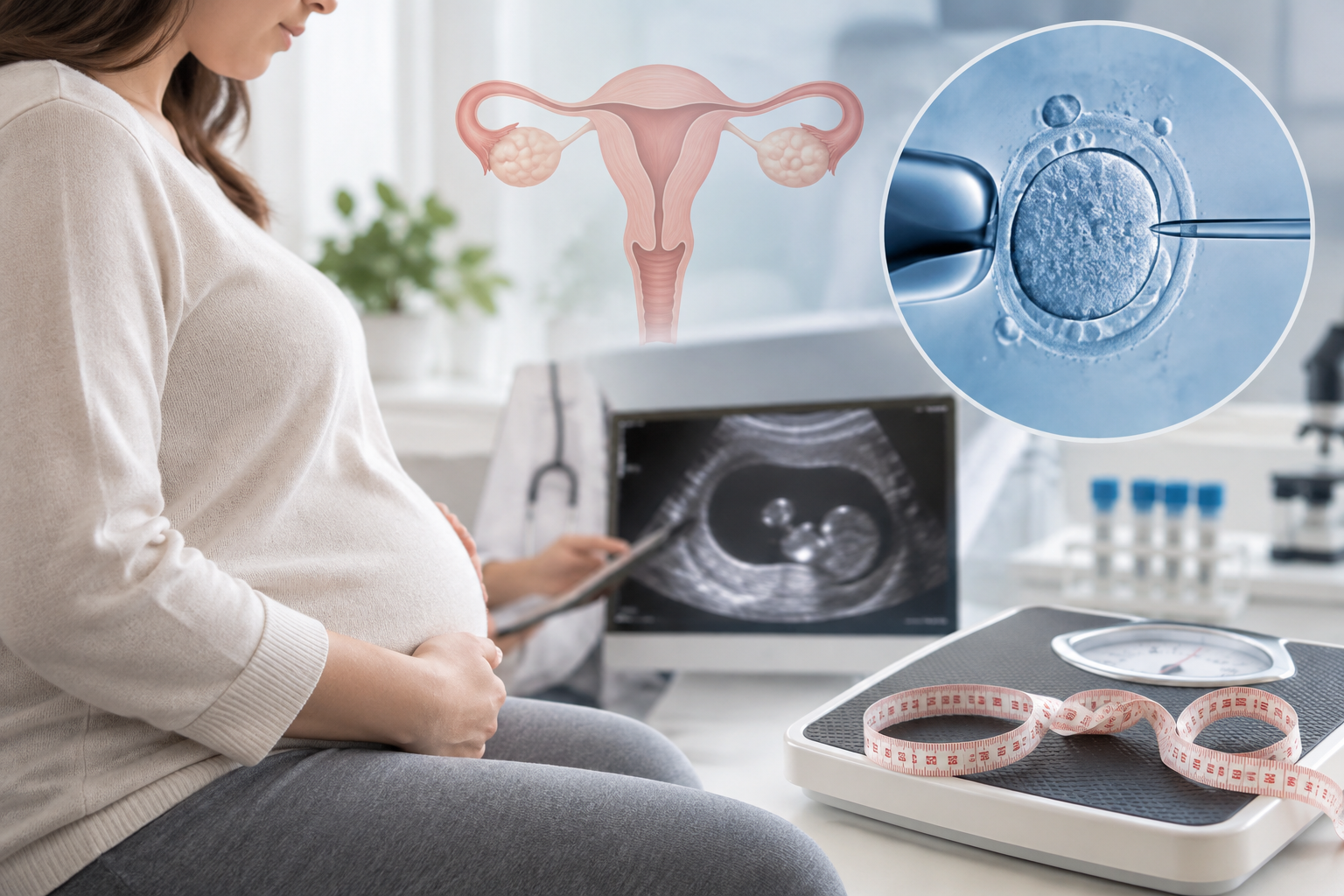
An analysis of 8,923 IVF cycles found a pregnancy-loss odds ratio of 1.60 with obesity.
The association appeared across PCOS, diminished ovarian reserve and tubal-factor infertility, but weight-loss benefits were not tested.
Obesity was associated with higher odds of pregnancy loss after IVF in a study of 8,923 cycles, while clinical pregnancy rates did not show a statistically significant association.
Published on October 9, 2026, in the Journal of Ovarian Research, the study compared women with different infertility diagnoses. The pattern was broadly similar across polycystic ovary syndrome (PCOS), diminished ovarian reserve (DOR) and tubal-factor infertility.
The findings distinguish achieving a pregnancy from sustaining one, but do not prove that losing weight prevents miscarriage.
Comparing different causes of infertility
Researchers at the Reproductive Medicine Center of Jiangxi Maternal and Child Health Hospital in China examined BMI, ovarian response and pregnancy outcomes.
PCOS commonly involves hormonal and ovulatory disturbances. Diminished ovarian reserve reflects a reduced follicle pool or ovarian response. Tubal-factor infertility involves problems such as blocked or damaged fallopian tubes.
By examining these different groups, the researchers explored whether the relationship between weight, egg yield and pregnancy outcomes was specific to one diagnosis or more broadly shared.
Pregnancy-loss odds were 60% higher
The odds ratio for pregnancy loss with obesity was 1.60, with a 95% confidence interval of 1.02–2.53, indicating a statistically significant association.
This means 60% higher odds than the comparison group. It does not mean the actual probability of miscarriage rose by 60%.
The association was broadly consistent across PCOS, diminished ovarian reserve and tubal-factor infertility.
Obesity was not significantly associated with clinical pregnancy rates, suggesting a possible relationship with pregnancy maintenance rather than simply whether pregnancy was established.
Hormonal mediation explained only part of the association with egg yield
The researchers examined follicle-stimulating hormone (FSH), which supports follicular growth and is used in ovarian assessment.
FSH statistically mediated 5.31–8.21% of the association between BMI and retrieved egg numbers. The hormonal environment may contribute, but its estimated contribution was limited.
Insulin resistance, chronic inflammation and hormonal disturbances have been proposed as possible links between obesity and pregnancy loss, potentially involving the uterine lining or early placental development. Those mechanisms were not directly demonstrated in this study.
The study did not establish that weight loss prevents miscarriage
The live birth odds ratio with obesity was 0.77, but it was not statistically significant. The live birth analysis also had limited statistical power, so it cannot establish reduced birth success.
The study retrospectively analyzed clinical records. It identified an association rather than testing whether a weight-loss intervention prevents pregnancy loss.
For older women or those with low ovarian reserve, substantially delaying IVF to lose weight may not necessarily be advantageous. Age, ovarian function and metabolic health need to be considered together.
The findings emphasize pregnancy maintenance alongside conception, egg yield and embryo quality. Overall health and weight-related metabolic factors are part of that assessment, without reducing an individual's prospects to BMI alone.
Study source
Researchers at Jiangxi Maternal and Child Health Hospital: “Consistent associations of BMI with ovarian response and pregnancy loss risk across PCOS, DOR, and tubal factor infertility: a complete-case mediation analysis of 8,923 IVF cycles.” Journal of Ovarian Research, published October 9, 2026. DOI: 10.1186/s13048-026-02299-0.
The illustration was generated using ChatGPT (OpenAI). Any people depicted are fictional.
Related reading
Understanding implantation failure and outcomes after embryo transfer
Copyright © 2026 THE FERTILITY NOTES. All rights reserved. Unauthorized reproduction, copying, redistribution, scraping, AI training, or data use of any content, including articles, photographs, and images, is strictly prohibited. Violations may result in legal liability.