
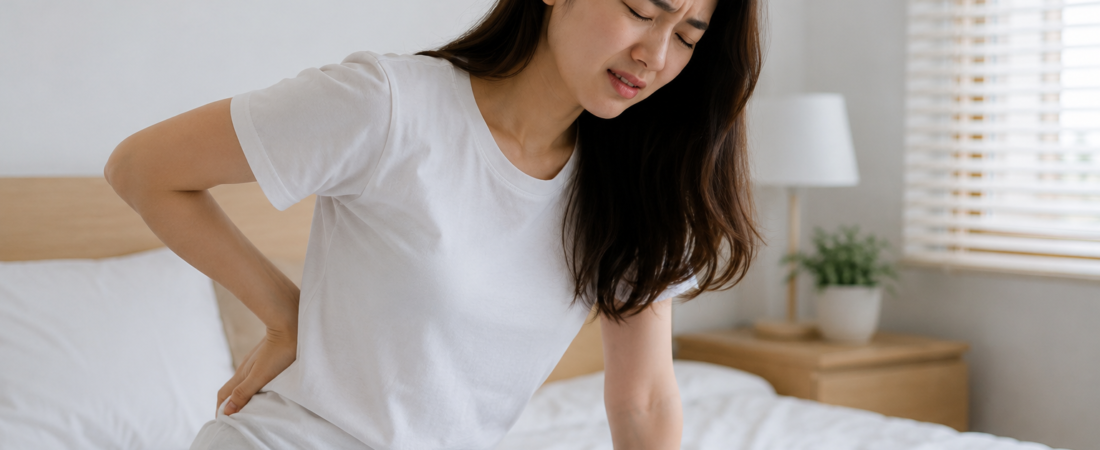
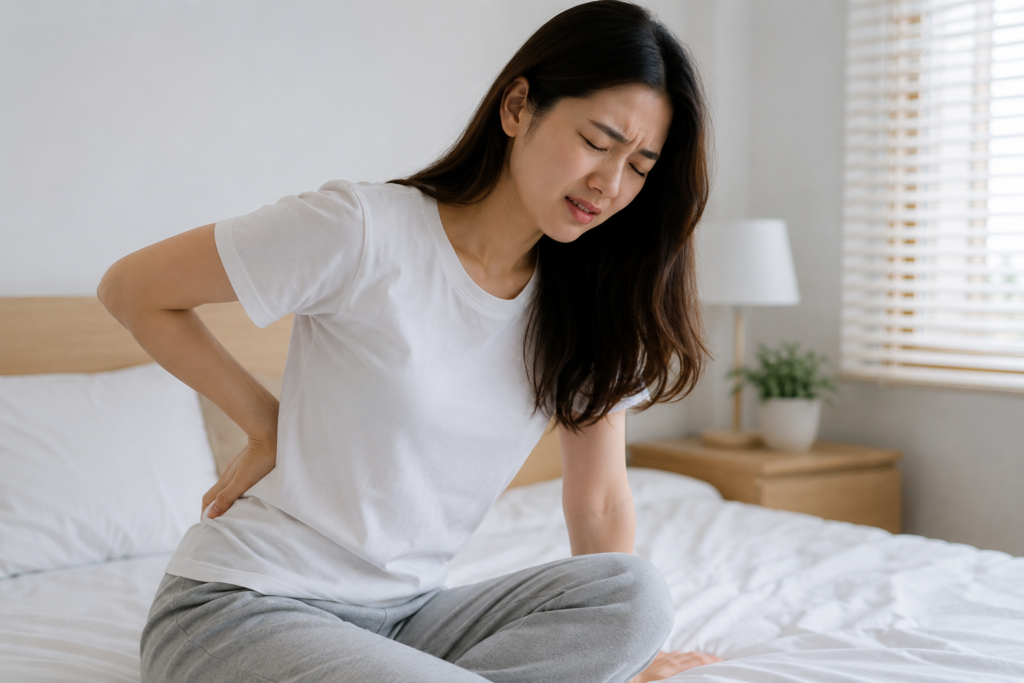
“My lower back feels like it’s snapping.” Dismissing it as just menstrual pain, only to discover infertility—the warning signals the uterus sends.
Every time her period arrives, her lower back aches as if it’s about to snap. Unless she takes painkillers, daily life is nearly impossible. Many women endure this, assuming it is just their “natural constitution to have severe menstrual pain.”
However, obstetricians and gynecologists view this pain differently.
Severe menstrual pain is not just pain; it can be a signal of structural abnormalities in the uterus, and in some cases, the first warning sign of a condition that makes conception difficult.
In fact, it is not uncommon for women in fertility clinics to say, “I had severe menstrual pain, but I just endured it,” only to be diagnosed late with endometriosis or adenomyosis.
When menstruation begins, the uterus contracts strongly to expel the endometrium, which had thickened in preparation for pregnancy. The bioactive substance called prostaglandin, secreted during this process, promotes uterine contractions. When secreted in excess, it constricts blood vessels and significantly increases pain. It is known that women with severe menstrual pain tend to have higher concentrations of this substance.
But why is the pain felt in the lower back?
The cause is ‘referred pain.’ Because the uterus and the lower back share a neural network within the pelvis, pain originating in the uterus is transmitted to the back and hips. The uterus is the actual source of the pain, but the brain interprets it as back pain. That is why many women describe it as “my back feels like it’s snapping” or “I can’t straighten my back.”
Furthermore, the pain intensifies as the pelvic floor muscles and the muscles around the lower back tense up during the menstrual period. Sensitivity to pain also increases as the female hormones estrogen and progesterone drop rapidly.
The problem does not end there.
The reason fertility specialists take menstrual pain seriously is not because of the pain itself, but because of the underlying diseases hidden behind it.
A representative condition is endometriosis. Endometrial tissue, which should be inside the uterus, grows outside the uterus—on the ovaries, fallopian tubes, or pelvic peritoneum—causing chronic inflammation and adhesions. As the disease progresses, it can interfere with the movement of eggs and sperm, degrade the fertilization environment, and lower the chances of natural pregnancy.
Adenomyosis is also a major cause. Endometrial tissue invades the uterine muscular layer, making the uterus thick and hard, causing severe menstrual cramps and lower back pain. It can affect uterine contractions, blood flow, and the implantation environment, making it a condition that is evaluated in infertility patients.
What you should pay particular attention to is the change in pain.
If menstrual pain that was tolerable in your teens or 20s becomes worse every year, or if you need to take multiple painkillers just to get by, you should not dismiss it as simple period pain. If you also experience persistent pelvic pain, pain during sexual intercourse, pain during bowel movements, or difficulty getting pregnant, a precise medical examination is required.
In recent fertility treatments, menstrual pain is used as important diagnostic information. Doctors do not just check for ovulation or the menstrual cycle; they comprehensively examine the intensity of the pain, the timing of its onset, the presence of back pain, and the frequency of painkiller use to evaluate the possibility of endometriosis or adenomyosis. In other words, menstrual pain can be an important clue reflecting reproductive health rather than just a simple inconvenience.
Experts emphasize, “Having menstrual pain doesn’t mean it will unconditionally lead to infertility, but severe pain that interferes with daily life must be investigated for its cause.” This is because early diagnosis can often increase the chances of pregnancy through medication, appropriate surgery, or fertility treatment strategies.
The thought that “menstrual pain is supposed to be painful” is what causes women to miss the optimal time for treatment. Back pain that feels like it’s about to snap may not be a simple part of menstruation, but a structural distress signal sent by the uterus to protect future pregnancy potential. Enduring is not the answer; confirming why it hurts is the first step in protecting a woman’s reproductive health.
※ This article was written based on domestic and international OB/GYN and reproductive medicine research, medical literature, and expert consultations. It does not replace a specific individual’s diagnosis or treatment, and actual medical judgment must be made through consultation with a specialist.
※ The images used in this article were created using generative AI (ChatGPT, OpenAI) and depict fictional individuals, not real people.