

IVF success rates depend on age, egg source, treatment pathway and the denominator used. More procedures do not automatically prove that care is improving—or stagnating. Per-transfer and cumulative live-birth outcomes answer different questions, and neither guarantees an individual result.
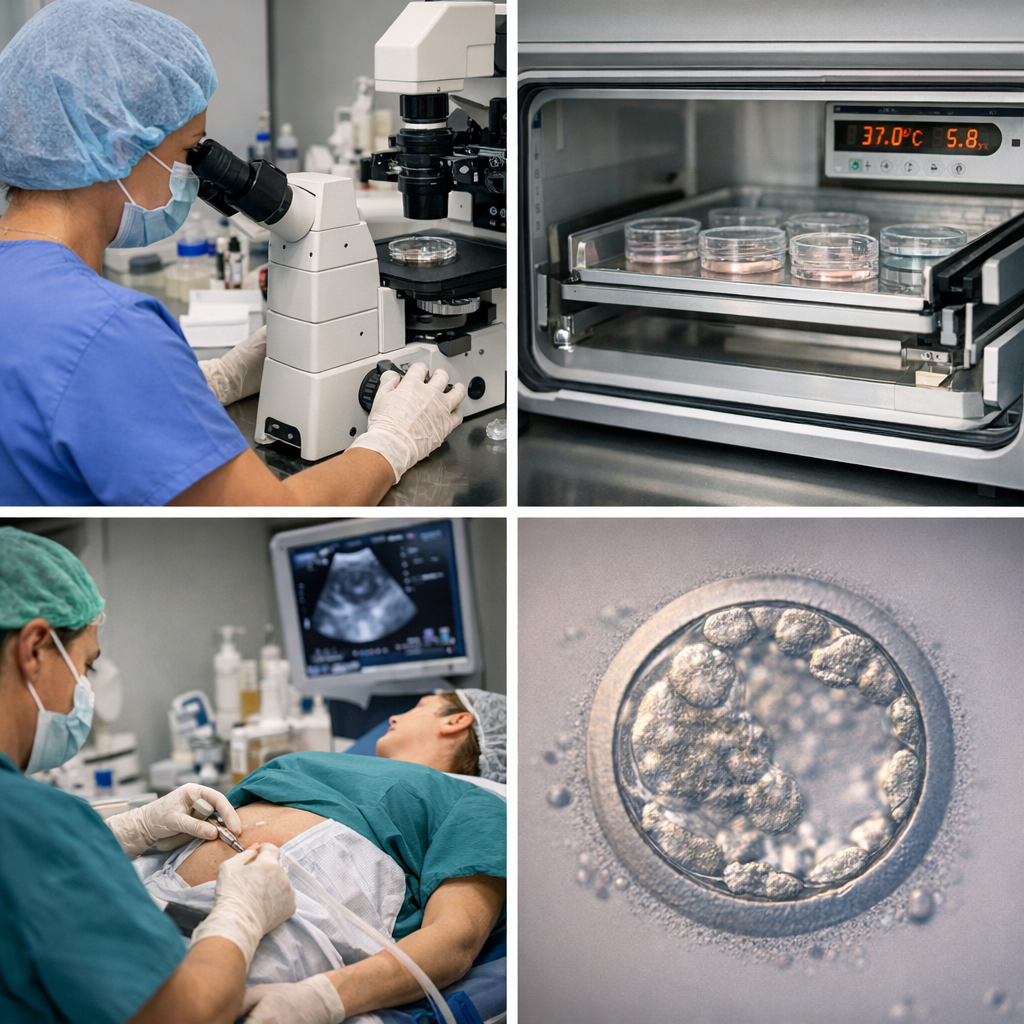
IVF and other assisted reproductive treatments are used worldwide. Their expanding role in family formation deserves attention, but the share of births depends on the country, year and definition.
A universal claim that live birth per transfer is stuck between 11% and 28% cannot be supported without a defined dataset. Rates vary by age, egg source, transfer type and reporting period.
This gap forces us to reconsider the fundamental nature of IVF. We often perceive IVF as a “technological solution for pregnancy,” but in reality, it is more akin to a high-stakes game of probability played against a complex backdrop of biological variables. Egg quality, sperm DNA integrity, chromosomal stability of the embryo, and endometrial receptivity—none of these can be fully controlled. Ultimately, precision in the laboratory does not necessarily equate to certainty in pregnancy.
More sophisticated selection technologies need evaluation against meaningful outcomes. Their availability alone cannot prove either dramatic progress or universal stagnation.
This leads us to a critical question: Should we view IVF as a technology that guarantees success, or one that manages cumulative probability? Current data suggests the latter.
Some patients succeed after one treatment pathway, some pursue additional cycles and some do not achieve a birth. Repetition is a choice with costs and burdens, not a guarantee.
Through the lens of a fertility specialist journalist, this is the most sobering reality of our field. IVF is undoubtedly an innovation that has enabled countless couples to become parents. At the same time, it is too complex and uncertain to be reduced to the simplistic message that “you can do it if you try.”
Cumulative outcomes can help explain a treatment pathway when their starting point and follow-up are clear. Patients also need realistic discussion of burden, stopping points and alternatives.
Disclaimer: This content is provided for informational purposes, based on reporting on infertility and various public data. Medical judgments and treatment decisions must always be made in consultation with professional medical personnel. Image: AI-generated (ChatGPT, OpenAI) / Visual reference for illustrative purposes only.
Clinical context and evidence
A treatment pathway, its burden and its outcomes need to be considered separately. Population success rates do not predict an individual result. HFEA: in vitro fertilisation.
Related reading
IVF Success Rates: Is More Treatment Hiding the Real Result?