
English Translation
Loach Soup and Grilled Eel: Do They Really Help with Implantation?
The Psychology of “Implantation Foods”: A Desire for Success
Among women preparing for In Vitro Fertilization (IVF) or those who have just undergone embryo transfer, similar questions are always circulating:
“Should I be eating abalone?” “I heard loach soup is good.” “I know someone who got pregnant after eating eel; is that true?”
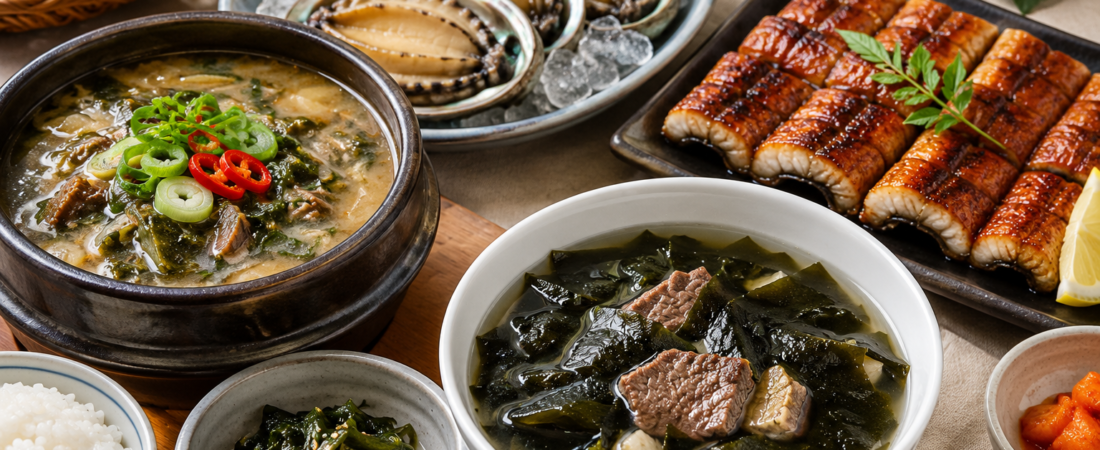
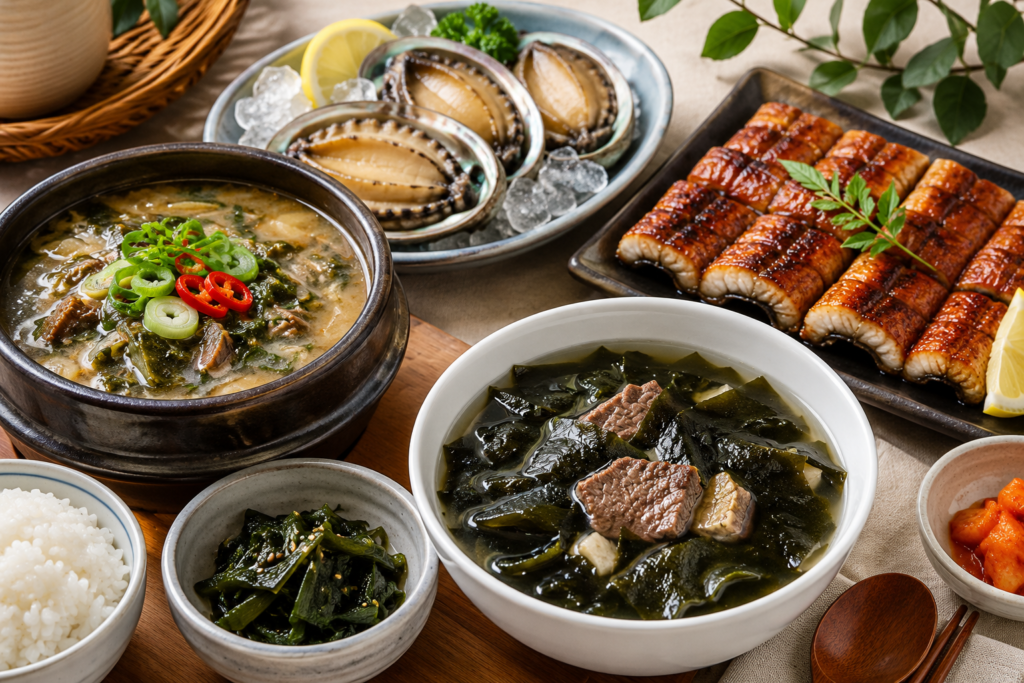
Internet forums and social media are flooded with “proof” of eating so-called “implantation foods.” Abalone porridge, grilled eel, loach soup, beef seaweed soup, and black goat stew are often introduced as if they were secret keys to pregnancy success.
But let’s ask coldly: can a single abalone really help an embryo attach to the uterus?
In reality, there are no reliable clinical studies proving that “eating abalone increases implantation rates” or “consuming loach soup increases pregnancy success rates.” It is difficult to find any domestic or international fertility guideline that recommends specific foods as “implantation stimulants.” Implantation is simply not a process that can be swayed by one or two food items.
Embryos Do Not Eat Abalone
Implantation is one of the most sophisticated biological events in the creation of human life. The embryo must be healthy, the endometrium must have the proper thickness and receptivity, and factors like progesterone levels, the immune environment, and blood flow must all align complexly. Recent studies show that the chromosomal normalcy of the embryo is one of the most important variables.
From this perspective, the culture of “implantation foods” can be an overly simplified interpretation. An embryo with chromosomal abnormalities will not turn into a normal embryo because of a bowl of abalone porridge. A thin endometrium will not thicken because of a bowl of loach soup. It is realistically difficult for any single food to instantaneously change the myriad molecular signaling processes occurring between the embryo and the endometrium.
However, that does not mean “implantation foods” are completely meaningless.
Abalone contains high-quality protein, zinc, and selenium. Loach soup is rich in protein, iron, and calcium. Eel also provides protein and unsaturated fatty acids. Beef seaweed soup helps with iron and protein intake, and black goat stew has traditionally been considered a high-protein health food.
What is important is that these are “nutritious foods,” not “implantation-inducing foods.” Sufficient nutritional status is undeniably important in the process of embryo growth and maintaining the endometrium. But this is a matter of overall health, not the magical effect of a specific food.
What is actually more concerning in fertility treatment settings is the obsessive fixation on these foods. Some patients consume abalone, eel, black goat, samgyetang (ginseng chicken soup), various health supplements, and herbal medicines all at once immediately after embryo transfer. This is because they are anxious. They feel they must do something.
Ironically, behaviors of clinging to these foods and eating only certain things can sometimes backfire. Excessive caloric intake can lead to blood sugar fluctuations, and greasy food can cause digestive issues.
The culture of “implantation foods” might be less about medicine and more about human psychology. Once the embryo transfer is over, there isn’t much the patient can actually do. The embryo selected in the lab has already entered the uterus, and the subsequent process is difficult to control with human willpower.
People find it hard to endure situations they cannot control. So they eat abalone, loach soup, and eel. It is less about believing in the efficacy of the food and more about soothing anxiety. Perhaps the true role of “implantation foods” is not improving implantation rates, but finding peace of mind.
It is more accurate to ask, “What body condition is favorable for implantation?” rather than “What should I eat to get an embryo to attach?”
The answer provided by current medicine is surprisingly ordinary: consume enough high-quality protein, eat a balanced diet of vegetables and fruits, maintain an appropriate weight, sleep well, and avoid smoking and excessive drinking. It is closer to the “basics” than to any special secret.
Life is often much more scientific than we expect. Abalone and loach soup are not “bad” foods; they are, in fact, good, nutritious meals. But they are not the protagonists that determine implantation.
What determines implantation is ultimately a healthy embryo and a prepared endometrium. The dining table can be a supporting actor that assists in the process, but it cannot be the star.