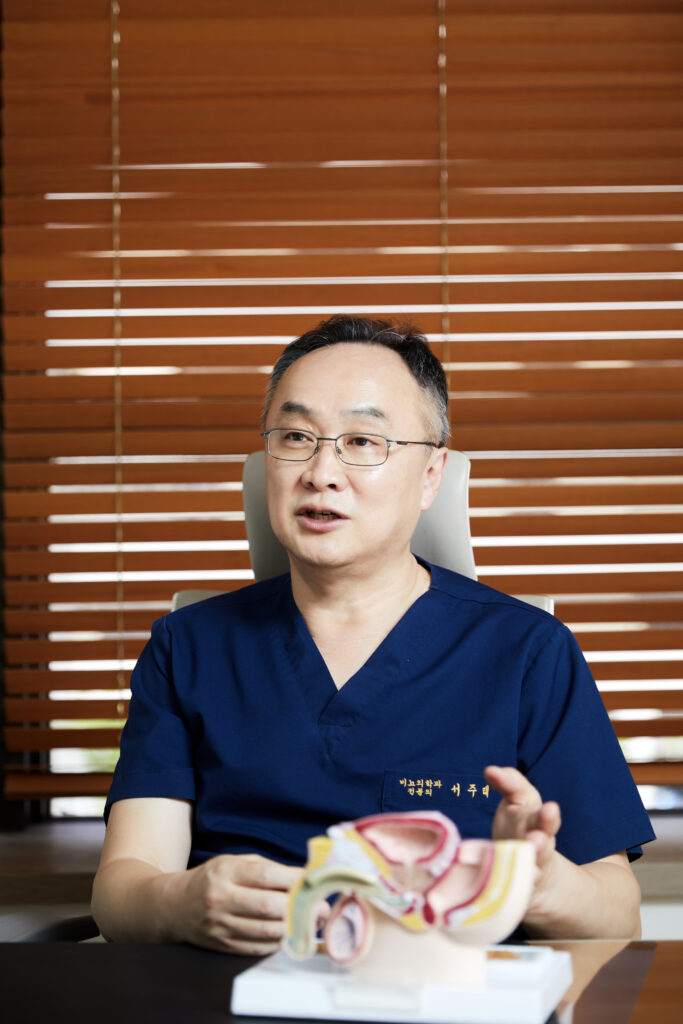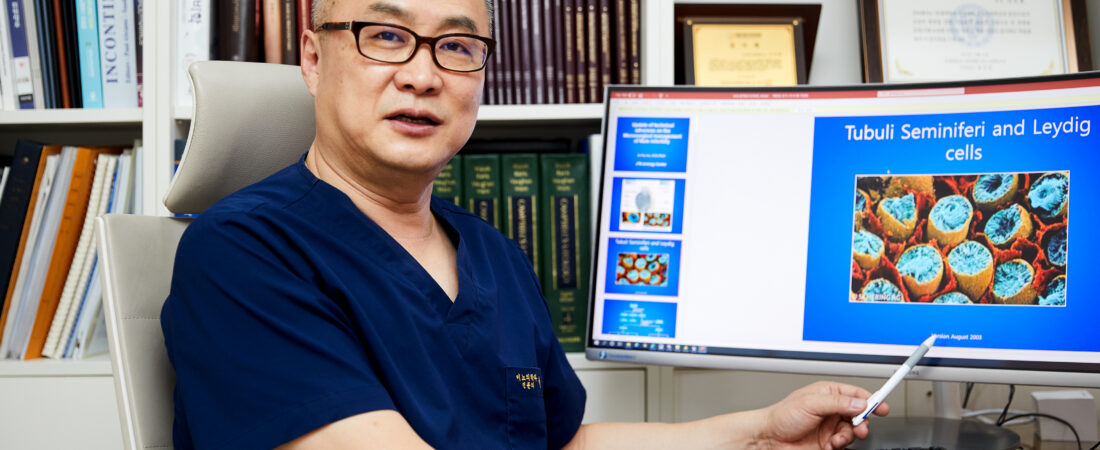
Male Infertility Specialist: Dr. Seo Joo-tae, Urologist
“Even Azoospermia Patients Can Have Children”
- 30% of male infertility is caused by varicocele.
- Do hair loss treatments weaken sexual function?
- Obstructive azoospermia can be resolved with corrective surgery.
- Non-obstructive azoospermia may require microsurgical TESE.
- Exercise is good for fertility, but avoid protein supplements.
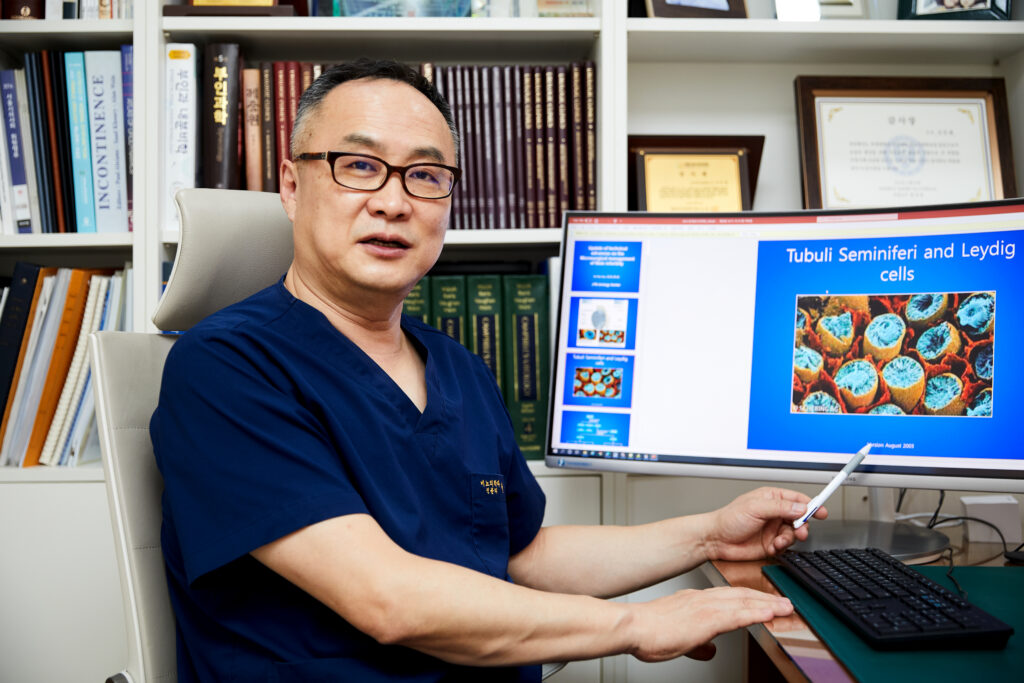
Dr. Seo Joo-tae
- Born in 1961. Graduate of Yonsei University College of Medicine.
- Former Director of Cheil General Hospital, Former Chair of Cheil General Hospital IRB.
- Current Director of Seo Joo-tae Urology Clinic (Seocho-gu, Seoul).
Male factors account for 40% of all infertility cases. Male infertility causes are diverse, ranging from simple sperm disorders like low sperm count or poor motility, to genetic factors like chromosomal abnormalities, and problems with sperm production due to testicular dysfunction or structural issues. In some cases, infertility occurs because the sperm ducts are damaged by sexually transmitted diseases or tuberculosis.
Active Sperm Count Below 500,000 Makes Natural Pregnancy Difficult
In modern reproductive medicine, most sperm issues can be resolved through In Vitro Fertilization (IVF). The real challenge is azoospermia—a condition where there is not a single sperm in the ejaculated semen. Azoospermia can lead to total infertility, not just subfertility. Statistics show that 15–20% of male infertility patients have azoospermia.
We interviewed Dr. Seo Joo-tae, a specialist in male infertility, regarding varicocele and azoospermia.
Is there a standard for judging when natural pregnancy is difficult for men? “There is no absolute standard. If the wife ovulates well and is healthy, natural pregnancy can occur even with low sperm count or motility. However, statistically, we consider natural pregnancy difficult if the active sperm count is below 500,000 in a semen analysis. Semen analysis is not a test to decide ‘if you can or cannot conceive,’ but rather a test to assess the probability.”
I heard that sperm count and motility can improve with 3 months of effort. “That is true. Managing your health by reducing stress, quitting smoking, exercising, maintaining a healthy weight, and following a proper diet can significantly improve your condition.”
Is it true that hair loss treatments weaken male sexual function? “Research shows that while there may be minor changes in semen parameters when taking hair loss medication, it returns to normal once you stop taking it. I recommend pausing the medication if you are planning for a child. Some who claim their sexual function decreased are often in their 50s. Men in their 20s and 30s rarely complain of erectile dysfunction. It is more accurate to view this as the natural age-related decline of male hormones rather than a direct result of the medication.”
Is varicocele a common cause? “Overall, varicocele is found to be the cause in 30% of male infertility cases. It occurs when the veins in the scrotum become enlarged, similar to varicose veins in the legs. This increases testicular temperature and negatively affects sperm production. Substances harmful to the testicles can reflux, and oxygen levels can drop, hindering sperm creation. It is a common condition, and many men are unaware they have it.”
Can you have a natural pregnancy after surgery? “Yes. Natural pregnancy rates for couples where the husband has a varicocele (regardless of the wife’s condition) are less than 10%. After surgical treatment, this rises to 60%. Currently, the health insurance system mandates that if a male has a varicocele during IVF, it should be treated first, because the success rate of natural pregnancy after surgery is more than twice as high as the IVF success rate.”
Obstructive Azoospermia: Solvable with Simple Corrective Surgery
Are there different types of azoospermia? “Yes, obstructive and non-obstructive. In obstructive cases, sperm is produced but cannot be ejaculated due to a blockage in the pathway. In non-obstructive cases, there is an issue with the production process itself.”
Can obstructive azoospermia patients conceive? “Yes, it can be solved with simple corrective surgery. If the epididymis is blocked, a vasoepididymostomy can correct it. If it was caused by a vasectomy, a vasovasostomy (vasectomy reversal) is simple and effective.”
Can you achieve natural pregnancy with corrective surgery? “Yes. Once the pathway is open, if the wife’s fallopian tubes are open, natural pregnancy is possible, or you can start with artificial insemination (intrauterine insemination). Medically and in terms of Korea’s national health insurance system, it is correct to start with corrective surgery. It can prevent the need for IVF entirely. Unfortunately, many urologists are hesitant to perform these surgeries because the medical fees are unrealistically low compared to countries like the U.S.”
What causes obstructive azoospermia? “Some are born without vas deferens (in which case, proceed directly to TESE). Others are caused by STDs, tuberculosis, or inflammation in the prostate or epididymis.”
What if sperm doesn’t come out even after corrective surgery? “Then you must proceed to TESE (Testicular Sperm Extraction) directly from the testicles. In obstructive cases, finding sperm is easy and can be done under local anesthesia without a microscope.”
Non-obstructive Azoospermia: The Challenge of Sperm Production
How is non-obstructive azoospermia diagnosed? “We check testicular size and Follicle-Stimulating Hormone (FSH) levels. Adult testicles should be at least 20cc. If smaller, non-obstructive azoospermia is suspected. If FSH levels are over 12, it is highly likely that there is a problem with sperm production.”
What is the probability of finding sperm through microsurgical TESE? “The probability is about 15–25%. If sperm cannot be found, the only option for pregnancy is using donor sperm from a sperm bank.”
Is it true that I should avoid protein supplements? “I see many men hitting the gym to get ‘six-pack’ abs. While exercise is good, you must never take protein supplements containing steroids. They shrink the testicles and severely degrade sperm production capacity. Also, healthy men of reproductive age should never take male hormone injections, as this makes the testicles lazy and stops them from producing their own hormones.”
What is your message for the government regarding male infertility? “Male infertility cases are increasing rapidly. The problem is that government financial support is concentrated heavily on female infertility, while support for male infertility is severely lacking. To properly support infertile couples, the government must expand policy coverage and financial support for male infertility treatments.”