
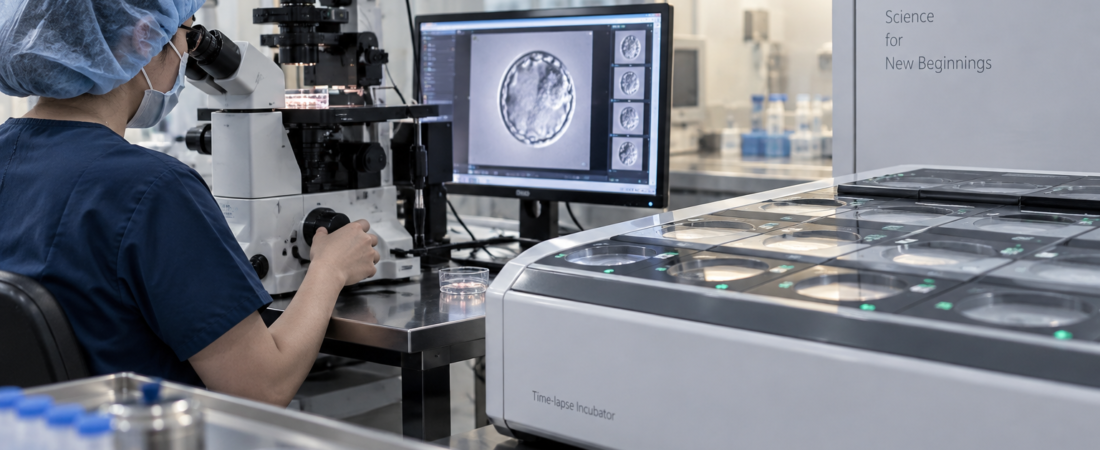
VOC filtration was associated with more high-quality blastocysts after ICSI, but overall blastocyst formation did not change.
IVF laboratory air quality may be associated with embryo grade. After a volatile organic compound (VOC) removal filter was installed in an embryology laboratory, a study found a significantly higher proportion of high-quality blastocysts in intracytoplasmic sperm injection (ICSI) cycles.
Researchers at Kyoto University Hospital in Japan compared embryo development before and after installation. They reported their findings in Clinical and Experimental Reproductive Medicine on October 7, 2026.
Can pollutants in laboratory air affect embryo development?
During IVF, eggs are fertilized and the resulting embryos are cultured in a laboratory. After successive cell divisions, embryos generally reach the blastocyst stage on day five or six after fertilization.
Temperature, humidity, oxygen and carbon dioxide concentrations, and culture-medium composition can all affect this process. Laboratory air quality is another potential influence.
VOCs are chemicals that readily evaporate at room temperature. Building materials, adhesives, cleaning agents and disinfectants can release them. Their entry into laboratory air or the culture environment has raised concerns about possible disruption of eggs and early embryo development.
The researchers compared fertilization and embryo-development measures before and after installing the filter to examine the relationship between improved air quality and development.
More high-quality ICSI blastocysts, without more blastocysts overall
Overall blastocyst formation did not differ significantly before and after installation. In other words, the proportion of embryos reaching the blastocyst stage did not clearly change.
ICSI cycles showed a different pattern for quality: the proportion of high-quality blastocysts was significantly higher after installation, with a P value of 0.0069.
Blastocyst quality is assessed using morphological features of the inner cell mass and the outer cell layer involved in placental development. Embryos with good morphological grades are generally prioritized for transfer, but a favorable grade does not guarantee pregnancy or live birth.
The study suggests that laboratory air management may be associated with morphological quality as well as the broader question of whether an embryo develops.
Why might ICSI embryos show a difference?
ICSI involves an embryologist using a microscope and micromanipulation equipment to inject a single sperm directly into an egg's cytoplasm.
Unlike conventional IVF, it requires direct manipulation of the egg, adding a period of exposure to the laboratory environment outside the incubator.
These procedural differences could make ICSI more susceptible to laboratory air conditions. However, this study cannot establish precisely why the proportion of high-quality blastocysts increased. Patient characteristics, treatment conditions and other changes in the laboratory environment could also have influenced the results.
The laboratory environment is part of the IVF picture
Patients often focus on the number of eggs retrieved, fertilization rates, embryo grades and the endometrium. The environment in which embryos actually grow is less visible to them.
Yet maintaining stable temperature, gas concentrations, equipment conditions and airborne-pollutant control is an important part of embryo culture.
The study is relevant because improved air quality was associated with more high-quality blastocysts under particular treatment conditions. It was nevertheless an observational before-and-after comparison: it does not prove that the filter caused the improvement.
Nor should a higher proportion of high-quality blastocysts be interpreted as evidence of higher pregnancy or live-birth rates. When considering IVF outcomes, the findings support attention to the laboratory environment alongside egg and sperm quality.
Research source
Kyoto University Hospital researchers. “Effects of installing a volatile organic compound-removal filter in a clinical embryology laboratory on embryo development.” Clinical and Experimental Reproductive Medicine, October 7, 2026. DOI: https://doi.org/10.5653/cerm.2026.09369.
Related reading
- Embryologists in IVF: Skill, Checks and Laboratory Safety
- Recurrent Implantation Failure: Why Did a Euploid Embryo Fail?
The illustration was generated with ChatGPT (OpenAI); any depicted people are fictional.
Copyright © 2026 Fertility Information TokTok Fertility News | THE FERTILITY NOTES. All rights reserved. Unauthorized republication, reproduction, redistribution, scraping, AI training and data use of any content, including articles, photographs and images, are strictly prohibited. Violations may result in legal liability.