
Sperm: A Record of Past and Present Life
Men are strangely slow to visit the hospital. This is especially true for urological symptoms. A slight stinging sensation when urinating. A little discharge on the underwear. It seems to get better after a few days.
Many men end their judgment there. They dismiss it, thinking, “I must be tired,” or “It will go away in a few days.”
However, in many cases, when couples visit a fertility clinic because they cannot conceive, they discover histories of untreated sexually transmitted infections (STIs) or recurrent urethritis while trying to find the cause of poor semen analysis results.
Most are shocked. They had never thought that urethritis could be linked to infertility.
In fact, urethritis itself does not necessarily mean infertility. Not every patient with urethritis experiences problems with sperm production. The problem is ignored inflammation. Worse than a house on fire is a fire that you think is out, but continues to smolder deep inside.
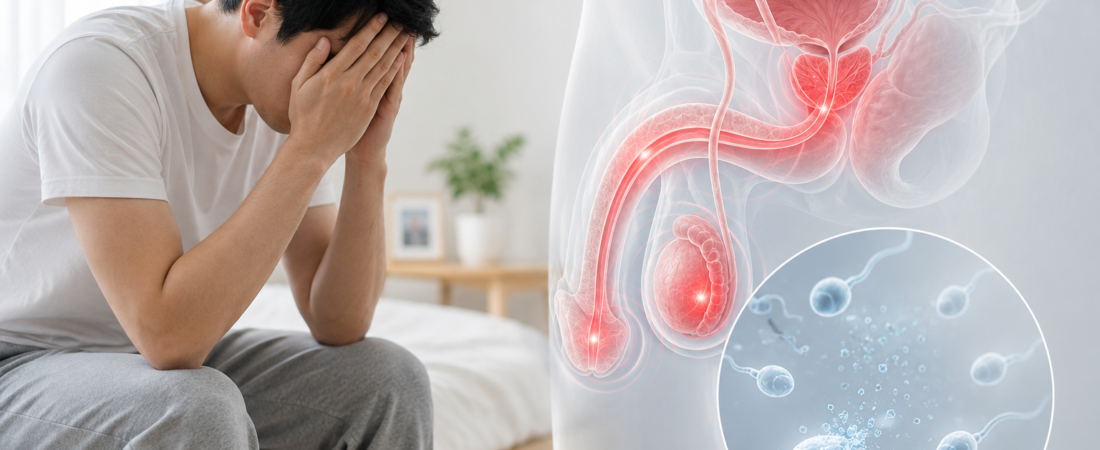
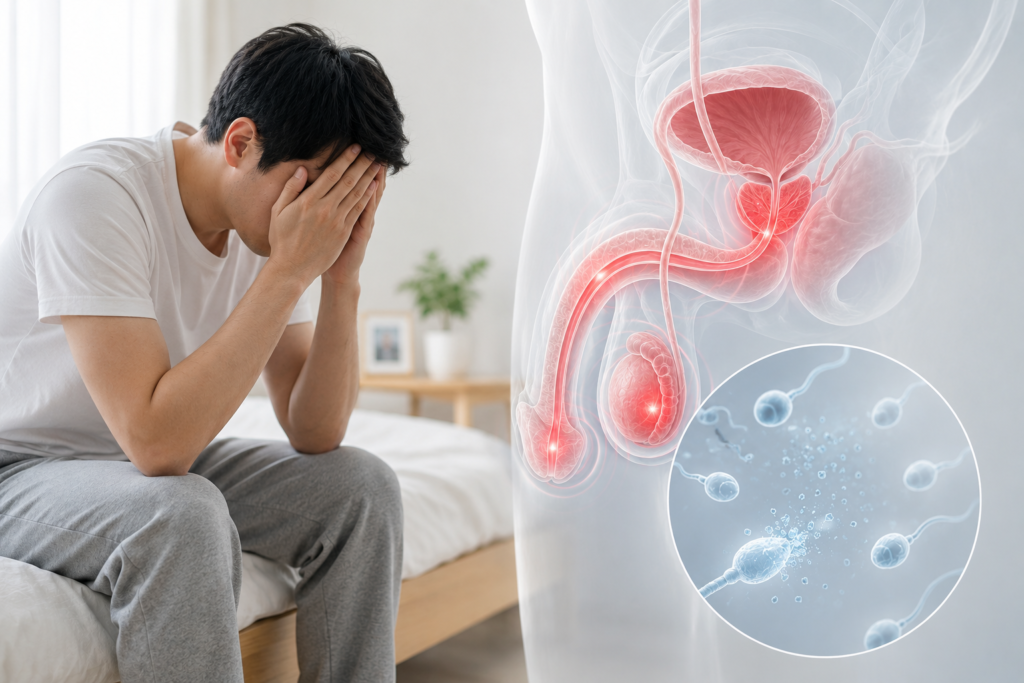
The urethra is like the gateway to the male reproductive system. Inflammation that starts here can spread upward—sometimes to the prostate, sometimes to the seminal vesicles, and sometimes to the epididymis. The epididymis, in particular, is the organ that serves as both a passage and a storage area for sperm. If inflammation occurs here, the situation changes.
When inflammation recurs, tissues can be damaged and scarring can remain. Just as lanes can narrow after road construction, the path sperm travel can become constricted.
In severe cases, the passage through which sperm exits can become blocked. A situation arises where sperm are being produced normally but cannot get out. This can result in a man becoming “obstructively azoospermic.”
The bigger problem is invisible damage.
Recent male infertility research is focusing not only on sperm count or motility but also on DNA health. Chronic inflammation within the reproductive tract increases reactive oxygen species (ROS).
ROS attacks bacteria, but in the process, it also damages our body’s cells. Sperm are no exception. This means that while sperm may appear to be swimming perfectly on the outside, there may be hidden damage to the DNA on the inside.
There is an interesting point here.
Many men are concerned about heart health. They measure blood pressure and manage cholesterol. Yet, they are strangely indifferent to their future reproductive capacity. The reason is that they have no immediate plans for pregnancy.
However, sperm are not made overnight. Today’s lifestyle and health condition determine the state of your sperm several months from now.
In particular, STIs like chlamydia or gonorrhea require extra caution. What is scary is not the symptoms, but the asymptomatic nature of these infections. In fact, many men live for months or even years without even knowing they are infected. Meanwhile, the inflammation proceeds quietly. Just because there is no pain does not mean there is no damage.
In the field of infertility, this expression is often used:
“Eggs age, but sperm record your lifestyle.”
Smoking, obesity, sleep deprivation, excessive alcohol consumption, exposure of the testicles to heat, and recurrent infections all leave traces on sperm. Urethritis is one of them. This is why a problem that started as a simple urinary discomfort can be discovered in an infertility clinic years later.
Of course, there is no need to be excessively afraid. Most cases of urethritis are well-recovered with proper diagnosis and antibiotic treatment. The problem is not the treatment, but the neglect. What is more dangerous than treated urethritis is untreated urethritis.
Medicine has advanced, but it cannot reverse all damage. Restoring a factory that produces sperm is much harder than you might think. That is why prevention is important.
If you are a man who is enduring a stinging sensation when urinating or discharge despite knowing you should seek help, remember this: it may not be just a simple issue with your urinary tract.
While you are currently putting off a medical visit that would take only a few minutes, you might end up spending years trying to conceive a child in the future. The path to becoming a father crumbles in places further away than you think. Sometimes, it starts with a single, seemingly trivial inflammation of the urethra.