
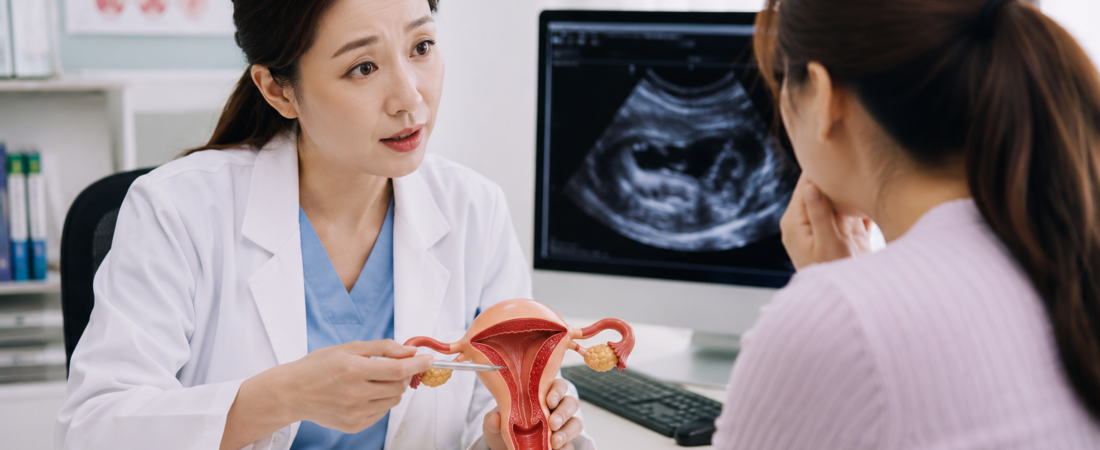
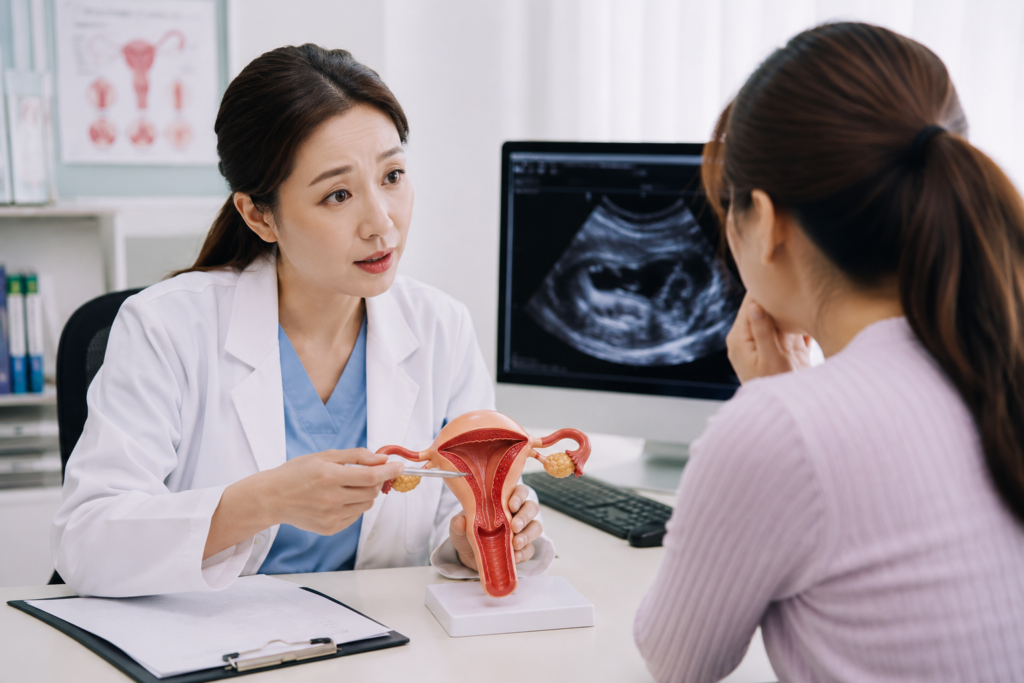
“I Thought It Was Just a Heavy Period”… Uterine Fibroids and Adenomyosis: The Hidden Causes
Menstruation is a vital signal of women’s health. If your menstrual flow suddenly increases, you should not dismiss it as a simple change in constitution. Especially for women preparing for pregnancy, changes in menstrual volume can be a signal that something is wrong with the uterus and ovaries.
Medically, “menorrhagia” (excessive menstrual bleeding) is defined as a total blood loss of more than about 80 mL per cycle, or bleeding that continues to the point where a large sanitary pad needs to be changed every 1 to 2 hours. Repeated passage of blood clots or periods lasting longer than 7 days also fall into this category.
Uterine fibroids are the most common cause of menorrhagia. Uterine fibroids are so common that they are found in nearly half of women of reproductive age. Submucosal fibroids, which grow toward the inside of the uterus, can significantly increase menstrual flow even when small. The uterus cannot contract properly, leading to increased bleeding and, in severe cases, anemia. They are also closely linked to infertility. Submucosal fibroids deform the endometrium where the fertilized egg implants and impair blood flow, lowering success rates for both natural conception and In Vitro Fertilization (IVF). It is not uncommon for them to be discovered as the cause of recurrent implantation failure or recurrent miscarriage.
Adenomyosis is another representative cause. This is a condition where endometrial tissue invades the uterine muscle layer, often accompanied by increased menstrual flow and severe menstrual pain. As the uterus becomes larger and firmer overall, bleeding increases. Adenomyosis can worsen the inflammatory environment in the uterus and increase uterine contractions, hindering fertilized egg implantation. Recently, studies have consistently reported that pregnancy rates improve after treatment for adenomyosis in infertile women.
Endometrial polyps cannot be overlooked. These are small growths within the uterus. They often have no symptoms in daily life but are frequently discovered due to increased menstrual flow or abnormal bleeding. A polyp acts like a small stone sitting in the uterus, obstructing the space where a fertilized egg needs to implant. In fact, when hysteroscopy is performed before IVF, small polyps not visible on ultrasound are often discovered. In such cases, successful pregnancy after removal via hysteroscopy is common.
Endometrial hyperplasia must also be checked. If ovulation does not occur properly or the balance of female hormones is disrupted, the endometrium can become excessively thick. The thickened lining is shed all at once, leading to a significant increase in menstrual volume. This is common in women with Polycystic Ovary Syndrome (PCOS), obesity, or ovulation disorders. If left untreated for a long time, some cases can progress to endometrial cancer, so tissue biopsies are sometimes necessary.
Hormonal imbalances are also a significant cause. Thyroid dysfunction, hyperprolactinemia, PCOS, and diminished ovarian reserve can interfere with normal ovulation. If you do not ovulate, progesterone secretion becomes insufficient, and the endometrium becomes irregularly thick, causing excessive bleeding. This ovulation disorder does not end with menstrual problems; it makes natural conception difficult and can simultaneously affect both egg quality and the state of the endometrium during IVF.
Rarely, endometrial cancer or cervical cancer can be the cause. Especially if menstrual volume has suddenly increased after age 40 or if severe bleeding repeatedly occurs near menopause, you must undergo an OB/GYN examination.
Many women think, “It must be because I’m getting older,” and endure it when their period gets heavier. However, menstruation is a health signal sent by the uterus. Especially if you are planning a pregnancy, menorrhagia is not just a simple inconvenience but a vital clue that can reveal the cause of infertility.
Not all lesions are identified by transvaginal ultrasound alone. Some lesions, like endometrial polyps or small submucosal fibroids, can be missed by ultrasound. If heavy menstrual flow continues or if you do not become pregnant despite repeated IVF procedures, considering a hysteroscopy is often helpful.
While menstruation is a natural phenomenon that repeats every month, a change in menstrual volume is a signal of change sent by your body. If you notice a visible increase in the use of sanitary pads compared to before, or if symptoms like anemia, fatigue, and severe menstrual pain appear, finding the cause is a priority over simply enduring it. Infertility treatment starts not just by looking at the eggs, but by taking care of the uterus where the fertilized egg must reside.