
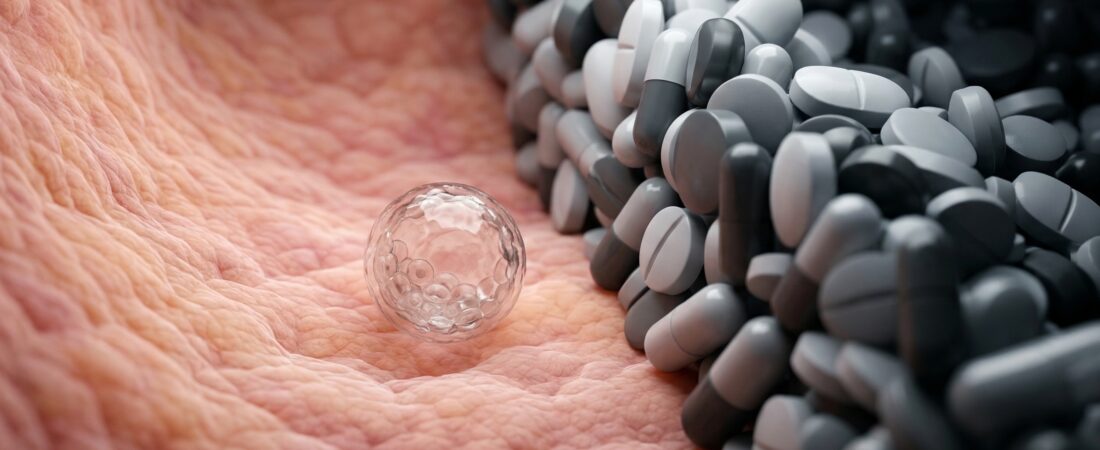
The Hidden Trap of Prolactin
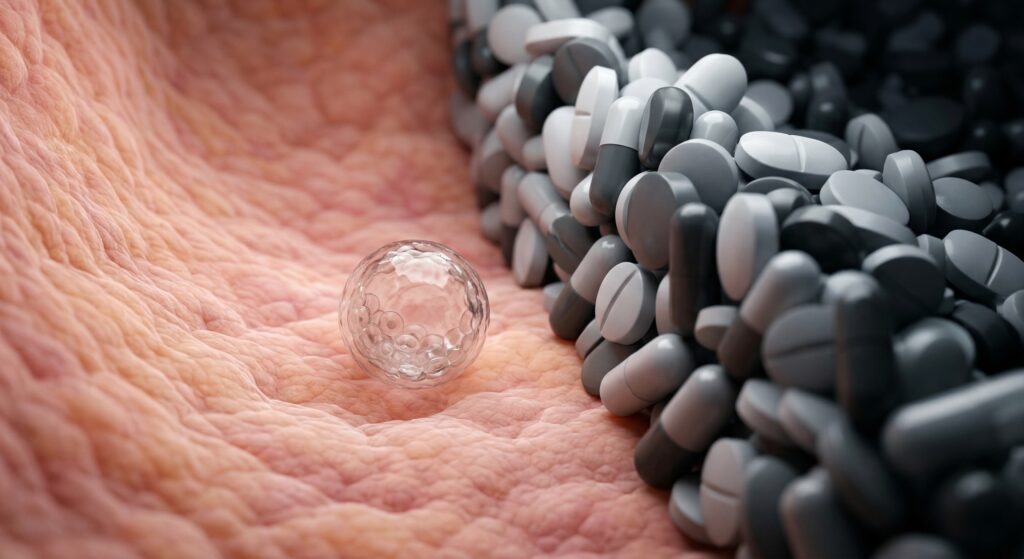
For women actively preparing for pregnancy, the casual assumption that “taking just one minor medication won’t hurt” can introduce an unexpectedly critical variable into their fertility journey.
In particular, the fact that common gastrointestinal medications taken for routine stomach discomfort—or certain drugs utilized for long-term management—can profoundly disrupt delicate hormonal equilibrium is frequently overlooked. In actual clinical practice, when a patient presents with an irregular menstrual cycle and recurrent implantation failure despite having no underlying anatomical disease, unexpected medication history is often identified as the culprit.
At the literal epicenter of this issue sits a specific hormone known as prolactin.
Prolactin is a peptide hormone naturally synthesized by the anterior pituitary gland, primarily responsible for stimulating lactation (milk production) following childbirth. Under physiological conditions, it is entirely natural for prolactin levels to escalate in alignment with pregnancy.
However, when this hormone spikes in a non-pregnant individual, the biological implications alter drastically—a clinical state defined as hyperprolactinemia (고프로락틴혈증). While it may appear on paper as a minor hormonal fluctuation, it functions as a critical systemic variable that can derail the entire process of ovulation and embryo implantation.
There is a distinct clinical red flag frequently observed in reproductive medicine: the spontaneous expression of a milky discharge from the nipples in a non-pregnant woman.
This is not an isolated, benign symptom; it serves as a primary diagnostic clue indicating elevated systemic prolactin levels. The problem, however, does not stop at lactation.
When prolactin rises abnormally, it can actively degrade luteal phase function (황체기 기능 저하). This hormonal insufficiency directly impairs endometrial receptivity, meaning the uterine lining fails to properly prepare for an incoming embryo. Furthermore, this state can compromise the quality of cervical mucus and compress the overall menstrual cycle. Ultimately, hyperprolactinemia shatters both the precise timing and the baseline environment required for successful implantation.
This raises a fundamental question: What causes prolactin levels to spike in the first place?
While lifestyle stressors, psychological strain, and sleep deprivation are documented triggers, the biochemical impact of daily medications is remarkably significant. Clinical data indicates that long-term use of specific gastrointestinal drugs can actively stimulate prolactin secretion.
In particular, medications that interfere with autonomic pathways or act as central dopamine antagonists (도파민 억제제) can induce major shifts in hormonal balance. The real clinical challenge is that these specific drug classes are routinely prescribed for stomach issues and are exceptionally prone to long-term, unmonitored use.
This is where a profound disparity between patient perception and reproductive endocrinology reveals itself.
Many patients continue taking routine medications under the assumption that “a stomach pill is just a stomach pill.” However, from a reproductive endocrinology standpoint, the implications are entirely different. If a patient undergoes advanced fertility treatments while simultaneously taking chronic gastrointestinal medication, microscopic fractures in her hormonal environment—rather than intrinsic embryo quality issues—can silently dictate a negative outcome. Real-world clinical data shows that simply discontinuing or adjusting these targeted medications frequently normalizes the menstrual cycle within a short period.
To be clear, this does not imply that every single gastrointestinal medication poses an immediate threat to fertility.
The primary clinical variables remain the duration of consumption and the drug’s specific pharmacological mechanism on endocrine pathways. If you notice that your menstrual cycle has become irregular or observe unfamiliar physiological shifts after starting a medication, it should not be dismissed as mere fatigue. Instead, checking your baseline serum prolactin level is highly advisable. While this is a straightforward evaluation accomplished via a standard blood test, leaving it uninvestigated can transform it into a chronic, hidden barrier to conception.
Additionally, a crucial diagnostic distinction must be emphasized: not all forms of nipple discharge share the same clinical origin.
While a classic milky discharge is strongly linked to hyperprolactinemia, a yellowish, purulent (고름성) fluid or serous discharge points toward localized mastitis (유관염) or alternative benign or malignant breast pathologies. Furthermore, in cases where serum prolactin levels are found to be excessively elevated, a more profound underlying cause—such as a prolactinoma (a benign pituitary tumor)—must be actively ruled out. Because a tumor pathway cannot be resolved through simple medication adjustments, a comprehensive, multi-disciplinary diagnostic evaluation becomes essential.
Fortunately, once the specific underlying trigger is identified, the vast majority of hyperprolactinemia cases are highly manageable.
Targeted pharmacological therapies can effectively restore optimal hormonal equilibrium, and when combined with structured lifestyle modifications, patients routinely return to healthy ovulatory patterns and regular cycles. However, if a clinician fails to identify this underlying variable and proceeds solely with repetitive, aggressive assisted reproductive technologies, this invisible endocrine barrier will continue to compromise the results.
Ultimately, the core principle is simple. Overcoming infertility is not merely an isolated quest to secure a viable embryo; it is a comprehensive management of the body’s holistic hormonal ecosystem.
And that ecosystem can be destabilized by a seemingly minor daily habit or a single routine pill. Preparing for a healthy pregnancy means that before diving into intensive medical protocols, you must first pause, evaluate, and restore the baseline internal balance of your body.