
Focus on “Proper” Intake Rather Than “High” Intake Folic Acid Is Essential for Pregnancy Preparation
“Vitamins—What on earth should I be taking?”… Everything You Need to Know About Vitamins from A to K
Go to a pharmacy, and you will find dozens of types of vitamins. We know Vitamin C, but why are there so many B vitamins? Why is Vitamin D considered mandatory? And is Vitamin E really good for the skin? Many people take a multivitamin while wondering, “What exactly am I taking right now?”
Vitamins are essential nutrients that our body needs in very small amounts, but without them, vital life processes cannot function properly. If carbohydrates, proteins, and fats are the fuel, vitamins are the “engine oil” that allows that fuel to be used correctly. If they are lacking, thousands of biochemical reactions in the body begin to stall.
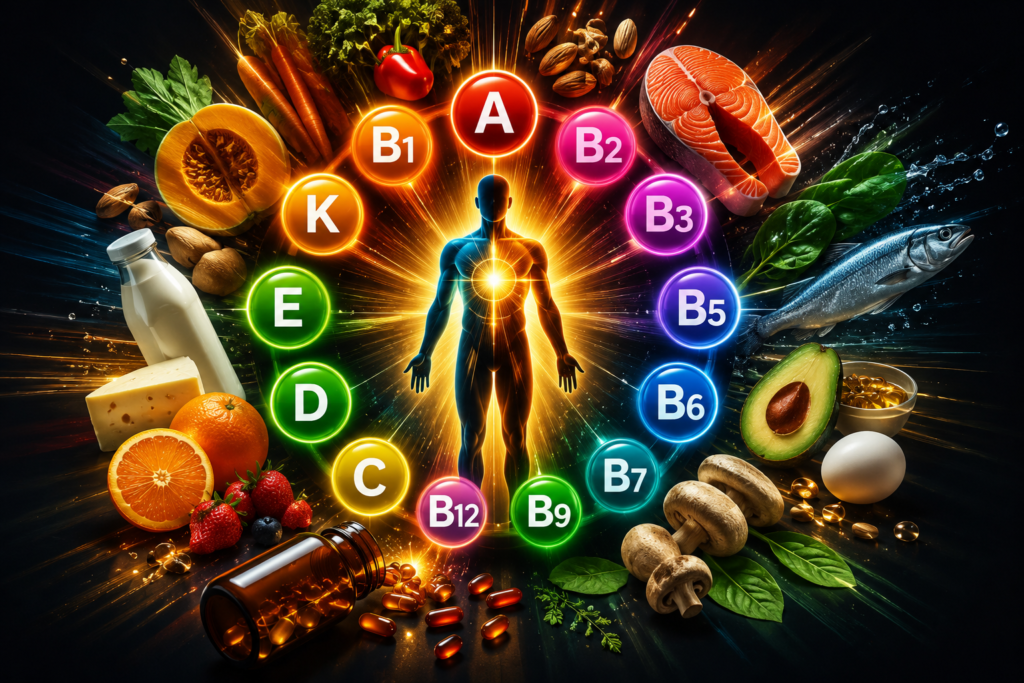
Vitamins are broadly categorized into fat-soluble (A, D, E, K) and water-soluble (B complex, C). Fat-soluble vitamins are stored in the body, so excess intake can lead to toxicity, whereas water-soluble vitamins are mostly excreted in urine, making steady, daily intake important.
- Vitamin A protects eyes, skin, and immunity.
- B Complex is not just one vitamin, but an “energy production team” of eight. They play a key role in converting food into energy and creating brain tissue, nerves, and blood.
- Vitamin C provides powerful antioxidant effects, supports collagen production, and aids iron absorption.
- Vitamin D affects not only bone health but also immunity and muscle function.
- Vitamin E protects cells from oxidation.
- Vitamin K is essential for blood coagulation and building strong bones.
However, more is not always better. Fat-soluble vitamins (A, D, E, and K) can actually harm your health if taken in excess because they are stored in the body.
The best source of vitamins is not a medicine bottle, but your dining table. Eating a balanced diet of vegetables, fruits, fish, eggs, legumes, and nuts is enough to get most of the vitamins you need.
If you are preparing for pregnancy, you need to pay even closer attention.
The most important vitamin is Folic Acid (Vitamin B9). Because the neural tube—which develops into the fetus’s brain and spine—is formed before most women even know they are pregnant, it is recommended to consume 400μg of folic acid daily starting at least one month before conception.
Research consistently shows that Vitamin D is related to ovarian function, endometrial environment, and immune regulation; supplementation can be helpful if levels are deficient.
Vitamin B12 is necessary for blood and DNA formation along with folic acid, and for men, Vitamins C and E act as antioxidants that protect sperm from oxidative stress. Conversely, high doses of Vitamin A should be avoided during pregnancy preparation and the early stages of pregnancy due to the risk of fetal malformation.
Ultimately, vitamins are neither a panacea nor nutrients that are better the more you take. Consuming the right amount of the vitamins you need, tailored to your health status, is most important. For couples waiting for pregnancy, the surest first step toward a healthy pregnancy is not expensive supplements, but a foundation of folic acid and Vitamin D combined with balanced meals and healthy lifestyle habits.