
7mm is Just a Benchmark; the Quality of the Endometrium Determines Implantation
“How many millimeters thick should my endometrium be to get pregnant?”
If you are preparing for In Vitro Fertilization (IVF) or natural conception, you have probably heard this at the hospital at least once: “Your lining is a bit thin.”
You might hear that while your embryo grade is excellent, the endometrium hasn’t grown enough, leading to a delay in transfer or a recommendation to increase estrogen medication. Then, everyone asks the same question:
“Is there any natural way to thicken the endometrium, other than medication?”
The answer is a bit unexpected: “Yes, but it is limited.” Above all, you must first understand what the endometrium actually is.
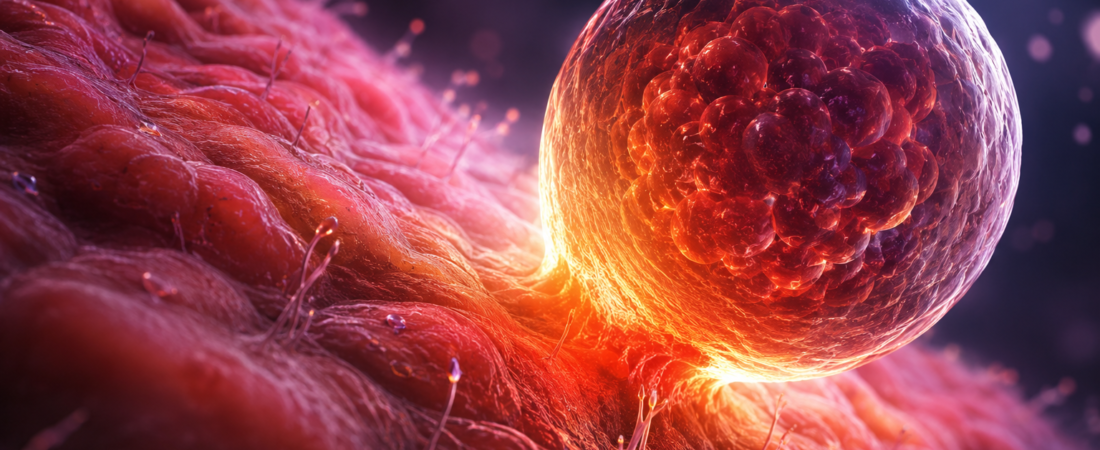
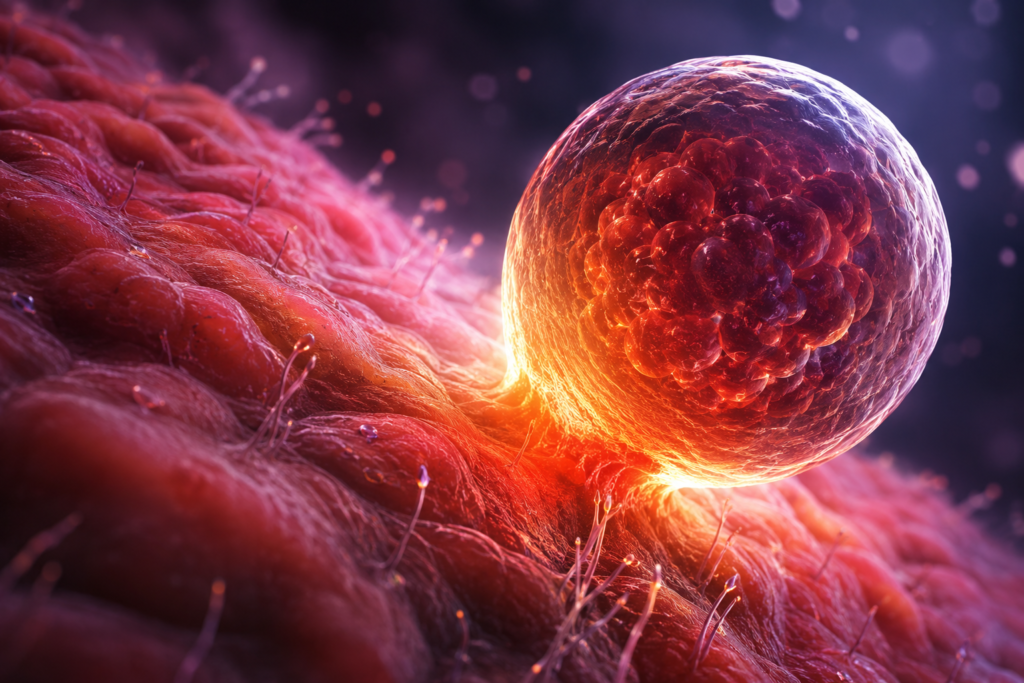
The endometrium is a very special tissue lining the inside of the uterus. It thickens under the stimulation of estrogen (E2), a female hormone secreted as eggs grow in the ovaries every month, and after ovulation, it prepares to welcome an embryo under the influence of progesterone.
When a fertilized egg arrives, it burrows into this tissue for implantation; if pregnancy does not occur, the lining is shed along with menstrual blood. In other words, the endometrium is one of the most dynamic tissues in the human body, created anew every month and then disappearing.
The endometrium is often compared to a “bed.” No matter how healthy an embryo is, it is difficult for it to settle comfortably on a hard floor. Conversely, a bed that is too soft or in poor condition cannot be a good environment. A proper thickness and a healthy state for the embryo to stay must both be present.
So, how many millimeters should the endometrium be?
While there is no absolute standard, in current reproductive medicine, an endometrium of 7mm or more at the time of ovulation or embryo transfer is generally considered within the range where implantation is possible.
A range of 8–12mm is often evaluated as the most ideal, and studies consistently report that pregnancy success rates may be lower when it is below 6mm. Of course, there are cases where pregnancy occurs at 5–6mm, and pregnancy is not guaranteed just because it is over 12mm. Numbers are probabilities, not absolute standards.
In reality, what doctors look at more importantly than thickness is the quality of the endometrium. Whether the “triple-line” pattern visible on ultrasound is well-formed, whether blood flow to the uterus is sufficient, whether there is inflammation, and whether receptivity to the embryo is present all have a greater impact on implantation. An endometrium of 9mm may be difficult for implantation if its function is poor, while a 7mm-thick but healthy endometrium often succeeds in implantation. However, even if implantation occurs, the outcome until birth depends on how healthy the embryo is.
Then, what are the ways to make the endometrium even slightly healthier without using medication?
Surprisingly, the methods with the most evidence are quite ordinary.
Regular, light exercise. Aerobic exercise like walking or indoor cycling for 30–40 minutes a day may help improve pelvic blood flow. Conversely, excessive high-intensity exercise can hinder ovulation or disrupt hormonal balance, so moderate exercise is more important during the period of preparing for pregnancy.
Sufficient protein. Since the endometrium is a tissue where new cells are constantly being created, it is helpful to consume about 1.2–1.5g of protein per kg of body weight daily through eggs, fish, tofu, legumes, and lean meat. Extreme dieting or being underweight can reduce estrogen secretion, leading to a thin lining.
Lifestyle habits cannot be ignored either. Smoking is well-known for reducing uterine blood flow, and excessive drinking, chronic sleep deprivation, and sustained stress also have negative effects on reproductive function. While there is no definitive evidence that keeping the abdomen warm thickens the lining, avoiding excessive cold exposure is a lifestyle habit commonly recommended in fertility clinics.
There is also a lot of interest in nutritional supplements. There are studies suggesting that Vitamin D deficiency can lower implantation and pregnancy rates, but there is still insufficient evidence that Vitamin D itself thickens the lining. Omega-3 is also taken by many for its blood flow-improving effects, but evidence that it significantly increases endometrial thickness is limited.
Recently, antioxidant nutrients like Vitamin C, Vitamin E, Coenzyme Q10, and L-arginine are being researched. In particular, L-arginine helps produce nitric oxide, which dilates blood vessels, and some studies have reported increased thickness in women with thin endometria; however, these studies are still small-scale, so it is not recommended as a standard treatment.
Ultimately, the most important thing is to have realistic expectations. It is not common for the endometrium to noticeably thicken by 2–3mm through natural methods alone. If you boost your overall health through regular exercise, a balanced diet, maintaining an appropriate weight, smoking cessation, sufficient sleep, and stress management, you increase the likelihood that your endometrium will maintain its best state.
Pregnancy is achieved neither by a good embryo alone nor by a thick endometrium alone. Implantation begins only when a healthy embryo, a healthy endometrium, and the precise timing of their meeting align. The endometrium is not merely a “number of millimeters”—it is the most important stage that finishes its preparation for a whole month to welcome a new life.