
The Implantation Truth Governed by the Gut
Among women undergoing fertility treatments, the phrase “probiotics are an absolute non-negotiable” is increasingly becoming accepted as common sense. In fact, within online fertility communities, it is not uncommon to hear anecdotes of women who conceived during In Vitro Fertilization (IVF) cycles after rigorously taking probiotic supplements. This raises a straightforward question: Do probiotics genuinely improve pregnancy success rates, or are they simply another overhyped wellness trend?
The origin of this scientific discussion dates further back than most realize. A study published in a prominent European reproductive journal in 2005 highlighted the potential link between lactic acid bacteria and reproductive function. The researchers demonstrated that when probiotics were administered to zebrafish, the protocol triggered a measurable increase in oocyte (egg) maturation and overall fecundity, alongside distinct alterations in related genetic signaling pathways. While translating data from animal models directly to human physiology has inherent limitations, it provided a definitive foundational clue: the gut microbiome and reproductive systems are intrinsically linked.
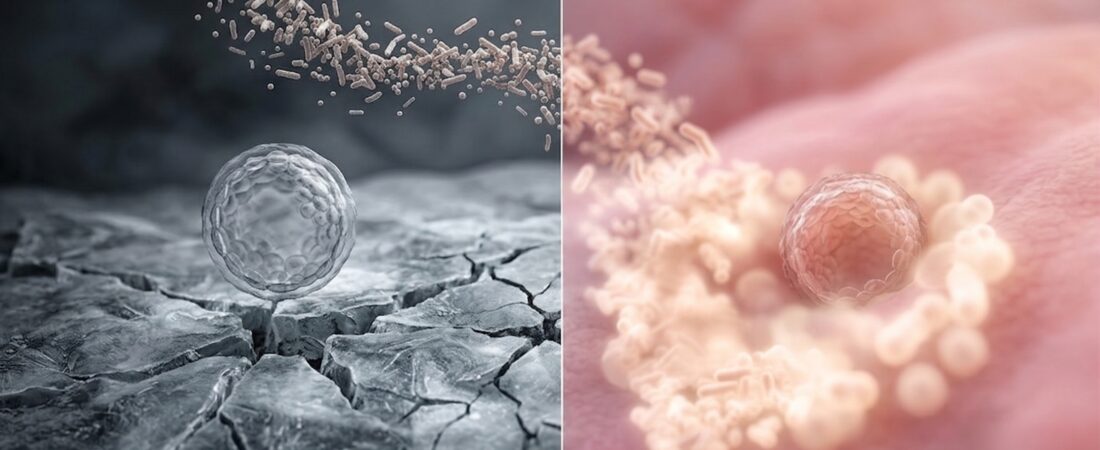
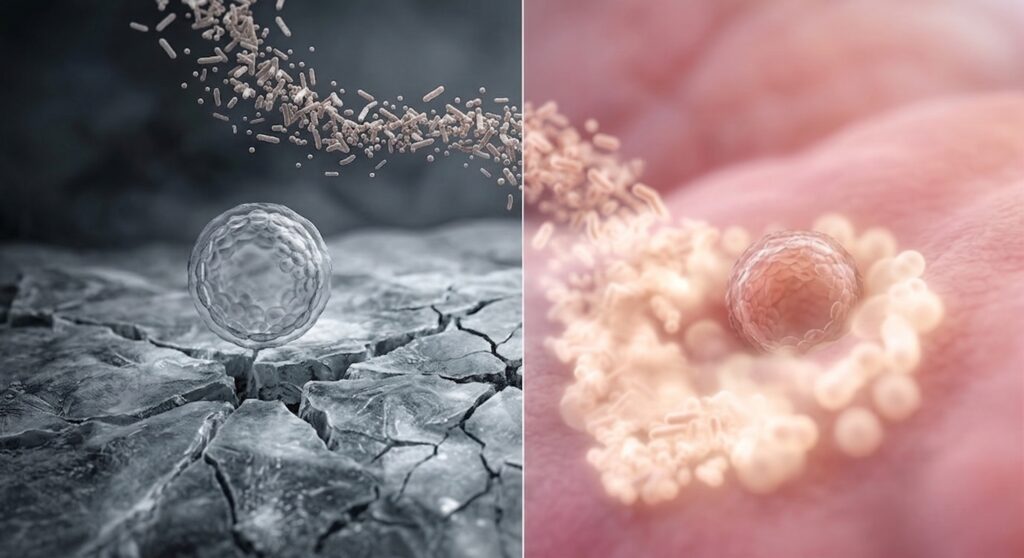
From a clinical standpoint, the localized microenvironment of the vagina and the gut commands the most attention. Probiotics help optimize the female reproductive tract by increasing the population of beneficial Lactobacillus species. These bacteria synthesize lactic acid, lowering the local pH to actively inhibit the proliferation of pathogenic microorganisms and stabilize the local reproductive immune environment. When subclinical infections and inflammatory responses are minimized, hostile barriers to embryo implantation are naturally reduced. For this reason, many reproductive endocrinologists actively recommend targeted probiotic supplementation.
There is another highly pragmatic clinical factor to consider: chronic constipation. Due to their distinct endocrine architecture, women are biologically far more susceptible to constipation than men. Specifically, progesterone—the dominant hormone secreted during the luteal phase and early pregnancy—acts as a natural smooth muscle relaxant, which suppresses intestinal peristalsis (연동운동) and delays transit time.
The aggressive gonadotropin injections utilized during controlled ovarian hyperstimulation in IVF cycles severely exacerbate this sluggishness. When the digestive tract stagnates, it does more than cause physical discomfort; it degrades the gut microbiome, which can pave the way for low-grade systemic inflammation and immune dysregulation. Within this framework, probiotics serve as a baseline therapeutic tool to restore healthy intestinal rhythms.
The most cutting-edge area of research currently focuses on the field of reproductive immunology. Given that over 70% of the body’s immune cells reside within the gut-associated lymphoid tissue (GALT), the state of the intestinal microbiome directly dictates systemic immune behavior. Emerging studies suggest that in patients exhibiting abnormally elevated Natural Killer (NK) cell activity, consistent probiotic intake may aid in modulating and balancing these immune responses.
Embryo implantation is not merely a mechanical attachment; it is a highly sophisticated immunological negotiation where the maternal immune system must recognize and actively tolerate a semi-allogeneic embryo. Considering that immunological dysfunction is frequently identified as a primary catalyst for recurrent implantation failure (RIF) and early miscarriage—especially in patients of advanced maternal age—this cellular connection cannot be ignored.
However, a strict clinical line must be drawn here: probiotics are not a pharmaceutical drug that manufactures an implantation.
The absolute core determinants governing IVF outcomes remain intrinsic embryo quality, endometrial lining receptivity, precise hormonal synchronization, and clinical transfer strategies. Probiotics function more as a supportive environmental primer that refines the biological soil upon which these core processes take place. Simply put, they do not act as a wild card that alters the final result, but rather as a stabilizing variable that optimizes the baseline conditions.
Another common misconception is viewing probiotics as a universal panacea. While a wealth of contemporary research confirms that gut health influences everything from systemic immunity to the synthesis of serotonin (the neurotransmitter regulating mood), it is medically irresponsible to claim that taking a supplement translates directly into a positive pregnancy test. What remains undeniable, however, is that optimal gut health is a prerequisite for holistic metabolic balance—and it is upon that very foundation of balance that reproductive function stabilizes.
Ultimately, the entire clinical paradigm distills into a single truth: probiotics do not generate a pregnancy; rather, they contribute significantly to cultivating the physiological environment where a pregnancy can successfully occur.
Overcoming infertility is rarely achieved through an isolated miracle drug or a single superfood. Instead, it is a clinical discipline where microscopic, supportive variables compound to tip the scale toward success. Intestinal health, immunological equilibrium, and synchronized endocrine rhythms—it is upon this invisible, tightly woven foundation that successful implantation finally becomes possible.