
Can we grant youth back to human eggs? Science has taken a cautious step closer to answering this question, which has long stood as the ultimate frontier in fertility treatment.
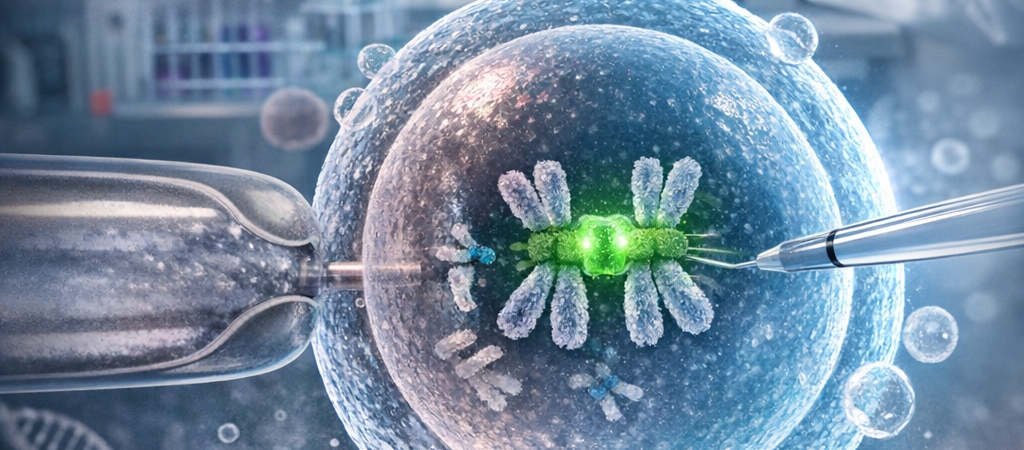
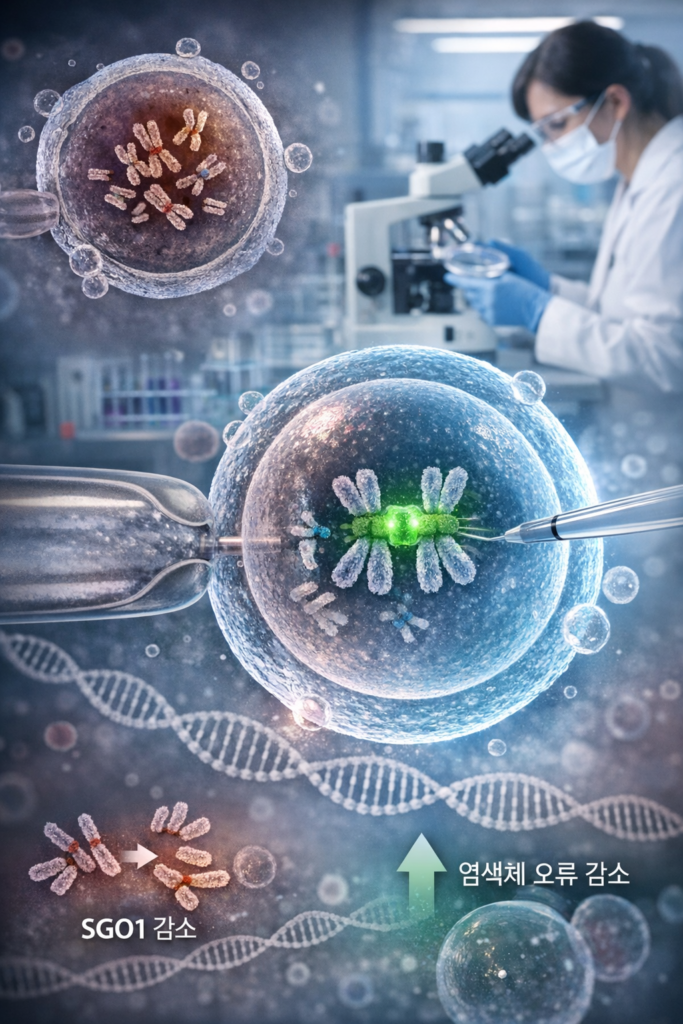
In a preclinical study unveiled in early 2026, researchers focused on Shugoshin 1 (SGO1), a protein known to decline in human eggs as they age. This protein acts as a biological anchor that holds chromosomes together. As it depletes with age, its function weakens, leading to a failure in proper chromosomal segregation and a subsequent rise in genetic errors. The research team noted that supplementing SGO1 function resulted in a meaningful reduction in these chromosomal segregation errors. In certain experiments, instances of “premature separation”—identified as the core of the problem—were slashed by nearly half.
As this news broke, the media reacted with rapid enthusiasm. Headlines blared terms like “Egg Rejuvenation” and “A Breakthrough for Advanced Maternal Age,” instantly spreading a wave of anticipation that the entire landscape of IVF was about to change.
However, this is precisely where we must pause and take a step back.
This research remains strictly in the preclinical phase and represents early-stage results achieved under highly controlled, limited conditions. Most crucially, there is currently no evidence demonstrating that these findings translate to higher pregnancy or live birth rates in actual clinical practice. Reducing chromosomal errors inside an egg does not automatically guarantee the formation of a healthy embryo, let alone a successful pregnancy. The intricate, multi-layered hurdles of post-fertilization embryonic development, implantation, and maintaining a pregnancy still lie ahead.
Why the Breakthrough Still Demands Our Attention
Until now, IVF technology has evolved primarily around observing embryos with greater precision and selecting the highest-grade candidates. In short, it has been an “art of selection.”
This study, however, fundamentally reconfigures the starting line by asking entirely different questions:
- “Can we create a better egg from the very beginning?”
- “Can we minimize the errors that occur within the egg itself?”
This shift is profoundly meaningful because it attempts to drag fertility treatment down into a one-step deeper, more fundamental dimension.
Yet, the hurdles to overcome are immense. The safety of directly intervening with human eggs has not been thoroughly verified, and the long-term impacts remain entirely unknown. For this to be applied in real-world clinics, years of additional research and rigorous validation will be required. While science has undeniably presented a new possibility, a substantial chasm of time remains before that possibility matures into an actual therapy.
History shows that in reproductive medicine, journeys that began with understanding a single protein or a solitary mechanism have frequently culminated in standard clinical treatments. There is a distinct possibility that this study marks exactly that kind of historic starting point.
But we must be entirely clear about one thing: at this current stage, the term “egg rejuvenation” is a linguistic leap that outpaces the scientific facts. This research has not reversed the age of an egg; rather, it has demonstrated a potential to reduce a fraction of the errors that occur during the aging process.
Through the lens of a specialized fertility journalist, this news illuminates two realities simultaneously.
The first is undeniable progress. It is immensely significant that fertility treatment is finally taking direct aim at the root cause: egg aging. It signals a transition from an era of selecting the best candidates to an era of engineering a better starting point.
The second, however, is a familiar illusion—our habitual tendency to mistake a single step in science for the completion of a cure.
What a patient truly needs inside a clinic is not a distant future possibility, but a choice that is viable right now. In that sense, the true message of this study is beautifully simple: It is not that we can now reverse the aging of an egg, but that we finally understand a little more accurately why it degrades in the first place.
Disclaimer: This content is provided for informational purposes, based on reporting on infertility and various public data. Medical judgments and treatment decisions must always be made in consultation with professional medical personnel. Image: AI-generated (ChatGPT, OpenAI) / Visual reference for illustrative purposes only.