
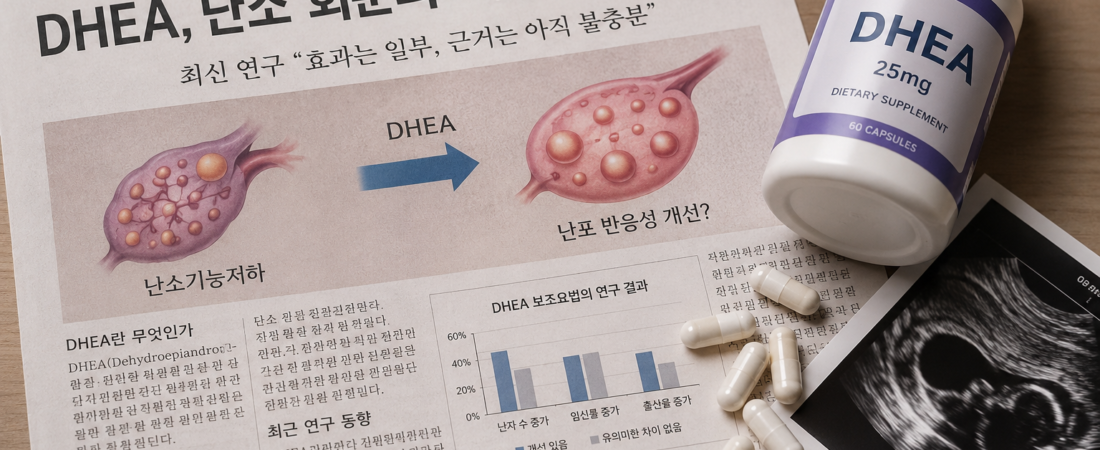
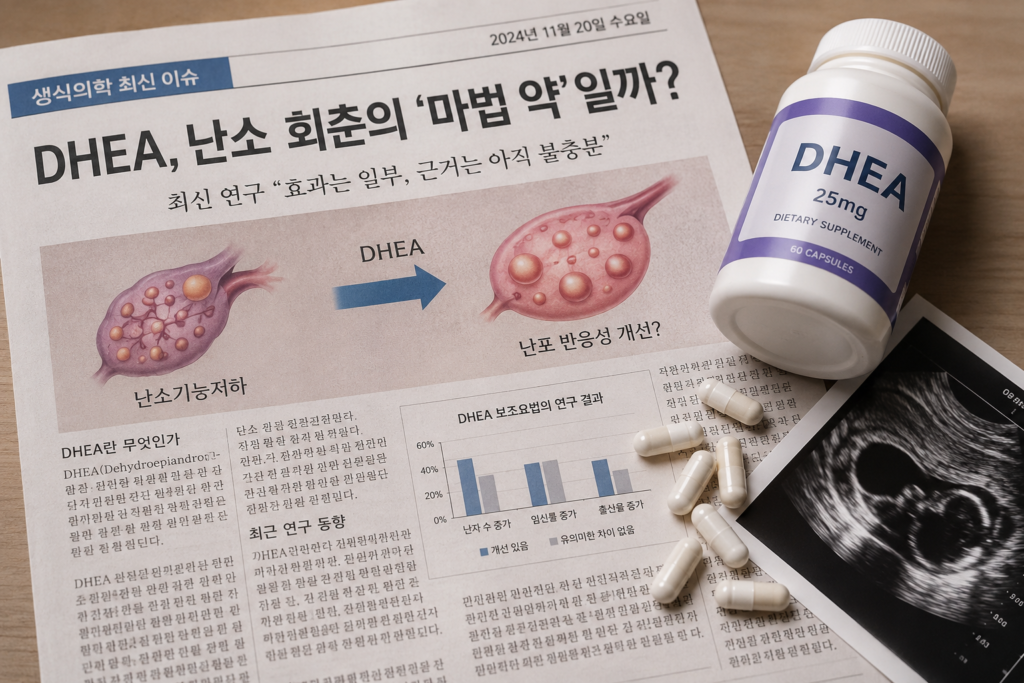
In the world of fertility forums, DHEA is often whispered about as a “miracle supplement”—a substance capable of “waking up” the ovaries and reversing the biological clock. However, while DHEA is a legitimate component of some clinical protocols for diminished ovarian reserve, the distinction between “rejuvenation” and “sensitization” is vital for patients to understand.
The Strategy: Sensitizing, Not Rejuvenating The fundamental misunderstanding is that DHEA “rejuvenates” the ovaries. Current medical science does not possess the technology to turn an aging ovary young again.
Instead, DHEA—a precursor to androgens—functions by changing how the ovary communicates with hormones. In patients with diminished ovarian reserve, the small, dormant follicles often lose their sensitivity to Follicle-Stimulating Hormone (FSH). DHEA supplementation is believed to increase the expression of FSH receptors on the granulosa cells surrounding these follicles.
In simpler terms: DHEA acts like a hearing aid for the follicles. It doesn’t create new follicles or “reset” the ovary’s biological age; it simply helps the follicles “hear” the FSH signal more clearly, potentially allowing more follicles to be recruited during an IVF cycle.
The Clinical Reality: Mixed Results Early studies on DHEA showed promising results, sparking the excitement we see today. However, recent clinical experience and large-scale data, particularly from the European Society of Human Reproduction and Embryology (ESHRE), have been more cautious.
- The Quantitative Trap: While some studies show an increase in the number of retrieved eggs, the correlation with Live Birth Rates is inconsistent.
- The False Metric: Patients often worry if their AMH levels haven’t soared after DHEA use. It is crucial to remember that a temporary fluctuation in AMH does not mean the ovary itself has biologically aged backward.
Why the Discrepancy? The data on DHEA is notoriously “noisy.” Results vary wildly because the underlying causes of ovarian decline are heterogeneous. What helps one patient—whose primary issue is receptor sensitivity—may provide zero benefit to another whose primary issue is mitochondrial depletion or chromosomal integrity.
The Peril of Misplaced Hope The most dangerous narrative is the belief that DHEA is a substitute for time. In the clinic, we see patients who delay more definitive fertility paths (such as immediate IVF or donor egg discussions) because they believe DHEA is actively reversing their age-related decline.
DHEA should be viewed as a supplementary tool, not a primary therapy. It is an attempt to optimize the current pool of follicles, not a means to restock the supply or erase years of biological aging.
Conclusion: A Tool, Not a Miracle If you are considering DHEA, approach it with pragmatic expectations. It is not a fountain of youth for the ovaries; it is a pharmaceutical strategy designed to improve the recruitment efficiency of follicles that are already present.
- Consultation is Key: Because it affects hormone levels (androgens), DHEA must only be taken under the supervision of a reproductive endocrinologist who can monitor your androgen profile and determine if your specific type of ovarian reserve reduction will benefit from this approach.
In the pursuit of parenthood, strategy is more reliable than hope alone. Use the tools available to you, but keep your eyes on the reality of your biological clock. DHEA can help you get the most out of your current reserves, but it cannot make you twenty years old again. Focus on maximizing the efficiency of what you have, rather than chasing the myth of restoration.
Sources: ESHRE guidelines on ovarian stimulation; clinical reviews on androgen supplementation in IVF (Fertility and Sterility).
Disclaimer: This report is for informational purposes. DHEA is a hormonal precursor and can have systemic effects. Do not initiate DHEA supplementation without professional medical guidance and baseline hormone testing.