
“There are no sperm.” In the context of fertility treatment, this is often a sentence of profound finality. For men diagnosed with non-obstructive azoospermia, it has traditionally signaled the end of the road for biological fatherhood, sometimes leading to invasive surgical interventions like micro-TESE (microdissection testicular sperm extraction).
However, a breakthrough at Columbia University’s Fertility Center is challenging this long-held clinical boundary. By utilizing an AI-based sperm search system named STAR (Sperm Tracking and Recovery), researchers have successfully identified viable sperm in samples previously classified as azoospermic—and, crucially, used those sperm to achieve successful pregnancies.
The “Needle in a Haystack” Problem In a standard IVF laboratory, the search for sperm is a manual, fatigue-inducing task. An embryologist scans through a “sea” of cellular debris and protein aggregates under a microscope. Even for the most experienced experts, fatigue sets in after hours of scanning, and the human eye can easily miss cells that are partially hidden or obscured.
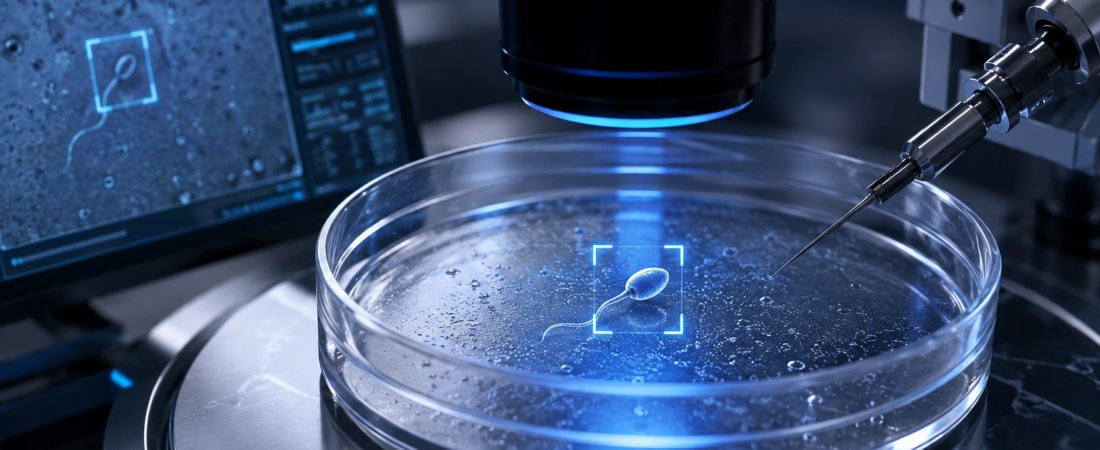
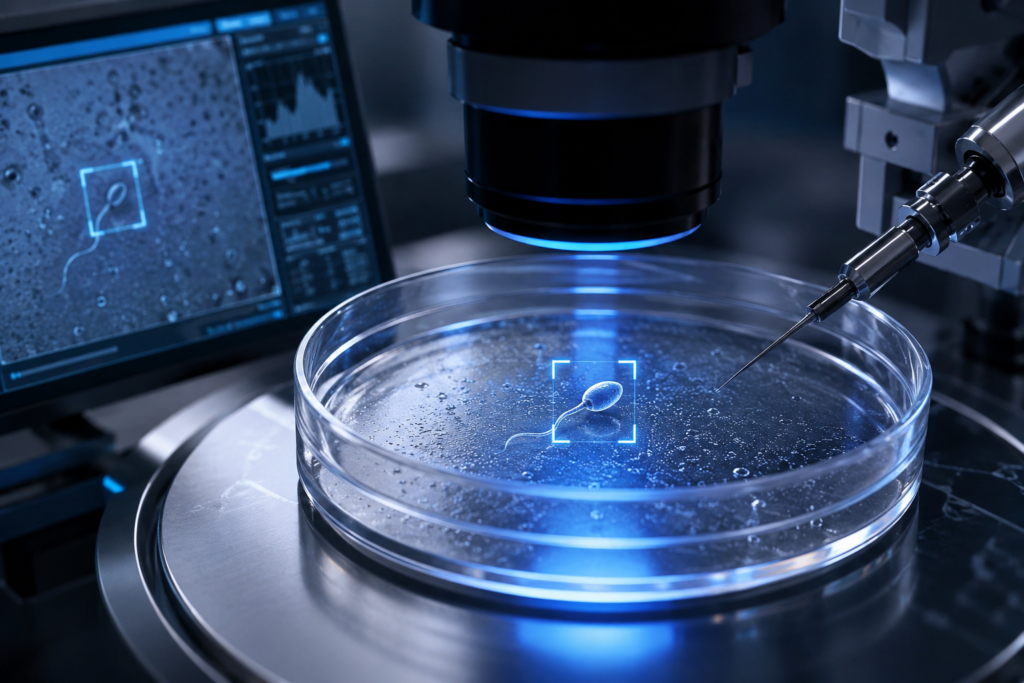
The STAR system approaches this differently. Inspired by algorithms used in astronomy to detect faint stars in the vastness of space, the AI scans the entire sample. It captures millions of high-speed images in under an hour, using computer vision to flag potential sperm cells that human eyes would inevitably overlook. Once identified, microfluidic and robotic systems recover the cells. This automated process is not only more efficient but also reduces mechanical damage compared to traditional centrifugal methods.
Results That Defy Odds The success stories coming out of this research are staggering. In one case, the AI identified only eight viable sperm; in another, only two. Yet, from those mere two cells, a successful fertilization occurred, an embryo developed, and a healthy child was born. These are not just “successful surgeries”; they represent a fundamental shift in the definition of infertility.
Implications for the Future of IVF The global reproductive medicine community is closely watching these developments. While AI has already been used for embryo grading and developmental forecasting, this is the first time AI has crossed the line from “analytical assistant” to “diagnostic discoverer.” It has essentially corrected a human diagnosis—turning a patient previously labeled as “azoospermic” into a “biological father.”
A Measured Path Forward Despite the excitement, the clinical community remains appropriately cautious. Critics note that we need larger-scale clinical data and long-term safety validation. In a field where “innovation” is often marketed aggressively, the industry must ensure that this technology proves its efficacy in improving live birth rates across diverse patient demographics before it becomes a new global standard.
Conclusion: A New Chapter in Reproductive History The history of IVF is essentially a timeline of expanding human vision. The microscope allowed us to see the egg; Intracytoplasmic Sperm Injection (ICSI) allowed us to fertilize with a single cell; time-lapse incubators allowed us to record the life of an embryo. Now, AI has allowed us to find what was previously lost.
The phrase “there are no sperm” is slowly being rewritten in IVF labs worldwide. It is evolving from a definitive diagnosis into a tentative observation: “We haven’t found them yet.” With the help of AI, that finality is being replaced by the possibility of a new beginning.
Sources: Research from Columbia University Fertility Center; clinical reports in reproductive medicine; industry coverage on AI in IVF.
Disclaimer: This content is provided for informational purposes, based on recent advancements in reproductive technology. Medical judgments and treatment decisions must always be made in consultation with professional medical personnel. Image: AI-generated (ChatGPT, OpenAI) / Visual reference for illustrative purposes only.