
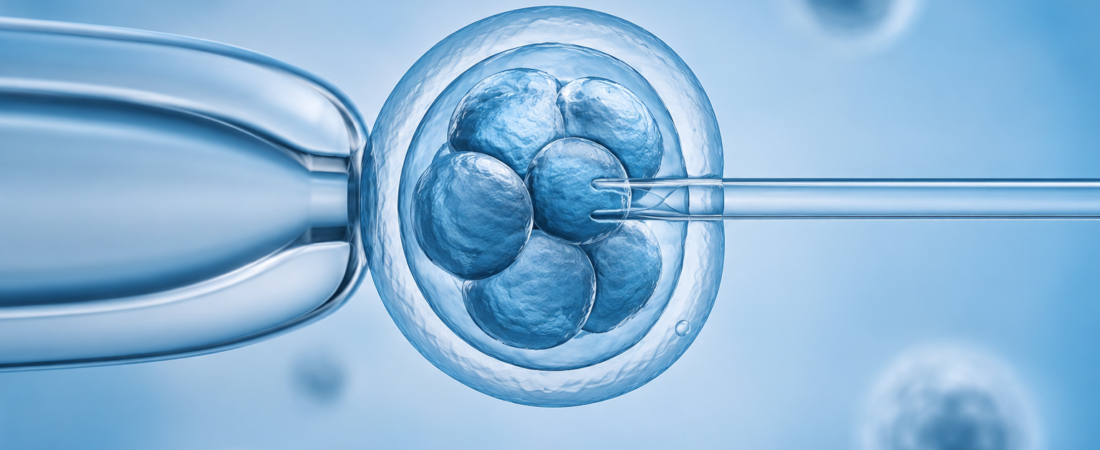
One of the most frequent questions in an IVF consultation remains: “If we transfer two embryos, won’t our chances of pregnancy double?”
This question is a relic of an older era. In the early days of IVF, when embryo culture technology was in its infancy and implantation rates were low, transferring multiple embryos was a necessity to ensure at least one would take hold. Today, however, we have entered a new era where we must prioritize not just the achievement of pregnancy, but the safety of its outcome.
The Rise of Technology, The Fall of Multiple Gestation Technological advancements—specifically long-term embryo culture to the blastocyst stage (5-day incubation) and superior cryopreservation—have drastically improved implantation success rates. We no longer need to rely on “volume” to achieve success. In younger patients (under 35), transferring two high-grade blastocysts can result in a twin pregnancy rate of up to 30–45%.
While the prospect of twins is often romanticized as “double the joy,” the clinical reality is stark. In obstetrics, a twin pregnancy is a high-risk pregnancy.
The Hidden Toll of Multiple Gestations The focus on “more embryos” often ignores the physical reality of the uterus:
- The Prematurity Trap: Twin pregnancies carry a significantly higher risk of preterm birth. These extra weeks in the womb are not just time—they are essential developmental windows for the brain, lungs, and immune system.
- Maternal Complications: From preeclampsia and gestational diabetes to the increased necessity for cesarean sections, the maternal health burden is substantially heavier with multiple gestations.
- Neonatal Impact: Twin births are more likely to require admission to the Neonatal Intensive Care Unit (NICU), marking a stressful and difficult start for both the baby and the parents.
The Paradigm Shift: ‘Less is More’ The global consensus in reproductive medicine has shifted decisively toward Elective Single Embryo Transfer (eSET). We are moving away from the era of “How many can we get to stick?” and toward the era of “What is the safest way to deliver a healthy baby?”
This shift is rooted in the realization that fertility success is not measured by a positive pregnancy test, but by a healthy infant in the arms of the parents. Modern IVF is evolving from a technology that “creates pregnancy” into a technology that “secures health.”
Navigating the Emotional Urgency For couples who have endured the physical, financial, and emotional strain of infertility, the urge to transfer multiple embryos is deeply understandable. The desire to “get it over with” and “maximize odds” is a natural response to the exhaustion of repeated failure.
However, medical decisions must be guided by foresight rather than desperation. Transferring two embryos in a patient with a high implantation potential is no longer considered a “boost” to success—it is considered an unnecessary exposure to the significant risks of multiple gestation.
Conclusion: Success is a Healthy Birth The true progress of modern IVF lies in our ability to achieve success with fewer interventions. We now have the tools to select the best embryo and provide it with an environment where it can thrive safely.
If you are beginning your IVF journey, redefine your own success metrics. Your goal is not a “pregnancy at all costs,” but a safe, healthy, and full-term arrival. Trust in the evolution of the science: today, the safest path is often the singular path.
Sources: ASRM guidelines on embryo transfer (2021); CDC and SART statistics on ART outcomes; ESHRE clinical consensus on single embryo transfer.
Disclaimer: This report is for informational purposes. The optimal number of embryos to transfer depends on age, embryo quality, and personal clinical history. Always discuss the risks and benefits of single vs. multiple embryo transfer with your reproductive specialist.