
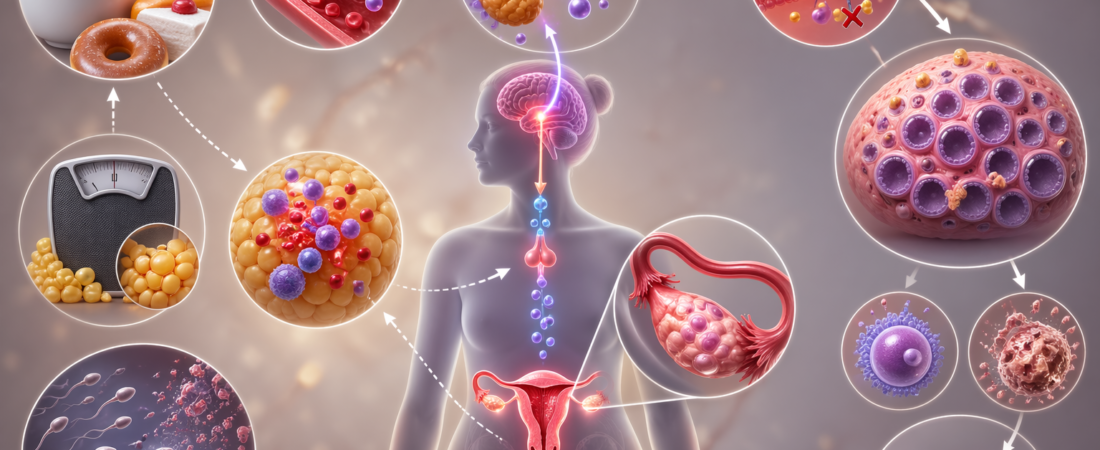
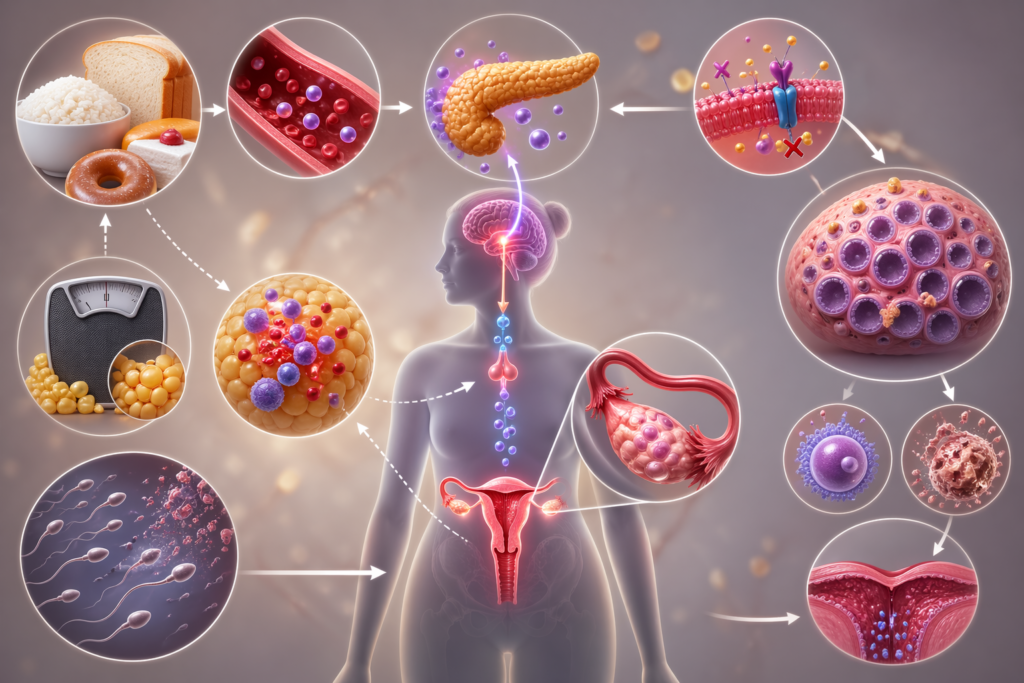
When couples struggling with infertility are advised to avoid high-glycemic foods, the recommendation often feels detached from the goal of getting pregnant. Yet, in modern reproductive endocrinology, metabolic health has emerged as a cornerstone of successful IVF and natural conception. The reason is simple: pregnancy is not an isolated ovarian event; it is the culmination of your entire body’s energy landscape.
The Insulin Cascade: A Barrier to Ovulation High-glycemic (high-GI) foods—processed sugars, white rice, and refined flour—trigger rapid spikes in blood glucose. To manage this, the body releases a surge of insulin. Over time, frequent spikes lead to insulin resistance, a state where the body needs more and more insulin to perform the same task.
In the ovaries, this excess insulin acts as a disruptor. It stimulates the production of androgens (male hormones), which inhibits proper follicle maturation. This is the hallmark of Polycystic Ovary Syndrome (PCOS): the ovaries contain an abundance of follicles, but the metabolic environment prevents them from reaching the stage of ovulation. It is a biological “traffic jam” caused by metabolic instability.
The Impact on Implantation The influence of insulin resistance does not stop at the ovary. It directly compromises the “soil” of the uterus. Insulin resistance is associated with:
- Endometrial Inflammation: A micro-environment that is hostile to embryo attachment.
- Vascular Instability: Impaired blood flow to the lining, reducing the nutritional support an embryo needs.
- Molecular Signaling Failure: Essential signals for implantation are blunted, leading to scenarios where a healthy embryo fails to implant despite optimal lab conditions.
The Male Connection Metabolic health is not a gender-specific concern. In men, insulin resistance exacerbates oxidative stress, directly damaging sperm DNA, reducing motility, and impairing morphology. Even if a semen analysis appears “within normal limits,” the actual fertilizing potential can be hampered by the body’s metabolic fatigue.
The “Safety Margin” of Youth Why does this impact couples more severely as they age? The answer lies in the body’s diminishing “metabolic reserve.” A younger biological system can absorb and compensate for dietary fluctuations. However, after age 35, as the egg pool shrinks and mitochondrial function declines, the system loses its margin for error. Adding metabolic stress to an already aging reproductive system is often the tipping point that turns a manageable fertility challenge into a clinical failure.
Conclusion: Preparing the Environment Weight management—losing even 5% to 10% of body weight—can be transformative, often restoring ovulation and improving the hormonal environment for those with metabolic disruptions.
The goal of modern fertility treatment is shifting. We are moving away from purely “stimulating” the ovaries with high-dose hormones and toward “designing” the body to be receptive. By stabilizing your blood sugar and improving insulin sensitivity, you are not just “dieting”—you are signaling to your reproductive system that it is safe, stable, and ready to support life.
Pregnancy is not a product of technology alone; it is a miracle that occurs when a prepared body meets the right opportunity. Your metabolism is the foundation of that preparation.
Sources: Guidelines from the American Society for Reproductive Medicine (ASRM) and the European Society of Human Reproduction and Embryology (ESHRE) regarding metabolic health and infertility; studies on insulin resistance and oocyte/sperm quality (Fertility and Sterility, Human Reproduction).
Disclaimer: This report is for informational purposes. Nutritional changes should be integrated into your overall fertility plan under the guidance of a reproductive specialist, as individual metabolic needs vary significantly.