

IVF at 47 with one’s own eggs has a very low chance of live birth, even when follicles remain. Age-related egg changes matter more than a reassuring reserve number alone. Decisions should include realistic clinic-specific outcomes, pregnancy risks, donor options and the choice to stop treatment.
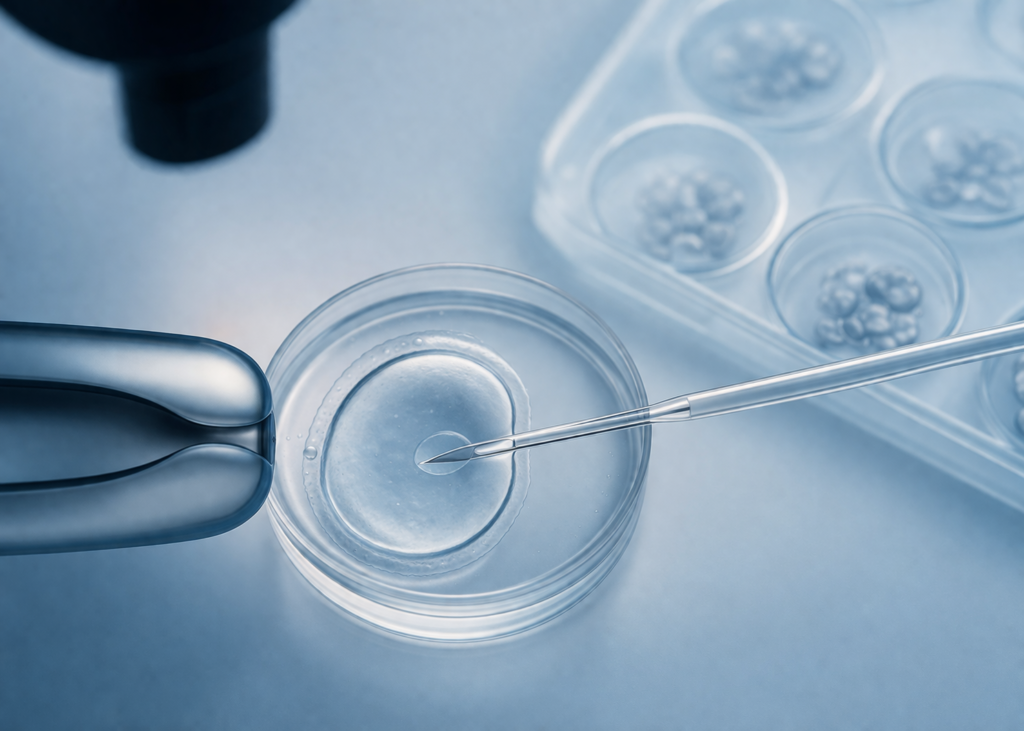
At 47, the number of remaining follicles and the chance of a live birth are different questions. A measurable ovarian reserve does not overcome age-related limitations in egg competence.
Age changes the odds
Chromosomal errors become more common with increasing egg age. Exact rates vary with what is measured; a universal “5% normal eggs” figure should not be used to predict an individual outcome.
Natural versus stimulated cycles
A naturally selected dominant follicle is not proven to contain a genetically healthier egg than follicles recruited with stimulation.
- Natural cycles: Usually one dominant follicle develops, but selection does not screen the egg for chromosomal normality.
- Stimulated cycles: Several follicles may be recruited, increasing the number of eggs available without reversing age-related changes.
Choices beyond another cycle
Discuss own-egg success rates, expected response, costs, physical burden, donor eggs and the option to stop. Pregnancy at this age also requires a maternal-health assessment.
- Natural or modified natural IVF: May suit selected circumstances, but should not be promised to produce higher-quality eggs.
- Conventional stimulation: May provide more eggs if the ovaries respond; the likely yield and very low own-egg live-birth chance must still be discussed.
Persistence is a choice, not a prescription
More attempts can bring further opportunities but do not erase very low odds or guarantee success.
The outcome does not measure effort or willpower. A clinician should help set realistic expectations and a stopping point that reflects personal values, health and resources.
Disclaimer: This report is for informational purposes. Achieving pregnancy at age 47 is medically complex. Please consult with a reproductive endocrinologist to conduct a realistic assessment of your unique clinical profile and reproductive options.
Reserve and reproductive potential differ
AMH and follicle count help estimate response; neither overrides age-related reproductive risk. Request outcomes for comparable own-egg patients rather than relying on a clinic’s overall success rate. ASRM ovarian-reserve guidance (2020).
Related reading
AMH and Fertility: The One-Number Trap You Should Not Fall Into